GippsAero GA8 Airvan vs Pacific Aerospace P750
GippsAero GA8 Airvan vs Pacific Aerospace P750 at a glance — top speed 241 vs 315 km/h, range 1,352 vs 2,183 km, max takeoff weight 1,814 vs 3,402 kg, built 250 vs 120 units.
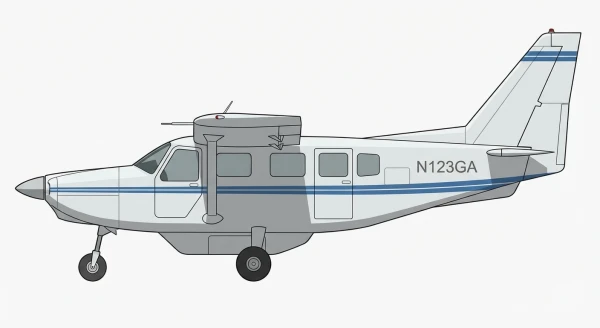
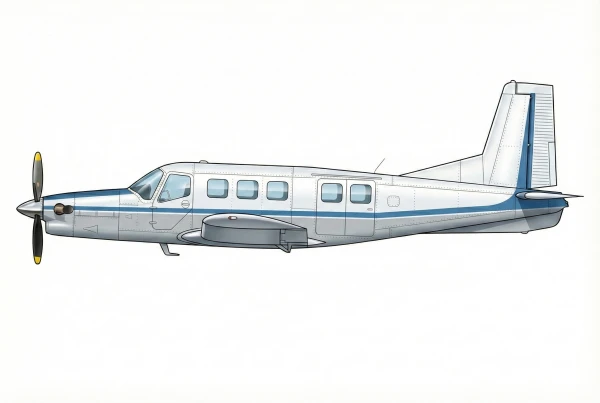
| GippsAero GA8 Airvan | Pacific Aerospace P750 | |
|---|---|---|
| Origin country | 🇦🇺 Australia | 🇳🇿 New Zealand |
| Category | Military Transport Aircraft | Military Transport Aircraft |
| Manufacturer | GippsAero | Pacific Aerospace |
| First flight | 3 March 1995 | 1 January 2001 |
| Year introduced | 2000 | 2001 |
| Number produced | 250 units | 120 units |
| Average unit price | -- | $2.2 million |
| Wing area | 19.3 m² | 24.9 m² |
| Wingspan | 12.3 m | 12.8 m |
| Height | 3.9 m | 3.9 m |
| Length | 9.0 m | 11.1 m |
| Maximum speed | 241 km/h | 315 km/h |
| Operational range | 1,352 km | 2,183 km |
| Service ceiling | 6,100 m | 6,096 m |
| Max. takeoff weight | 1,814 kg | 3,402 kg |
| Empty weight | 997 kg | 1,633 kg |
| Total thrust | 1 x 227 kW | 1 x 560 kW |
Detailed Comparison
The GippsAero GA8 Airvan and Pacific Aerospace P750 utilize distinct propulsion and airframe configurations to serve light utility roles within the Oceania aerospace sector. While the Australian-made GA8 focuses on economic efficiency using a piston engine to bridge the gap between light singles and turboprops, the New Zealand-origin P750 leverages a powerful turboprop engine for extreme Short Take-Off and Landing (STOL) capabilities and heavier payload operations.
Development and Design
Designed to comply with stringent FAA Part 23 crashworthiness standards, the GA8 features a high-wing configuration and a rectangular fuselage maximizing interior volume for eight passengers. Its design philosophy prioritizes simplicity and field maintainability, utilizing a rugged tricycle gear, a modular interior, and mechanical flaps. The placement of the wing aft of the pilot enhances upward visibility, aiding in tactical observation.
Conversely, the P750 evolved from the agricultural PAC Cresco, retaining the powerful Pratt & Whitney PT6 turboprop but adopting a larger fuselage. It employs a low-wing monoplan design, which is less common for rough-field utility aircraft but is optimized here for stability and payload. The P750's standout engineering feature is its modified wing profile, specifically engineered to deliver exceptional lift for short-field operations while carrying significant loads.
Specifications and Performances
Performance metrics highlight a substantial tier difference driven by propulsion. The P750’s 560 kW (750 hp) turboprop allows for a Max Takeoff Weight of 3,402 kg, nearly double the GA8’s 1,814 kg limit. Consequently, the P750 offers superior logistical reach with a range of 2,183 km compared to the GA8’s 1,352 km. Speed metrics follow this trend, with the P750 reaching 315 km/h against the Airvan’s 241 km/h.
However, the GA8’s reliance on a 227 kW piston engine (Lycoming IO-540) significantly reduces acquisition and operating costs. While it lacks the P750's aggressive climb rate (5.42 m/s vs 4.0 m/s), the GA8 provides sufficient utility for standard operations where extreme STOL performance is not required. The P750 is optimized for "hot and high" environments, whereas the GA8 is optimized for economic endurance.
Deployment and usage
The GA8 functions primarily in permissive environments for logistics, SAR, and ISR. The Civil Air Patrol previously operated a fleet for domestic search and rescue, while the Lesotho Defence Force employs it for transport. Its ability to integrate retractable sensor pods (such as Wescam units) makes it a discreet platform for surveillance missions.
The P750 has seen more rugged deployment, including humanitarian missions with the UN in Africa and military service with the Papua New Guinea Defence Force. Its high power-to-weight ratio has prompted development into light attack and counter-insurgency (COIN) variants, extending its utility beyond mere transport into kinetic roles. This contrasts with the GA8, which remains strictly a support and observation platform.
Conclusion
Ultimately, the operational selection between these platforms relies on the trade-off between raw capability and fiscal efficiency. The GA8 Airvan is an optimized, low-cost solution for light logistics and surveillance where runway length is not the critical constraint. The P750 represents a higher capability bracket, offering essential heavy-lift and STOL performance for austere and tactical environments, albeit with the increased logistical footprint and expense inherent to turboprop operations.