Military Strength: United Arab Emirates vs Saudi Arabia
Saudi Arabia (ranked #14 globally) holds a stronger overall military position than United Arab Emirates (#19) on the ARMS Index. Saudi Arabia fields 282,000 active troops — 4.5:1 United Arab Emirates's 63,000, backed by 24,500 paramilitary. Saudi Arabia's $88B defense budget is 4.0:1 that of United Arab Emirates ($22B).
Six-pillar composite: manpower, ground forces, naval power, air power, nuclear deterrent and defense budget, with a readiness modifier from budget per soldier. Full methodology.
Pillar
Weight
Score
Basis
Manpower
15%
68.2
128000 effective
Ground forces
20%
67.2
354 main battle tanks
Naval power
20%
38.7
Carrier tiers, nuclear vs conventional submarines
Air power
25%
56.3
Weighted by aircraft type & fleet age
Nuclear deterrent
10%
0.0
No declared capability
Defense budget
10%
60.2
$22B, PPP-adjusted
Readiness
modifier
×1.15
Budget per soldier
🇸🇦 Saudi Arabia
World #14
56.1/ 100
Six-pillar composite: manpower, ground forces, naval power, air power, nuclear deterrent and defense budget, with a readiness modifier from budget per soldier. Full methodology.
🇦🇪 United Arab Emirates: Maintains a "forward defense" posture centered on high-tech interoperability and expeditionary capabilities to secure maritime corridors (Strait of Hormuz) and counter non-state actors.
🇸🇦 Saudi Arabia: Focuses on heavy conventional deterrence and area denial to protect vast territorial borders and critical energy infrastructure, leveraging strategic missile forces and massed armor.
2. Combat Power Snapshot
Domain
United Arab Emirates
Saudi Arabia
Edge
Air Power
Highly advanced, pilot-centric force (F-16 Blk 60, Rafale F4) focused on precision and agility.
Massive fleet (F-15SA, Typhoon) providing overwhelming volume and deep strike capability.
🇸🇦
Ground Forces
Small, mechanized, expeditionary-focused (Leclerc MBT) with high readiness (Presidential Guard).
Large, heavy armored formations (M1A2S Abrams) split between Army and National Guard for internal/border security.
🇸🇦
Naval
Littoral warfare specialists; modern corvettes (Baynunah) optimized for the Gulf's shallow waters.
Dual-fleet blue water aspirations (Red Sea/Gulf) with heavier frigates and stronger sustainment.
🇸🇦
Missiles/Defense
Dense IAMD (THAAD, Patriot) but lacks offensive ballistic missile capabilities.
Operates a dedicated Strategic Missile Force (DF-21) providing offensive reach unmatched in the GCC.
🇸🇦
3. Scenario: First 7 Days of War
Trigger: A rupture in diplomatic relations escalates rapidly following a contested incident involving energy infrastructure near the border, leading to mutual mobilization.
Day 1: The Royal Saudi Air Force (RSAF) initiates a high-volume air campaign targeting UAE command nodes and airfields. The UAE Air Force (UAEAF) scrambles F-16s and Mirage 2000-9s for defensive counter-air, inflicting tactical losses on RSAF heavy fighters but struggling against superior numbers.
Day 2-3: Saudi Arabia activates the RSSMF, launching DF-series ballistic missiles at key UAE runways and logistics hubs. UAE’s THAAD and Patriot batteries achieve high interception rates but are saturated by the sheer volume of incoming threats.
Day 4-5: Saudi Land Forces (RSLF) armored columns (M1A2S) cross the border. UAE ground forces, utilizing terrain and domestically produced anti-tank systems, conduct a flexible defense, slowing the advance but retreating to preserve manpower.
Day 6-7: The UAE deploys EDGE Group loitering munitions and autonomous swarms to harass Saudi supply lines. However, the RSAF achieves air superiority through attrition, allowing Saudi armor to threaten major Emirati population centers.
Outcome: Saudi strategic depth and mass overwhelm the UAE's qualitative tactical advantages, forcing a ceasefire favorable to Riyadh.
4. Wildcards
🤖 Autonomous Warfare: The UAE's EDGE Group has rapidly advanced in swarming drones and loitering munitions; widespread deployment could disrupt Saudi heavy armor logistics disproportionately.
🏜️ Strategic Depth: The UAE lacks territory for retreat; its vital infrastructure is concentrated in a small coastal strip. Conversely, Saudi Arabia can absorb strikes and operate from deep interior bases, making a "knockout blow" against them impossible.
🛡️ Force Preservation: The UAE relies heavily on a small citizen population; high casualty rates would force an immediate political capitulation, whereas Saudi Arabia has a larger demographic pool to sustain losses.
5. Verdict
Saudi Arabia retains hegemon status through sheer geographic size, strategic depth, and overwhelming firepower, while the UAE serves as a "poison shrimp"—capable of inflicting severe damage but unable to win a sustained conventional war.
Short War (High Intensity)
Long War (Attrition)
Conventional
⚖️ Tactical stalemate; High attrition
🇸🇦 Saudi mass prevails
Asymmetric
🇦🇪 UAE tech disrupts logistics
🇸🇦 Saudi depth absorbs shock
This analysis is a speculative scenario generated by artificial intelligence for informational and entertainment purposes only. It does not constitute a military assessment and should not be interpreted as a prediction of any real-world outcome.
Who has more military personnel, United Arab Emirates or Saudi Arabia?
Saudi Arabia has approximately 282,000 active military personnel compared to United Arab Emirates's 63,000, giving Saudi Arabia a 4.5:1 numerical advantage.
Which country has more combat aircraft, United Arab Emirates or Saudi Arabia?
Saudi Arabia operates 384 combat aircraft compared to United Arab Emirates's 135. This includes fighters, strike aircraft, and multirole combat jets.
Who has the larger navy, United Arab Emirates or Saudi Arabia?
United Arab Emirates has a larger navy with 79 vessels compared to Saudi Arabia's 30 ships.
Which country spends more on defense, United Arab Emirates or Saudi Arabia?
Saudi Arabia has a larger defense budget at $88 billion (4.0:1 more) compared to United Arab Emirates's $22.1 billion annually.
Do United Arab Emirates and Saudi Arabia have nuclear weapons?
Neither United Arab Emirates nor Saudi Arabia currently possesses nuclear weapons.
How do the tank forces of United Arab Emirates and Saudi Arabia compare?
Saudi Arabia operates 840 main battle tanks compared to United Arab Emirates's 354. Tank numbers reflect both active inventory and reserves.
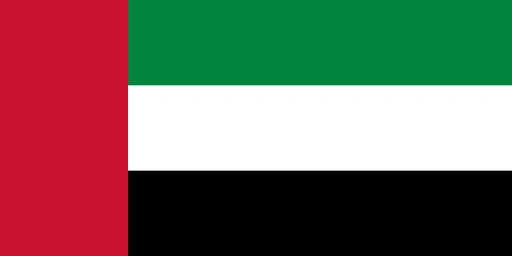 United Arab Emirates vs
 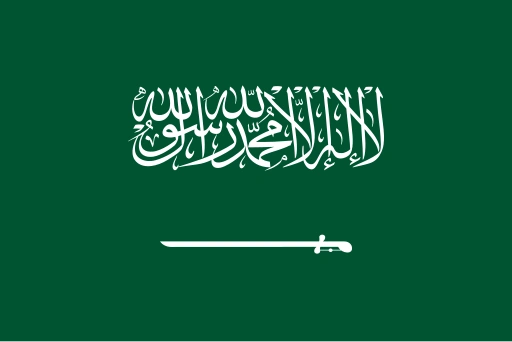 Saudi Arabia