Ohio vs Typhoon
Ohio vs Typhoon at a glance — displacement 16,764 vs 23,200 tons, length 170 vs 175 m, speed 12 vs 22 knots, crew 155 vs 160.
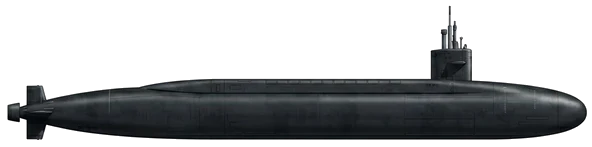

| Ohio | Typhoon | |
|---|---|---|
| Origin | 🇺🇸 United States | 🇷🇺 Ex-USSR |
| Category | Submarine | Submarine |
| Type | Nuclear-powered ballistic missile submarine | Nuclear-powered ballistic missile submarine |
| Manufacturer | General Dynamics Electric Boat | Sevmash |
| Year introduced | 1981 | 1981 |
| Number built | 18 units | 6 units |
| Estimated unit price | $2,000 million | NA |
| Displacement | 16,764 tons | 23,200 tons |
| Maximum speed | 12.0 knots | 22.0 knots |
| Range | Unlimited | Unlimited |
| Length | 170.0 m | 175.0 m |
| Beam | 13.0 m | 23.0 m |
| Crew | 155 | 160 |
| Max depth | 240 m | 400 m |
| Ohio | Typhoon | |
|---|---|---|
| Armament |
|
|
| Propulsion | 1× S8G PWR nuclear reactor, 2× geared turbines; 35,000 shp (26 MW), 1x Fairbanks Morse auxiliary diesel, 1× 325 hp (242 kW) auxiliary motor, 1 shaft with seven-bladed screw | 2 × OK-650 pressurized-water nuclear reactors, 190 MWt each; 2 × geared steam turbines, 50,000 shp each; 2 shafts with 7-bladed shrouded screws |
Detailed Comparison
The Project 941 Akula (NATO: Typhoon) and the Ohio class served as the primary ballistic missile submarine (SSBN) platforms for the Soviet Union and the United States, respectively, during the late Cold War. Both entered service in 1981 to provide nuclear deterrence through submarine-launched ballistic missiles (SLBMs). While the Ohio class remains in service with the U.S. Navy, the Typhoon class has been fully retired, with the final vessel decommissioned in 2023.
Development and Design
The Typhoon utilizes a multi-hull configuration, enclosing two primary pressure hulls and separate command modules within an outer light hull. This design was necessitated by the size of Soviet R-39 missiles. It resulted in the largest submarine class by displacement, weighing 48,000 tons submerged with a beam of 23.0 meters. Construction at Sevmash yielded six units.
In contrast, the Ohio class employs a single-hull SCB-304 design constructed by General Dynamics Electric Boat. It displaces 18,750 tons submerged—less than 40% of the Typhoon's mass—with a narrower 13.0-meter beam. Eighteen units were completed. To maximize time at sea, the Ohio class utilizes a dual-crew system (Blue and Gold) which rotates personnel while the vessel remains operational.
Weapons and Sensors
The Typhoon's primary armament consisted of 20 RSM-52 SLBMs positioned between the pressure hulls. For self-defense, it carried six 533mm torpedo tubes capable of firing Type 53 torpedoes and RPK-2/RPK-6 anti-submarine missiles, alongside a 9K38 Igla SAM system.
The Ohio class SSBNs originally carried 24 Trident missiles. Following New START treaty compliance, tubes were reduced to 20 Trident II D5s. Four hulls were converted to guided-missile submarines (SSGN), replacing SLBMs with up to 154 Tomahawk cruise missiles and special operations lockout chambers. All Ohio vessels mount four 533mm tubes for Mark 48 torpedoes.
Propulsion and Performance
Propulsion for the Typhoon is supplied by two OK-650 nuclear reactors (190 MWt each) driving two shafts, generating approximately 100,000 shp. This power plant enables a submerged speed of 27.0 knots and a maximum operational depth of 400 meters. The vessel's reserve buoyancy is high due to the multi-hull structure.
The Ohio operates on a single S8G pressurized-water reactor driving one shaft. The system produces 60,000 shp, allowing for a submerged speed of 25.0 knots. Its official test depth is approximately 240 meters, significantly shallower than the titanium and high-yield steel reinforced Soviet counterparts.
Deployment and Combat Record
Typhoon class vessels operated with the Russian Northern Fleet. Due to high operating costs, three units were scrapped in the 1990s. The lead ship, Dmitry Donskoy, operated as a test platform for the Bulava missile system until 2023. The class did not engage in combat.
The Ohio class maintains deterrent patrols in the Atlantic and Pacific oceans. The four converted SSGNs have executed conventional strikes using Tomahawk missiles in various theaters. The SSBN fleet is currently scheduled for replacement by the Columbia class.
Conclusion
The Typhoon class demonstrated a specific engineering solution to missile dimensions, prioritizing survivability and payload at the expense of manufacturing and maintenance costs. The Ohio class offered a more conventional, cost-efficient architecture that proved adaptable to post-Cold War conventional missions. Consequently, the Ohio class outlasted the Typhoon in active service by decades.