Borey vs Ohio
Borey vs Ohio at a glance — displacement 14,720 vs 16,764 tons, length 170 vs 170 m, speed 15 vs 12 knots, crew 107 vs 155.
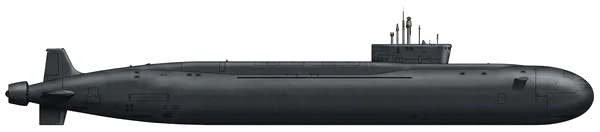
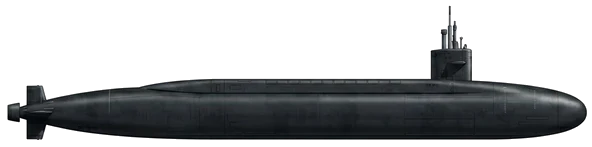
| Borey | Ohio | |
|---|---|---|
| Origin | 🇷🇺 Russia | 🇺🇸 United States |
| Category | Submarine | Submarine |
| Type | Nuclear-powered ballistic missile submarine | Nuclear-powered ballistic missile submarine |
| Manufacturer | Sevmash | General Dynamics Electric Boat |
| Year introduced | 2013 | 1981 |
| Number built | 8 units | 18 units |
| Estimated unit price | $713 million | $2,000 million |
| Displacement | 14,720 tons | 16,764 tons |
| Maximum speed | 15.0 knots | 12.0 knots |
| Range | Unlimited | Unlimited |
| Length | 170.0 m | 170.0 m |
| Beam | 13.5 m | 13.0 m |
| Crew | 107 | 155 |
| Max depth | 400 m | 240 m |
| Borey | Ohio | |
|---|---|---|
| Armament |
|
|
| Propulsion | 1 × ОК-650V nuclear reactor, 1 × Steam turbine, 50,000 SHP, 1 × Pump-jet | 1× S8G PWR nuclear reactor, 2× geared turbines; 35,000 shp (26 MW), 1x Fairbanks Morse auxiliary diesel, 1× 325 hp (242 kW) auxiliary motor, 1 shaft with seven-bladed screw |
Detailed Comparison
The Ohio class, commissioned between 1981 and 1997, constitutes the sea-based leg of the United States nuclear triad with 18 nuclear-powered vessels. The Borei class (Project 955/955A), entering service in 2013, serves as the primary modern ballistic missile submarine for the Russian Navy, replacing Soviet-era Delta and Typhoon units. Both platforms function as strategic deterrents, although the Ohio class includes hulls converted for conventional strike and special operations.
Development and Design
General Dynamics Electric Boat constructed the Ohio class using the SCB-304 hull design, which features four-deck sections and logistics hatches for modular supply. The fleet comprises 14 ballistic missile submarines (SSBN) and four guided-missile conversions (SSGN). The Russian Borei class, built by Sevmash, faced a prolonged development cycle starting in the mid-1980s, requiring a redesign to accommodate the RSM-56 Bulava missile. While both classes measure 170 meters in length, the Borei class has a significantly higher submerged displacement at 24,000 tons compared to the Ohio's 18,750 tons. The Borei-A variant introduces structural updates, including all-moving rudders and vertical endplates on hydroplanes.
Weapons and Sensors
The Ohio SSBN configuration carries 20 Trident II D5 SLBMs, reduced from the original 24 to comply with the New START treaty. The four SSGN conversions carry up to 154 Tomahawk cruise missiles and offer swimmer lockout chambers. Defensive armament consists of four 21-inch torpedo tubes. The Borei class carries 16 RSM-56 Bulava SLBMs, with each missile capable of carrying six MIRV warheads. Torpedo arrangements vary by hull: Project 955 utilizes eight 533mm tubes, while Project 955A utilizes six. Unlike the Ohio, the Borei includes the REPS-324 Shlagbaum anti-torpedo defense system and carries RPK-2 Vyuga anti-submarine missiles.
Propulsion and Performance
The Ohio class utilizes a single S8G PWR nuclear reactor driving two geared turbines to produce 35,000 shp (26 MW). It employs a conventional seven-bladed screw, achieving a submerged speed of 25 knots and a maximum depth of 240 meters. The Borei class integrates an OK-650V reactor generating 50,000 shp. It represents the first Russian nuclear submarine to use a pump-jet propulsor, contributing to a higher submerged speed of 29 knots. The Borei hull is rated for a maximum depth of 400 meters, exceeding the Ohio class operational limit by 160 meters.
Deployment and Combat Record
US forces operate Ohio vessels from Naval Base Kitsap and Naval Submarine Base Kings Bay, utilizing a Blue/Gold dual-crew system to maximize time on station. The SSGN variants have deployed for conventional missions, while SSBNs maintain continuous deterrent patrols. The Russian Navy distributes eight active Borei units between the Northern and Pacific Fleets, enabling the resumption of patrols in southern latitudes.
Conclusion
The Ohio class maintains a higher missile payload capacity per vessel in both strategic and conventional configurations. Conversely, the Borei class demonstrates superior kinematic performance with greater depth capabilities, higher submerged speeds, and pump-jet propulsion. While the US Navy proceeds with replacing the Ohio class with the Columbia class, the Borei remains in active production, with total planned units set to reach 14.