Scorpène vs Type 212
Scorpène vs Type 212 at a glance — displacement 1,565 vs 1,524 tons, length 61 vs 56 m, speed 12 vs 12 knots, crew 31 vs 27.
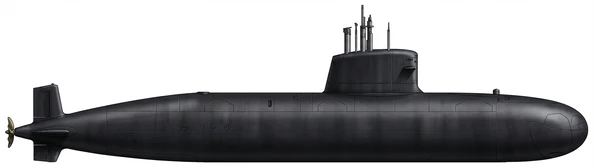
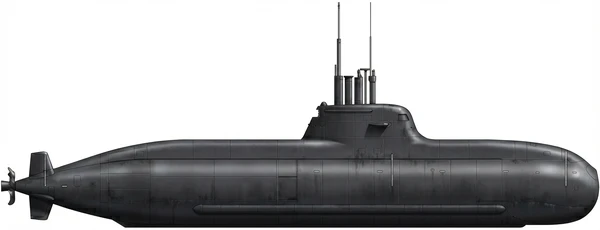
| Scorpène | Type 212 | |
|---|---|---|
| Origin | 🇫🇷 France | 🇩🇪 Germany |
| Category | Submarine | Submarine |
| Type | Diesel-electric attack submarine | Diesel-electric attack submarine |
| Manufacturer | Naval Group | Howaldtswerke-Deutsche Werft GmbH (HDW) |
| Year introduced | 2005 | 2005 |
| Number built | 4 units | 10 units |
| Estimated unit price | $450 million | $450 million |
| Displacement | 1,565 tons | 1,524 tons |
| Maximum speed | 12.0 knots | 12.0 knots |
| Range | 6,500 nm at 8 knots | 8,000 nm at 8 knots |
| Length | 61.7 m | 56.0 m |
| Beam | 6.2 m | 6.8 m |
| Crew | 31 | 27 |
| Max depth | 350 m | 200 m |
| Scorpène | Type 212 | |
|---|---|---|
| Armament |
|
|
| Propulsion | Diesel-electric, Batteries, Air-independent propulsion (AIP), MESMA AIP, DRDO PAFC Fuel Cell AIP | 1 × MTU 16V 396 marine diesel engine; 9 × HDW/Siemens PEM fuel cells (30–40 kW each) or 2 × HDW/Siemens PEM fuel cells (120 kW each); 1 × Siemens Permasyn electric motor (1700 kW) driving a single seven-bladed skewback propeller |
Detailed Comparison
The global conventional submarine market fractures along two doctrinal lines: vessels designed for high-endurance oceanic patrols, and those engineered for localized operations in littoral chokepoints. Naval Group’s Scorpène and HDW’s Type 212 fulfill these specific operational roles. The Scorpène captured an international export market through technology transfer agreements, while the Type 212 serves as the core of NATO’s European shallow-water anti-submarine warfare (ASW) capability.
Development and Design
The Scorpène originated as a joint French-Spanish venture to succeed the Agosta class, prioritizing modularity for export. Naval Group markets the design through local production frameworks, yielding 14 hulls across India (Project 75), Brazil (ProSub), Chile, and Malaysia, with Indonesia signing for two units in 2024. The Type 212 resulted from a 1994 German-Italian merger of requirements for Baltic and Mediterranean operations. HDW designed the Type 212 with a non-magnetic steel hull to defeat magnetic anomaly detectors (MAD) and naval mines, utilizing an X-rudder configuration specifically engineered for maneuverability in shallow, constrained waters.
Weapons and Sensors
Both submarines rely on six 533 mm forward torpedo tubes, but their combat loads dictate different mission profiles:
- The Scorpène carries 18 weapons, integrating Black Shark heavyweight torpedoes, SM-39 Exocet anti-ship missiles, and A3SM (MICA) anti-air missiles for surface engagement.
- The Type 212 is restricted to a 13-weapon magazine (DM2A4 or Black Shark torpedoes) and uses a water ram expulsion system rather than compressed air, eliminating acoustic launch transients. It integrates the IDAS missile for engaging ASW helicopters and coastal targets.
The Scorpène employs the Thales S-Cube suite, while the Type 212 utilizes the CSU 90 sonar and incorporates a specialized reconnaissance mast on second-batch hulls.
Propulsion and Performance
HDW integrated Siemens proton-exchange membrane (PEM) fuel cell air-independent propulsion (AIP) into the Type 212’s baseline design, locating hydrogen and oxygen tanks outside the pressure hull. This configuration allows continuous submerged operations without snorkeling, enabling an 18-day submerged transatlantic transit by the German U-32 in 2013. The Scorpène relies on standard diesel-electric propulsion, offering the MESMA system as an optional module. Naval Group's latest iteration, the Scorpène Evolved, abandons MESMA for a full lithium-ion battery architecture. The Scorpène dives to 350 meters compared to the Type 212's 200 meters, reflecting its oceanic design parameters.
Deployment and Combat Record
Scorpène operators utilize the submarine for regional deterrence and force projection. India deploys its Kalvari-class units for patrols in the Indian Ocean, while Malaysia relies on them to assert claims in the South China Sea. Type 212 deployments center on intelligence gathering and chokepoint control. Italian units Salvatore Todaro and Scirè executed extended deployments to the Gulf of Aden and Arabian Sea for counter-piracy and NATO exercises, leveraging their low acoustic signatures in high-traffic sea lanes.
Conclusion
For shallow-water, anti-access/area denial (A2/AD) operations, the Type 212 is the superior asset. Its non-magnetic hull, X-rudder, and baseline fuel-cell AIP make it virtually undetectable in littoral chokepoints like the Baltic Sea. However, for navies requiring blue-water force projection and anti-surface warfare, the Scorpène holds the operational edge. Its 350-meter dive depth, larger 18-weapon magazine, and integration of the SM-39 Exocet provide organic strike capabilities the Type 212 lacks. Navies operating in confined littorals should procure the Type 212; those requiring multi-ocean patrols and surface fleet engagement require the Scorpène.