M101 Howitzer vs M777 Howitzer
M101 Howitzer vs M777 Howitzer at a glance — weight 2,030 vs 4,200 kg, range 18 vs 70 km, crew 8 vs —.
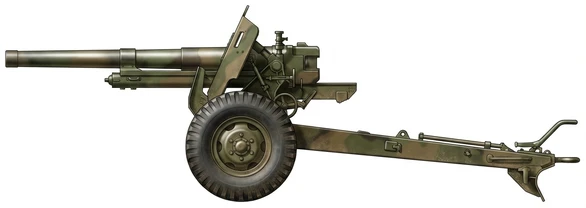
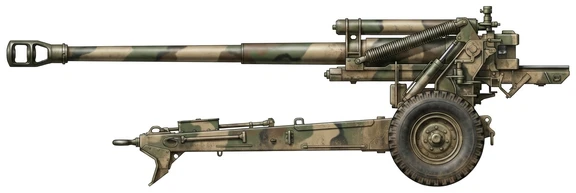
| M101 Howitzer | M777 Howitzer | |
|---|---|---|
| Origin country | 🇺🇸 United States | 🇺🇸 United States |
| Category | Towed Artillery | Towed Artillery |
| Type | Artillery piece | Towed 155 mm artillery piece |
| Manufacturer | Rock Island Arsenal | BAE Systems |
| Number produced | 10,202 units | 1,250 units |
| Estimated unit price | $0.0 million | $3.7 million |
| Combat weight | 2.0 tons | 4.2 tons |
| Operational range | 18 km | 70 km |
| Length | 5.94 m | 9.10 m |
| Width | 2.21 m | -- m |
| Height | 1.73 m | -- m |
| Crew | 8 | 8 (normal), 5 (minimum), 3 (minimal emergency) |
| M101 Howitzer | M777 Howitzer | |
|---|---|---|
| Main armament | 105 mm high explosive (HE) semi-fixed ammunition | 155 mm 55-caliber barrel |
| Secondary weapon | HEAT M67 Shell | M982 Excalibur GPS-guided munition |
Detailed Comparison
The 105mm M101 prioritizes mass production, low unit cost ($25,000), and mechanical simplicity to sustain high-volume, short-range fires. In contrast, BAE Systems' 155mm M777 utilizes a $3.7 million titanium chassis and digital fire-control systems to deliver precision ordnance over extended ranges, trading structural resilience for strategic mobility.
Development and Design
The M101, standardized as the M2A1 in 1941, emerged from U.S. Ordnance Department studies of World War I German artillery. It uses a conventional split-trail steel carriage and a pneumatic-tired chassis. Its design targeted mass manufacturability, resulting in 10,202 units built. BAE Systems developed the M777 starting in 1987 as the Ultralight Field Howitzer, specifically targeting a weight reduction to replace the 7.1-ton M198. The resulting 4.2-ton structure relies heavily on titanium alloys. The M777 integrates the M776 barrel directly into the towing mechanism via a forged muzzle brake projection, eliminating redundant carriage weight.
Protection and Firepower
Neither system offers inherent ballistic protection; crew survivability dictates shoot-and-scoot tactics. The M101 fires 105mm semi-fixed high-explosive ammunition to a maximum range of 18 km, relying on optical sights and manual laying. The M777 fires NATO-standard 155mm munitions from a 55-caliber barrel. Its M777A2 variant uses a digital fire-control system for self-location, enabling M982 Excalibur GPS-guided rounds and XM1113 rocket-assisted projectiles to reach 70 km.
Combat feedback from Ukraine indicates the M777's titanium components are highly susceptible to counter-battery shrapnel damage. Furthermore, high-volume firing regimens rapidly degrade the M777 barrel, requiring frequent depot-level replacement. The 2.03-ton steel construction of the M101 absorbs blast abuse more readily, though its short range guarantees exposure to modern counter-battery fire.
Mobility and Logistics
The M101 is towed by light tactical vehicles or integrated onto commercial truck chassis, as seen in Vietnamese and South Korean service. Maintenance requires basic mechanical tooling. The 4.2-ton M777 requires medium tactical vehicles for ground transport but was explicitly designed for vertical envelopment.
- Helicopter sling-loading (CH-47, CH-53) allows rapid repositioning over impassable terrain.
- Fixed-wing transport is possible via C-130 or C-5 aircraft.
The M777's reliance on titanium welding and digital avionics demands a specialized logistical tail and contractor support for structural repairs.
Deployment and Combat Record
The M101 provided the bulk of U.S. infantry support during World War II, Korea, and Vietnam. It remains active in internal security operations, such as by the Philippine Army in urban clearing. The M777 entered combat with Canadian forces in Afghanistan in 2006, later providing fire support in Iraq and Syria against ISIL. In Ukraine, the M777 demonstrated high precision against armor formations, but the conflict exposed its high maintenance burden. The Indian Army deploys the M777 in the Himalayas, capitalizing on its air-transportability during border standoffs with China.
Conclusion
The M777 holds the edge in expeditionary warfare and mountain operations where 70 km precision fires and aerial mobility are required to strike targets and evade counter-battery radars. However, its maintenance-heavy titanium chassis and barrel wear rates make it poorly suited for sustained attrition warfare without heavy logistical backing. The M101 retains the advantage in internal security and austere environments. Its 18 km range is obsolete against modern artillery, but its steel construction, mechanical simplicity, and low operating costs make it the more sustainable choice for militaries lacking advanced maintenance infrastructure.