Type 69 vs Type 79
Type 69 vs Type 79 at a glance — weight 37,000 vs 39,000 kg, top speed 50 vs 50 km/h, range 440 vs 440 km, crew 4 vs 3.
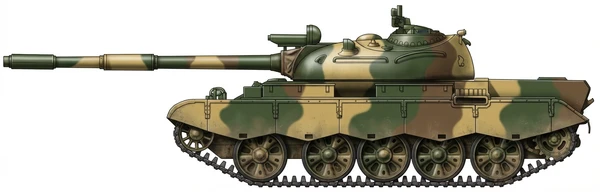
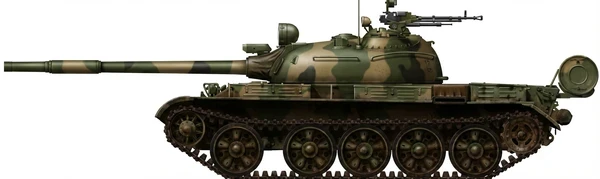
| Type 69 | Type 79 | |
|---|---|---|
| Origin country | 🇨🇳 China | 🇨🇳 China |
| Category | Main Battle Tank | Main Battle Tank |
| Type | Medium Main Battle Tank | Medium Main Battle Tank |
| Manufacturer | Norinco | Norinco |
| Number produced | 730 units | 300 units |
| Estimated unit price | $-- million | $-- million |
| Combat weight | 37.0 tons | 39.0 tons |
| Maximum speed | 50 km/h | 50 km/h |
| Operational range | 440 km | 440 km |
| Length | 8.65 m | 8.55 m |
| Width | 3.27 m | 3.27 m |
| Height | 2.80 m | 2.80 m |
| Crew | 4 | 3 |
Detailed Comparison
The Type 69 and Type 79 track the People’s Liberation Army’s (PLA) transition from relying on reverse-engineered Soviet hardware to integrating Western subsystems. The Type 69 emerged from a delayed effort to upgrade the Type 59 using captured Soviet T-62 components, while the Type 79 was a direct beneficiary of the 1980s Sino-Western geopolitical alignment, incorporating British fire control and European ordnance standards into the same aging Soviet-style chassis.
Development and Design
Initiated in 1963 as the WZ121, the Type 69 suffered severe development delays during the Cultural Revolution. It advanced only after the 1969 Sino-Soviet border clash, when the PLA captured a Soviet T-62 and stripped it for parts—specifically integrating the Luna infrared searchlight and a two-plane stabilizer. The resulting tank retained the T-54A lineage hull. The Type 79 (initially designated WZ-121D) entered production in 1984. It maintained the same baseline chassis but served as a testbed for technology transfers, integrating a Marconi fire control system and a domestic copy of the Royal Ordnance L7 105mm gun.
Protection and Firepower
Both platforms share a protection scheme based on homogeneous steel armor, leaving them highly vulnerable to modern kinetic and tandem-charge threats. The base Type 69 lacks NBC protection and mirrors the Type 59's structural limits, storing ammunition in the hull and turret crew space. The Type 79 added side skirts, automatic fire suppression, and an overpressure NBC system.
Firepower sharply differentiates the two. Early Type 69s fielded a 100mm smoothbore gun, later reverting to a 100mm rifled barrel (D-10T2S) due to poor ammunition performance. The Type 79 corrected this by adopting the ZPL-83 105mm rifled gun with a thermal sleeve. Paired with the British Marconi ballistic computer, laser rangefinder, and passive thermal imaging, the Type 79 achieved first-round hit probabilities at night that the manually calculated, IR-illuminated Type 69 could not replicate.
Mobility and Logistics
Both tanks utilize derivatives of the V-12 diesel engine, producing 730 hp in the Type 69 and 750 hp in the Type 79. Weighing 37.0 and 39.0 tons respectively, they achieve identical maximum speeds of 50.0 km/h and operational ranges of 440 km. Their lightweight footprint allows them to traverse bridges and soft terrain across South and Southeast Asia that restrict 60-ton Western main battle tanks.
Deployment and Combat Record
The PLA largely bypassed the Type 69 for domestic use, utilizing it primarily as an export commodity. It saw massive deployment during the Iran-Iraq War. Operators include:
- Iraq (deployed Type 69-QMs as static pillboxes during the 2003 defense of Nasiriyah, where they were dismantled by US armor and anti-tank missiles)
- Bangladesh (currently operates the T-69IIG modernized with ERA and 105mm guns)
- Myanmar (engaged Royal Thai Army M60A3s during 2001 border clashes)
The Type 79 saw a limited production run of 300 units, was retained exclusively by the PLA training formations, and never saw combat.
Conclusion
The Type 79 is strictly superior in mechanized engagements. By replacing the erratic 100mm gun of the Type 69 with a 105mm L7 derivative and a Western ballistic computer, the Type 79 transformed a blind, inaccurate platform into a viable standoff threat. While both vehicles lack the composite armor required to survive in a modern threat environment, the Type 79’s integration of thermal imaging and automated fire control provides a definitive first-look, first-kill advantage over the baseline Type 69.