Type 96 vs Type 99
Type 96 vs Type 99 at a glance — weight 41,000 vs 52,000 kg, top speed 60 vs 65 km/h, range 700 vs 450 km, crew 3 vs 3.
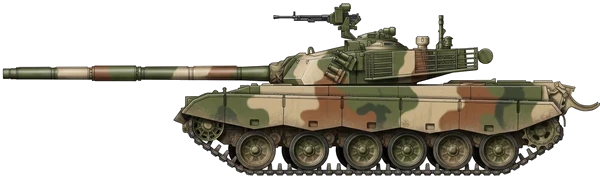
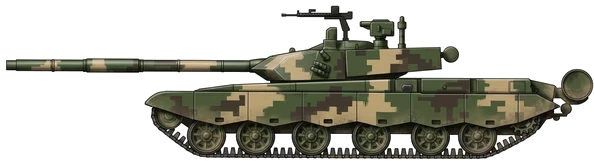
| Type 96 | Type 99 | |
|---|---|---|
| Origin country | 🇨🇳 China | 🇨🇳 China |
| Category | Main Battle Tank | Main Battle Tank |
| Type | Medium Main Battle Tank | Medium Main Battle Tank |
| Manufacturer | Norinco | Norinco |
| Number produced | 2,500 units | 1,300 units |
| Estimated unit price | $-- million | $2.5 million |
| Combat weight | 41.0 tons | 52.0 tons |
| Maximum speed | 60 km/h | 65 km/h |
| Operational range | 700 km | 450 km |
| Length | 9.99 m | 9.99 m |
| Width | 3.45 m | 3.45 m |
| Height | 2.30 m | 2.30 m |
| Crew | 3 | 3 |
Detailed Comparison
The People’s Liberation Army (PLA) operates a high-low mix of main battle tanks, with the Type 99 serving as the heavy breakthrough platform and the Type 96 functioning as the mass-produced foundation of its armored units. While both share a Soviet-derived design lineage rooted in the T-72 chassis, their divergent weight classes—52 tons for the Type 99 versus 41 tons for the Type 96—dictate distinct tactical applications within Chinese combined arms brigades.
Development and Design
The Type 96 emerged as a rapid, cost-effective remedy to PLA armor deficiencies exposed during the 1991 Gulf War. Evolving from the Type 88 and Type 85 prototypes, it entered service in 1997. Norinco produced 2,500 units to mechanize the PLA Ground Force. The Type 99, initiated in 1989 and entering service in 2001, is a ground-up effort to field a third-generation tank matching Western and Russian peers. With 1,300 units built at $2.5 million each, the Type 99 is reserved for priority formations in the Northern and Central Theater Commands.
Protection and Firepower
Both platforms share primary offensive systems:
- 125mm ZPT-98 smoothbore gun
- Carousel-style autoloader allowing a 3-man crew
- Compatibility with gun-launched ATGMs and depleted uranium rounds
Combat data from Ukraine indicates this specific autoloader geometry remains vulnerable to catastrophic ammunition detonation from top-attack munitions. The 11-ton weight difference between the vehicles manifests entirely in protection. The 41-ton Type 96 relies on steel and composite armor with FY-4 explosive reactive armor (ERA). The 52-ton Type 99 integrates modular composite blocks, third-generation tandem-defeating ERA, and the JD-3 active laser self-defense weapon to blind enemy optics.
Mobility and Logistics
The Type 99 relies on a 1500-hp V12 diesel engine, yielding a maximum speed of 65 km/h. Its 52-ton mass stresses indigenous Chinese transport infrastructure less than 70-ton Western main battle tanks, but limits operational range to 450 km. The Type 96 operates a 1200-hp diesel generating 60 km/h and extends its unrefueled range to 700 km. The 41-ton Type 96 traverses the bridges and mountainous terrain of southern China more readily than the heavier Type 99, dictating its broader geographic deployment.
Deployment and Combat Record
Neither tank has engaged in peer-level combat. The PLA deploys them in 14-vehicle companies within heavy combined arms brigades. Norinco exports the Type 96—currently fielded by Sudan and Tanzania—while prohibiting Type 99 exports. The Type 96 series frequently participates in the Russian Tank Biathlon, allowing the PLA to test the Type 96B’s hydropneumatic suspension and upgraded powertrain under stress. The PLA positions the Type 99B variant along the Himalayan border regions to counter Indian T-90S formations.
Conclusion
The Type 99 wins in direct, frontal engagements against adversarial main battle tanks. Its tandem-defeating ERA, millimeter-wave radar, and active laser countermeasures provide a survivability advantage over the baseline Type 96. Conversely, the Type 96 is the more practical platform for theater-wide mechanization. Its 41-ton weight, 700-km range, and lower production costs allow the PLA to field it across infrastructure-poor regions where the 52-ton Type 99 risks immobility. For a concentrated breakthrough, the Type 99 is required; for sustained, dispersed maneuver warfare, the Type 96 dictates the PLA’s operational tempo.