Bosnia and Herzegovina Military Forces
Bosnia and Herzegovina ranks #119 of 169 militaries worldwide in 2026, with 10,500 active troops. The Bosnian Army fields 45 main battle tanks; the Air Force flies 13 aircraft. Bosnia and Herzegovina has no nuclear weapons.
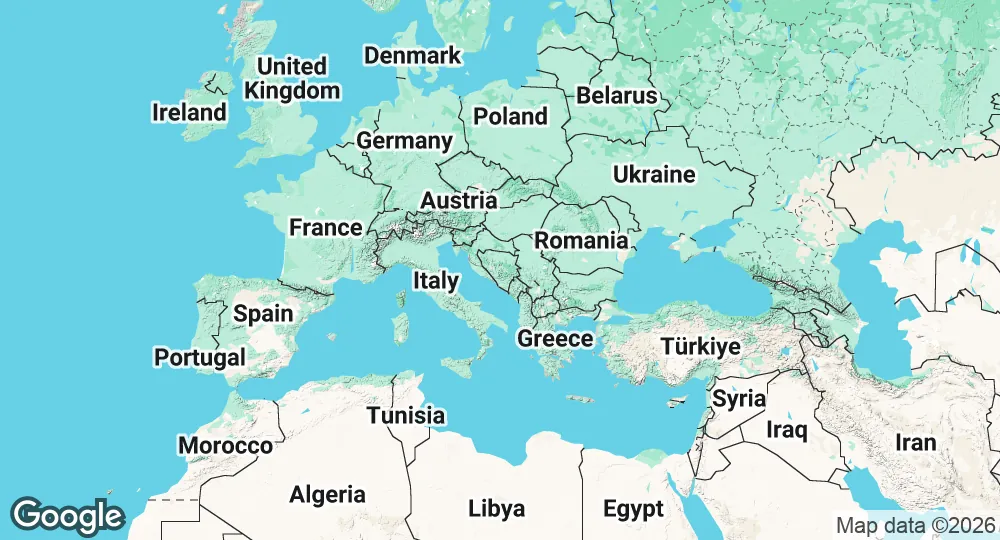
Armed Forces in 2026
| Domain | Strength | Composition |
|---|---|---|
| Air Force and Anti-Aircraft Defence of Bosnia and Herzegovina | 13 aircraft | 13 helicopters 3 air bases +8 on order |
| Ground Forces | 45 tanks | |
| Personnel | 10,500 active | 15,000 reserve |
ATLAS Index (Aggregate Total of Land, Air and Sea strength)
Full ranking →| Pillar | Weight | Score | Basis |
|---|---|---|---|
| Manpower | 10% | 26.0 | Active, reserve & paramilitary personnel |
| Ground forces | 20% | 23.3 | ARMS inventory power: armour & artillery by type and era, attack helicopters, armament |
| Naval power | 20% | 0.0 | SEAS inventory power: hulls by type, size and era, air wing, sustainment, armament |
| Air power | 25% | 9.1 | AIRS inventory power: aircraft by type and generation, enablers, armament |
| Nuclear deterrent | 10% | 0.0 | No declared nuclear capability |
| Defense budget | 15% | 12.7 | Annual spending, purchasing-power adjusted |
| Availability | modifier | ground ×0.80 · naval ×1.00 · air ×1.20 | Budget per point of each force, from the branch indexes |
Country File
| Population | 3.1M (2025) |
| GDP | $32.6 billion (2025) |
| GDP per capita | $10,382 |
| Military budget | $237M (2024) |
| Share of GDP | 0.8% (2024) |
| Military spending per capita | $75 (2024) |
| Inflation rate | 1.69% (2024) |
| Capital | Sarajevo |
| Region | Europe |
| Land area | 51,187 km² |
| Coastline | 20 km |
| Land borders | 1,459 km |
| Bordering countries | 3 |
| Currency | BAM |
Strategic Overview in 2026
Strategic Position
The defense posture of Bosnia and Herzegovina (BiH) is defined by the 1995 General Framework Agreement for Peace (Dayton Agreement), which ended the Bosnian War and established the country’s current constitutional architecture. Primary security concerns center on internal political instability, secessionist rhetoric from entity-level leadership, and the influence of external actors in the Western Balkans.
The state maintains a strategic objective of Euro-Atlantic integration. Bosnia and Herzegovina has participated in the NATO Partnership for Peace since 2006 and is currently in the Membership Action Plan (MAP) phase, though full accession remains stalled by internal political disagreement. NATO maintains a headquarters in Sarajevo to support defense reform and technical cooperation. In October 2025, the UN Security Council unanimously adopted Resolution 2795, extending the mandate of the European Union-led stabilization force (EUFOR Althea) through late 2026. EUFOR remains the primary international military instrument for maintaining a safe and secure environment in the country.
Regionally, Bosnia and Herzegovina maintains complex defense relationships with its neighbors, Serbia and Croatia. While all three states participate in regional security forums, bilateral tensions persist over historical legacies and current political influence. Technical cooperation with NATO and EU member states, particularly the United States, the United Kingdom, and the Czechia, forms the backbone of the country's external defense support.
Military Forces
The Armed Forces of Bosnia and Herzegovina (AFBiH) were established in 2006 through the unification of the former entity-level militaries. The AFBiH operates under a single command structure overseen by a professional Joint Staff and the Ministry of Defense. Command is exercised through an Operational Command and a Support Command. Personnel strength is approximately 10,000 active-duty professional soldiers, supplemented by roughly 5,000 reserves and 1,000 civilian staff. The force is structured into three multi-ethnic infantry brigades, a tactical support brigade, and an air force and air defense brigade.
Land Forces The Army is the primary branch, focused on territorial defense, demining, and participation in international peacekeeping. It operates a mix of legacy Soviet-era and donated Western equipment.
- Armor: The force fields M60A3 main battle tanks and AMX-30 tanks. Armored transport is primarily provided by M113 armored personnel carriers and various specialized wheeled vehicles.
- Artillery: Assets include D-30 towed howitzers, M-63 Plamen multiple-launch rocket systems, and locally produced H155 towed howitzers.
- Specialized Units: The Tactical Support Brigade includes specialized battalions for military intelligence, engineering, military police, and demining. The demining units are frequently utilized due to the country's high concentration of unexploded ordnance.
Air Force and Air Defense The Air Force and Air Defense Brigade operates from bases in Sarajevo and Banja Luka. It does not possess fixed-wing combat aircraft, focusing instead on rotary-wing capabilities for transport, medical evacuation, and light attack.
- Helicopters: The fleet includes UH-1H Huey and Huey II utility helicopters, Mi-8/17 transport helicopters, and SA341/342 Gazelle utility aircraft.
Defense Industry
Bosnia and Herzegovina maintains a substantive domestic defense industry, largely concentrated in the Federation entity. The sector is heavily export-oriented and has seen a resurgence in production due to global demand for conventional munitions.
Key manufacturers include BNT-TMH, which produces mortars, howitzers (such as the H155), and tank cannons. In 2025, BNT-TMH expanded its portfolio by producing its first domestic unmanned aerial system. The company Igman Konjic is a major producer of small arms ammunition, while Pretis specializes in artillery shells and explosives. The Bratunac-based company TRB (Tehnički Remont Bratunac) produces the Despot armored vehicle and the RS-9 pistol.
The industry experienced record export growth in the first half of 2025, with the United States and the Czechia serving as primary strategic partners. However, the sector faced challenges in late 2025, including a 30% tariff on exports to the United States and supply chain disruptions affecting raw materials like gunpowder.
Strategic Trends
The Ministry of Defense is currently executing several multi-year modernization projects approved in late 2025. These programs prioritize the procurement of new utility helicopters to replace aging Soviet-era platforms, the acquisition of 46 specialized vehicles to replace the M113 fleet, and the introduction of new standardized field uniforms.
The defense budget typically hovers around 0.8% of GDP, which limits the pace of independent procurement. The AFBiH relies heavily on foreign military financing and donations, particularly from the United States and the European Peace Facility, to meet NATO interoperability standards.
Future force development is constrained by political deadlock and the requirement for consensus among the country’s three-member Presidency. This often delays equipment maintenance and personnel recruitment. Despite these challenges, the AFBiH has successfully certified a Light Infantry Battalion Group to NATO combat readiness standards, maintaining its role as a contributor to regional and international security operations.
Military Expenditure: CIA World Factbook. Last updated on 25 September 2026. Suggest a change
Frequently Asked Questions
How large is Bosnia and Herzegovina's military?
What is Bosnia and Herzegovina's defense budget?
How does Bosnia and Herzegovina rank militarily in the world?
Does Bosnia and Herzegovina have nuclear weapons?
How many aircraft does Bosnia and Herzegovina's air force have?
How many tanks does Bosnia and Herzegovina have?
What percentage of GDP does Bosnia and Herzegovina spend on defense?
What is Bosnia and Herzegovina's military personnel per capita?
- SEP 252026 Updated Population and GDP added for 2025; GDP series revised
- AUG 42026 Updated Global Military Index updated in a site-wide editorial pass
- JUL 162026 Updated Global Military Index updated in a site-wide editorial pass
- JUN 162026 Updated Yearly statistics, military spending and 2 more fields updated
- MAR 172026 Updated Description updated
- MAR 162026 Updated Reserve personnel added
- JAN 172026 Updated Main battle tank count and Global Military Index updated