Strategic Position
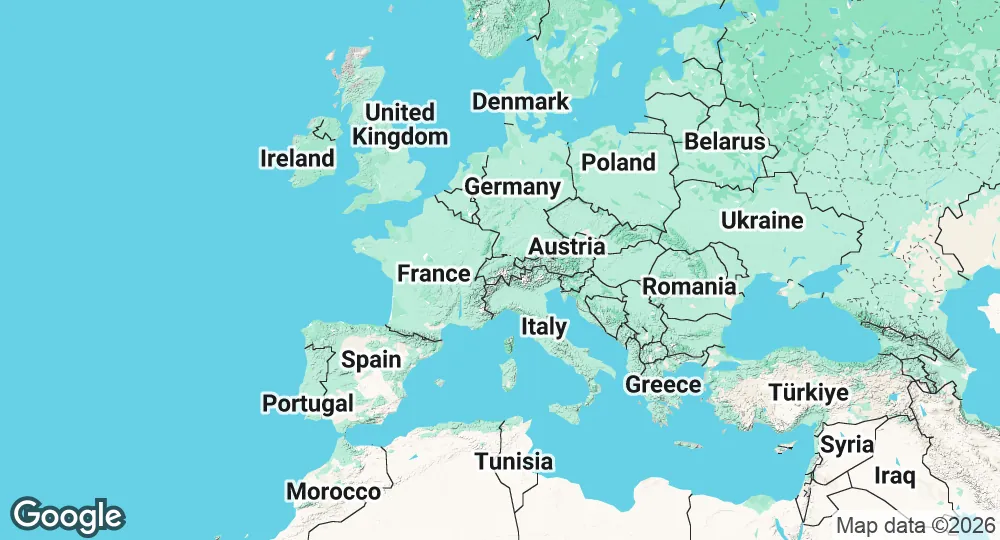
Switzerland maintains a policy of permanent armed neutrality, which remains the cornerstone of its national security. While not a member of NATO or the European Union, the country participates in the Partnership for Peace (PfP) program and has increased its cooperation with European defense frameworks in response to shifting regional security dynamics. In 2025, Switzerland formalized its integration into the European Sky Shield Initiative (ESSI), aimed at harmonizing ground-based air defense procurement across the continent.
Security priorities focus on maintaining territorial sovereignty, protecting critical infrastructure, and addressing hybrid threats, including cyberattacks and disinformation. The Swiss defense doctrine emphasizes "cooperation without membership," allowing the armed forces to improve interoperability with neighboring militaries for defensive and humanitarian purposes while retaining the legal right to withdraw from collective initiatives if a member state enters an international armed conflict.
Military Forces
The Swiss Armed Forces are organized as a militia system based on mandatory conscription for male citizens. The structure is composed of two primary service branches—the Land Forces and the Air Force—supported by specialized commands for cyber and logistics. As of 2026, total personnel numbers approximately 150,000, including active-duty troops, reserves, and roughly 9,000 professional military and civilian staff.
Land Forces
The Land Forces are structured into mechanized brigades and territorial divisions. The primary maneuver assets include Pz 87 Leopard 2 main battle tanks and Spz 2000 (CV9030) infantry fighting vehicles. The army is currently modernizing its wheeled fleet, integrating Piranha IV platforms in multiple configurations, including the Mörser 16 self-propelled mortar and new armored engineering variants scheduled for delivery starting in 2026.
Air Force
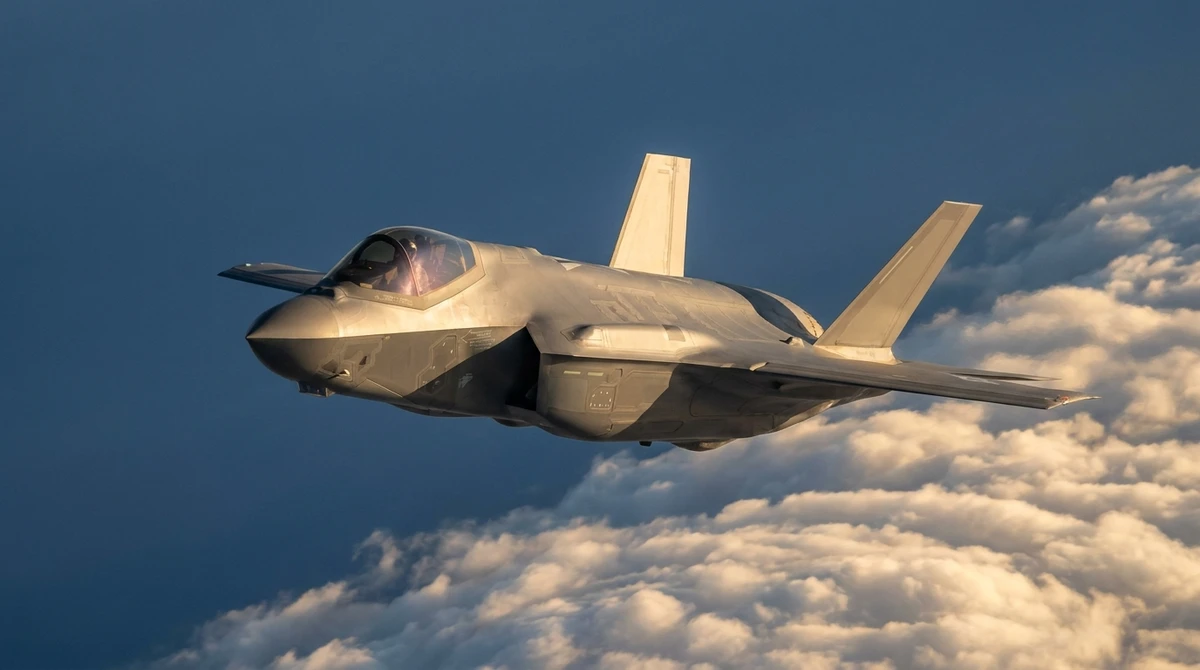
The Air Force is responsible for air sovereignty and air defense. Current flight operations rely on F/A-18C/D Hornet and F-5E/F Tiger II fighters. Under the "Air2030" modernization program, the branch is transitioning to the F-35A Lightning II, with an initial batch of aircraft under contract as of 2025. Ground-based air defense is being upgraded through the procurement of the Patriot long-range system and the IRIS-T SLM medium-range system.
Specialized Commands
The Cyber Command provides digital defense, electronic warfare, and signals intelligence capabilities. On January 1, 2026, the Swiss Armed Forces officially established a Space Competence Centre within the Joint Operations Command. This unit is tasked with managing space-based reconnaissance, secure communications, and protecting satellite-dependent military infrastructure.
Defense Industry
Switzerland maintains a domestic defense industrial base that provides significant maintenance and production capabilities. The state-owned RUAG AG and the privately held GDELS-Mowag are the primary domestic contractors. GDELS-Mowag produces the Piranha and Eagle families of armored vehicles, which are utilized both by the Swiss Army and international customers. Rheinmetall Air Defence (formerly Oerlikon) produces anti-aircraft systems, including the Skyguard and Skyshield platforms.
In 2025, the Federal Council adopted a new procurement strategy mandating that 60% of defense acquisition value be sourced domestically to ensure industrial self-sufficiency and secure supply chains. An additional 30% is targeted for procurement from European partners. Despite this domestic focus, Switzerland relies on the United States and European allies for high-end technology, such as fifth-generation fighter aircraft and advanced guided missile systems.
Strategic Trends
The Swiss defense budget is on a trajectory to reach 1% of GDP by 2030, a goal accelerated by the federal government in 2025. This funding shift supports the "Air2030" program and the comprehensive digitization of the ground forces. The military is currently transitioning from a focus on small-scale security assistance to high-intensity territorial defense capabilities.
Modernization priorities for 2026 include the replacement of legacy M113-based systems with modern wheeled armored vehicles and the expansion of the Cyber Command's specialist personnel. A notable trend is the increased involvement in multinational training and logistics coordination through the ESSI framework, reflecting a move toward closer integration with European air defense standards while upholding the legal requirements of Swiss neutrality. Constraints remain regarding the export of Swiss-made military hardware to conflict zones, which continues to be governed by strict national neutrality laws.