Pilatus PC-24
Swiss light business jet, operational since 2015, known for versatility across multiple deployments including charter services. Key figures: top speed 787 km/h, range 3,700 km, service ceiling 13,716 m, max takeoff weight 8,005 kg, unit price $12M, built 100. In service with 2 air forces as of 2026 — France (2), Qatar (2).
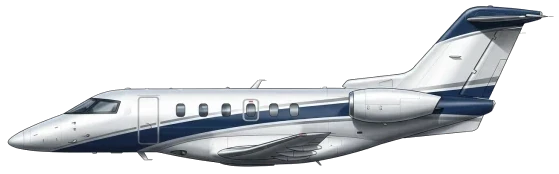
| Length | 16.8 m (55.1 ft) |
| Wingspan | 17 m (55.8 ft) |
| Height | 5.3 m (17.4 ft) |
| Wing area | 30.9 m² (332.7 sqft) |
| Empty weight | 4,967 kg (10,950 lbs) |
| Max. takeoff weight | 8,005 kg (17,648 lbs) |
| Powerplant | 2 × turbofans Williams FJ44-4A 1,529 kgf each |
| Maximum speed | 787 km/h (489 mph) |
| Operational range | 3,700 km (2,299 mi) |
| Service ceiling | 13,716 m (45,000 ft) |
| Climb rate | 20.7 m/s (67.9 ft/s) |
| Takeoff distance | 820 m (2,690 ft) |


Recent Events — Pilatus PC-24
2 events →
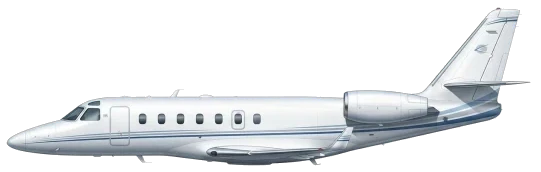
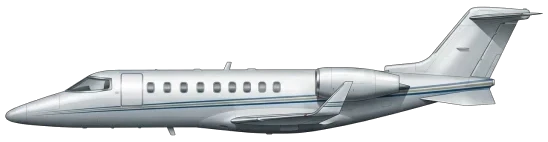
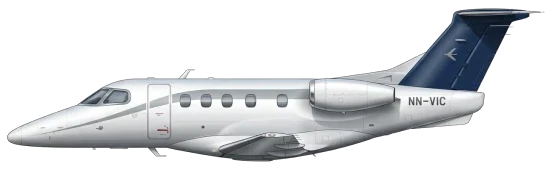
Description
Following the PC-12 single-engine turboprop program, Pilatus Aircraft initiated the PC-24 program in 2007 to develop a twin-engine jet with greater range and speed while retaining rough-field capability. The development was funded using existing company resources and the program was publicly mentioned in Pilatus' May 2011 annual report. The PC-24 was formally introduced on 21 May 2013, at the European Business Aviation Convention & Exhibition (EBACE) in Geneva. The first of three prototypes, P01, was rolled out on 1 August 2014. Prototype P01 was used for exploring the flight envelope, P02 for avionics and autopilot integration testing, and P03 served as a representative production model incorporating improvements. The first flight occurred on 11 May 2015, from Buochs Airport, Switzerland. The PC-24 received EASA and FAA type certification on 7 December 2017. The first customer delivery to PlaneSense was on 7 February 2018.
Design
The Pilatus PC-24 is a low-wing cantilever monoplane powered by two Williams FJ44-4A turbofans mounted on the rear fuselage sides. It features a T-tail and retractable tricycle landing gear. The wing incorporates a double-slotted flap system, contributing to a stall speed of 81 knots at maximum landing weight. The trailing link landing gear has a long stroke, and the dual-wheel main wheels operate at 70 psi pressure. The wing flaps feature replaceable, abradable surfaces. The high-mounted engines are positioned to minimize debris ingestion. Pilatus collaborated with Honeywell on the Advanced Cockpit Environment, utilizing the Honeywell Primus Epic 2 avionics system, designed to support single-pilot certification. The cabin accommodates up to ten passengers and one or two pilots and has three exits: a front left passenger door, overwing emergency exits, and a rear left cargo door.
The PC-24's primary function is passenger and cargo transport. Its design facilitates operation from short and rough airstrips. The aircraft has a maximum payload capacity of 1,406 kg (3,100 lb) and a large cargo door.
Operational History
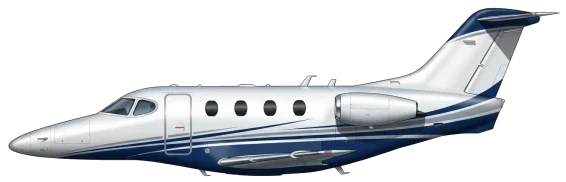
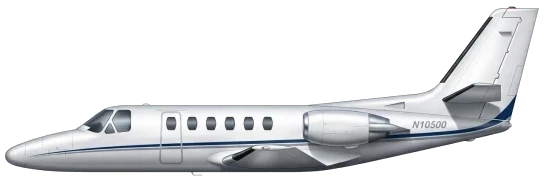
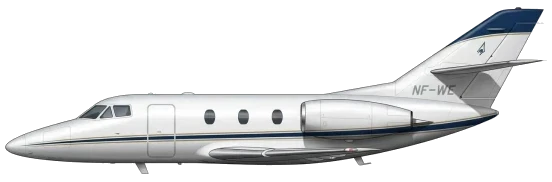
The PC-24 has seen diverse operational use. The Royal Flying Doctor Service of Australia operates PC-24 aircraft as air ambulances, equipped with medical interiors. The Qatar Emiri Air Force operates two PC-24s for governmental transport. Sweden's Svenskt Ambulansflyg operates six PC-24s for medical evacuation. The French Navy received the first of three leased PC-24s in May 2026, replacing the Falcon 10 Mer for instrument-flight training and liaison, and Spain has selected the type to replace the Cessna Citations of its Air and Space Force and naval air arm.
Variants
Main Variants:
-
PC-24: The baseline production model, capable of operating from short and unpaved runways.
-
PC-24 medevac: Configured as an air ambulance, capable of accommodating three beds and medical equipment.
-
PC-24 (modified): Features updated designs with lighter seats, touchscreen-controlled avionics, and optional galleys.
-
PC-24 steep approach certified: Approved for steep approaches, including operations at a 5.5° approach angle.
-
PC-24 rough field operation certified: Certified for operations on grass, wet earth, and snow-covered surfaces.
Frequently Asked Questions
What type of aircraft is the Pilatus PC-24?
What is the maximum speed of the Pilatus PC-24?
What is the range of the Pilatus PC-24?
When did the Pilatus PC-24 first fly?
How many Pilatus PC-24 have been built?
Which countries operate the Pilatus PC-24?
How much does a Pilatus PC-24 cost?
What is the service ceiling of the Pilatus PC-24?
- OCT 62026 Updated French Navy service entry and Spanish selection added
- AUG 52026 Updated Powerplant updated in a site-wide editorial pass
- JUL 272026 Updated Name updated
- APR 72026 Updated Sources and cross-references refreshed
- JAN 122026 Updated Range updated in a site-wide editorial pass