Strategic Position
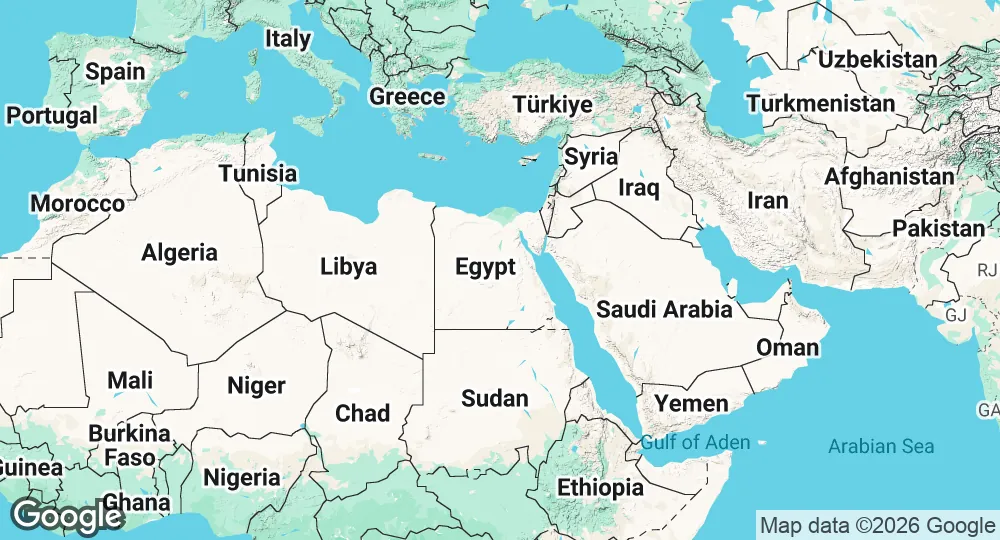
Egypt occupies a central position linking Africa and Asia, with its defense posture oriented toward maintaining control over the Suez Canal and protecting maritime interests in the Mediterranean and Red Seas. The primary security concerns include the threat of extremist groups in the Sinai Peninsula, instability along the western border with Libya, and the long-term hydro-security of the Nile River, particularly in relation to the Grand Ethiopian Renaissance Dam (GERD).
The Egyptian Armed Forces (EAF) operate under a doctrine of territorial integrity and regional deterrence. Egypt is a Major Non-NATO Ally (MNNA) of the United States and participates in the Bright Star multilateral exercise. Regionally, Egypt maintains a security partnership with Gulf Cooperation Council (GCC) states, specifically Saudi Arabia and the United Arab Emirates. Relations with Israel are governed by the 1979 Peace Treaty, though both nations coordinate on security matters regarding the Sinai-Gaza border.
Egypt maintains a "two-fleet" naval strategy, with the Northern Fleet covering the Mediterranean and the Southern Fleet based at Berenice on the Red Sea. This structure is intended to secure offshore energy assets, such as the Zohr gas field, and ensure freedom of navigation through the Bab el-Mandeb strait.
Military Forces
The EAF is under the command of the President, who serves as the Supreme Commander, and the Minister of Defense, who typically serves as the Commander-in-Chief. The military consists of the Army, Navy, Air Force, and the Air Defense Forces, which is a separate service branch.
Personnel
The EAF maintains an active-duty force of approximately 450,000 personnel, supported by a reserve force estimated at 800,000. Paramilitary organizations, including the Central Security Forces (Ministry of Interior) and the Border Guard Forces, provide additional internal and frontier security.
Army
The Egyptian Army is the largest branch, structured into field armies and military zones. It operates a diverse inventory of main battle tanks, including M1A1 Abrams (assembled domestically), T-90S, and older M60 Patton variants. Artillery capabilities include the K9 Thunder self-propelled howitzer and various multiple launch rocket systems (MLRS). Infantry units utilize several types of armored personnel carriers and infantry fighting vehicles, such as the YPR-765 and the locally produced ST-100.
Navy
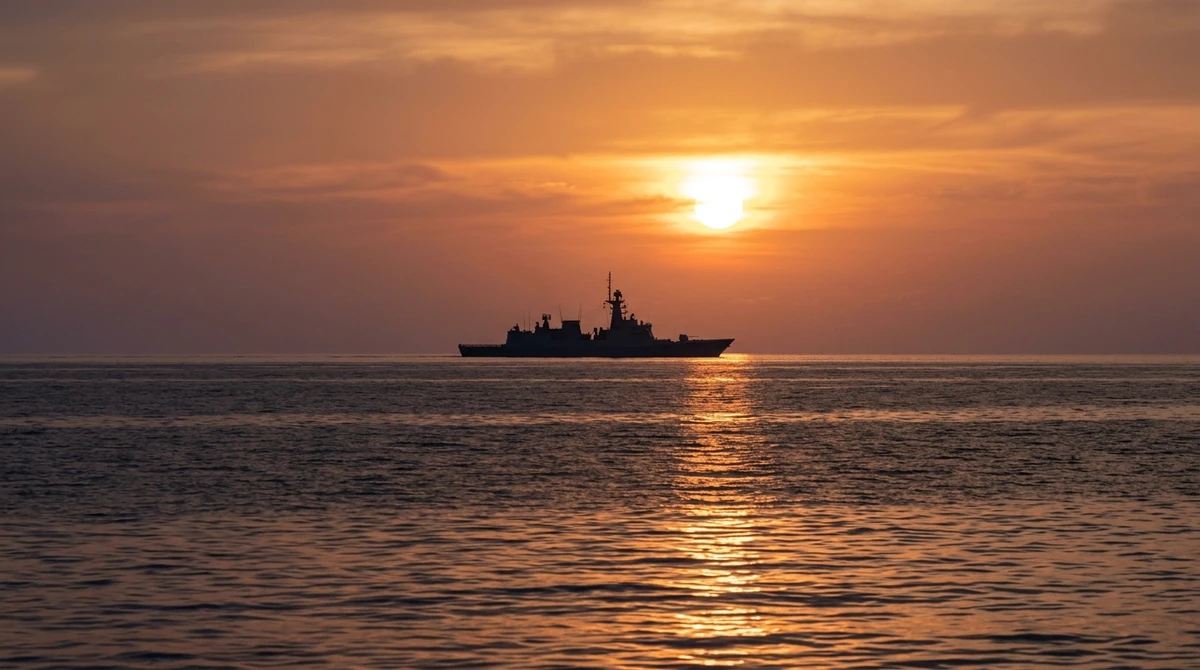
The Navy is one of the largest in the Middle East and North Africa. It operates Mistral-class amphibious assault ships, which serve as mobile platforms for helicopter operations. The surface fleet includes FREMM and MEKO A-200 frigates, Gowind-class corvettes, and various fast attack craft. The submarine force is composed of Type 209/1400mod vessels.
Air Force
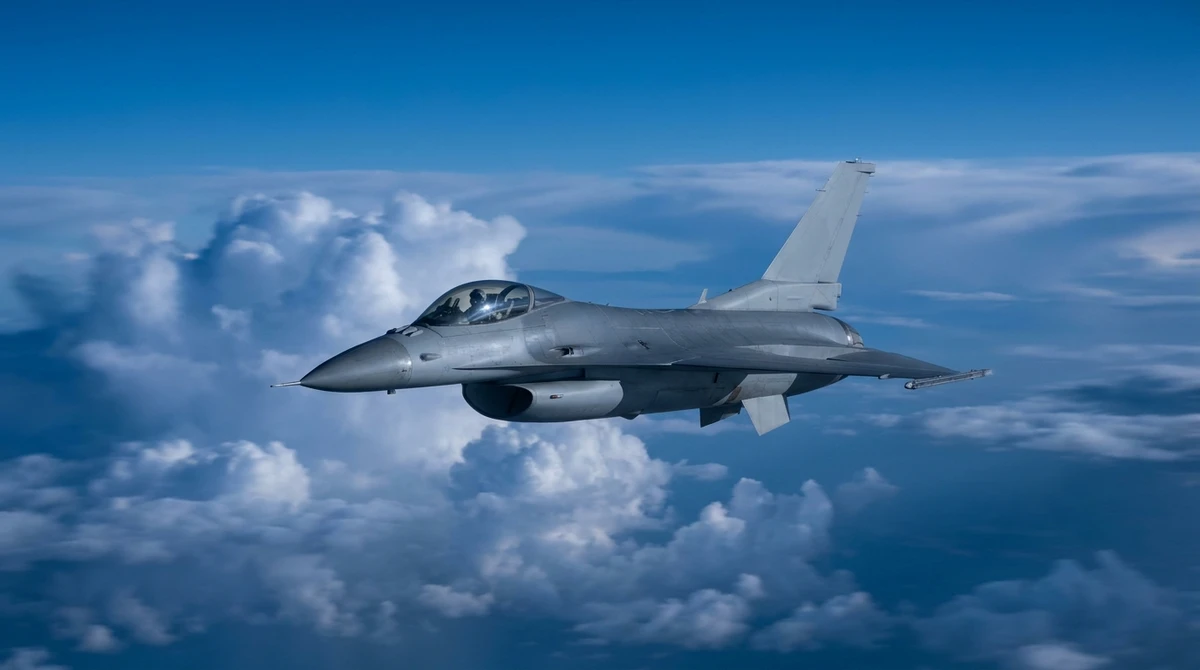
The Egyptian Air Force (EAF) operates a multi-platform fleet of fighter aircraft. The inventory includes F-16 Fighting Falcons, Rafale multirole fighters, and MiG-29M/M2 aircraft. Attack helicopter capabilities are centered on the AH-64 Apache and the Ka-52 Nile Crocodile. Transport is provided by C-130 Hercules and CASA C-295 aircraft.
Air Defense Forces
The Air Defense Forces operate an integrated network of long, medium, and short-range systems. This includes S-300VM, Buk-M2, and Tor-M2 surface-to-air missiles, complemented by localized variants of Western and Soviet-era systems.
Defense Industry
The Egyptian defense industry is led by the Arab Organization for Industrialization (AOI) and the Ministry of Military Production (MOMP). These entities manage dozens of factories producing small arms, ammunition, and electronics.
Domestic Production and Co-production
Egypt has established a history of co-production with international partners. The Tank Plant (Factory 200) has assembled M1A1 Abrams tanks for decades. In 2025, Egypt continued the local production of the K9 Thunder self-propelled howitzer under license from South Korea. The Alexandria Shipyard and the Egyptian Ship Repair and Building Company have successfully constructed Gowind-class corvettes and MEKO frigates in cooperation with European shipbuilders.
Armored Vehicles
The domestic ST-100 and ST-500 Mine-Resistant Ambush Protected (MRAP) vehicles are manufactured in Egypt and have been offered for export to regional markets.
Strategic Trends
The EAF is currently undergoing a multi-decade modernization program aimed at diversifying its hardware suppliers to reduce reliance on any single foreign nation. This shift has seen increased procurement from France, Germany, Italy, Russia, and South Korea.
Procurement Priorities
Current priorities focus on enhancing maritime domain awareness and air superiority. The acquisition of additional Rafale fighters and the expansion of the frigate fleet reflect an emphasis on high-end conventional capabilities. The military is also integrating unmanned aerial vehicles (UAVs) for surveillance and strike missions, utilizing both domestic designs and imports from China and Turkey.
Infrastructure
The establishment of the "Octagon" in the New Administrative Capital serves as the new unified headquarters for the Ministry of Defense. This facility is designed to centralize command, control, and communications for all branches of the armed forces.
Challenges
Economic constraints and currency fluctuations pose risks to large-scale procurement programs. Additionally, the military continues to conduct counter-insurgency operations in North Sinai, which requires a persistent allocation of resources toward asymmetric warfare and internal security.