Honduras Military Forces
Honduras ranks #126 of 169 militaries worldwide in 2026, with 14,950 active troops. The Air Force flies 53 aircraft, including 17 combat aircraft. Honduras has no nuclear weapons.
Armed Forces in 2026
| Domain | Strength | Composition |
|---|---|---|
| Air Force | 53 aircraft | 17 combat 12 helicopters +2 on order |
| Personnel | 14,950 active | 60,000 reserve 8,000 paramilitary |
ATLAS Index (Aggregate Total of Land, Air and Sea strength)
Full ranking →| Pillar | Weight | Score | Basis |
|---|---|---|---|
| Manpower | 10% | 34.2 | Active, reserve & paramilitary personnel |
| Ground forces | 20% | 0.0 | ARMS inventory power: armour & artillery by type and era, attack helicopters, armament |
| Naval power | 20% | 0.0 | SEAS inventory power: hulls by type, size and era, air wing, sustainment, armament |
| Air power | 25% | 18.5 | AIRS inventory power: aircraft by type and generation, enablers, armament |
| Nuclear deterrent | 10% | 0.0 | No declared nuclear capability |
| Defense budget | 15% | 15.7 | Annual spending, purchasing-power adjusted |
| Availability | modifier | ground ×0.90 · naval ×1.00 · air ×0.88 | Budget per point of each force, from the branch indexes |
Country File
| Population | 11M (2025) |
| GDP | $39.6 billion (2025) |
| GDP per capita | $3,598 |
| Military budget | $556M (2024) |
| Share of GDP | 1.5% (2024) |
| Military spending per capita | $51 (2024) |
| Inflation rate | 4.6% (2025) |
| Capital | Tegucigalpa |
| Region | America |
| Land area | 111,890 km² |
| Coastline | 832 km |
| Land borders | 1,520 km |
| Bordering countries | 3 |
| Currency | HNL |
Strategic Overview in 2026
Strategic Position
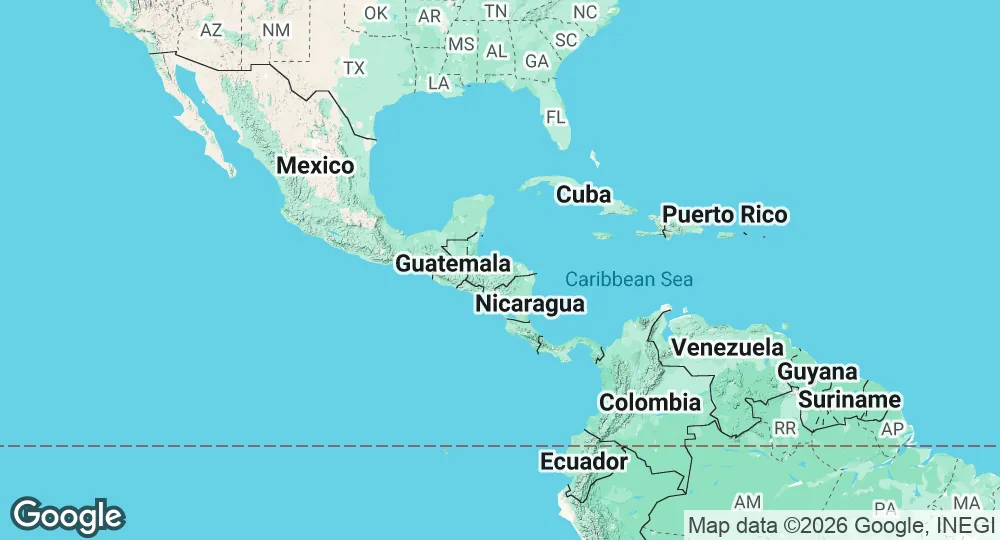
Honduras is located in the center of the Central American isthmus, sharing land borders with Guatemala, El Salvador, and Nicaragua. Its geography includes extensive coastlines on the Caribbean Sea and a shorter coastline on the Pacific Ocean via the Gulf of Fonseca. This maritime access makes the country a transit point for transnational narcotics trafficking, which remains the primary driver of national security policy.
The defense doctrine of Honduras emphasizes territorial integrity and internal security. The military is constitutionally mandated to assist in public safety, leading to a focus on counter-narcotics and anti-gang operations. Honduras is a member of the Central American Armed Forces Conference (CFAC), a regional body facilitating cooperation on migration, border security, and disaster response.
The bilateral relationship with the United States is the cornerstone of Honduran defense policy. The presence of Joint Task Force-Bravo at Soto Cano Air Base allows for coordinated regional operations, including maritime interdiction and humanitarian assistance. Relations with neighboring states are generally stable, though maritime boundaries in the Gulf of Fonseca are subject to a trilateral management framework with El Salvador and Nicaragua to prevent jurisdictional friction.
Military Forces
The Armed Forces of Honduras (Fuerzas Armadas de Honduras - FFAA) are organized into three traditional branches—Army, Air Force, and Navy—under the authority of the Secretariat of National Defense and the Joint Chiefs of Staff.
The Army is the largest branch, with approximately 16,000 active personnel. It is structured into infantry brigades, an armored cavalry regiment, and specialized artillery and engineering battalions. Armored capabilities consist of light reconnaissance platforms, including FV101 Scorpion vehicles, FV601 Saladin armored cars, and V-150 Commando 4x4 vehicles. Infantry units are equipped with a mix of M16 and Galil ACE assault rifles.
The Air Force (Fuerza Aérea Hondureña - FAH) maintains a diverse inventory focused on air defense and transport. It operates F-5 Tiger II supersonic interceptors and A-37 Dragonfly light attack aircraft. The transport wing includes C-130 Hercules and Beechcraft King Air aircraft. The rotary-wing fleet is composed of UH-1H Iroquois and Bell 412 helicopters. The FAH is responsible for monitoring the country's air corridors against illegal flights associated with smuggling.
The Navy (Fuerza Naval de Honduras - FNH) operates as a coastal defense and interdiction force. Its fleet includes Israel-built OPV 62 offshore patrol vessels, Damen Stan Patrol vessels, and numerous interceptor craft. The Navy also maintains a force of Naval Infantry (Marines) tasked with securing littoral zones and conducting riverine operations.
The Military Police of Public Order (PMOP) is a paramilitary force of approximately 12,000 personnel. While under the command of the Armed Forces, the PMOP is deployed primarily in urban areas to combat high-intensity gang activity and support civilian law enforcement.
Strategic Trends
Modernization efforts in 2025 and 2026 are prioritized toward the restoration of existing platforms rather than the acquisition of new high-end systems. A primary focus is the life-extension program for the F-5 interceptor fleet to maintain air sovereignty. Additionally, the government has allocated funds to increase the availability of transport helicopters to support "Green Battalions"—specialized units tasked with preventing illegal logging and protecting national forest reserves.
Defense spending is approximately 1.5% to 1.8% of GDP. Procurement remains heavily reliant on Foreign Military Financing (FMF) and equipment donations from the United States and Israel. The 2026 defense budget includes provisions for upgrading maritime surveillance radar systems to better monitor the Caribbean coast.
The force structure is undergoing a shift toward a more multi-role configuration. The military is increasingly integrated into environmental protection and border control tasks, moving away from conventional warfare readiness. Constraints facing the military include aging equipment inventories and the need for improved transparency in procurement processes. Strategic priorities for 2026 include the expansion of the "Safe Communities" program, where military units provide static security for critical infrastructure and high-risk transit corridors.
Military Expenditure: CIA World Factbook. Last updated on 25 September 2026. Suggest a change
Frequently Asked Questions
How large is Honduras's military?
What is Honduras's defense budget?
How does Honduras rank militarily in the world?
Does Honduras have nuclear weapons?
How many aircraft does Honduras's air force have?
What percentage of GDP does Honduras spend on defense?
What is Honduras's military personnel per capita?
Does Honduras have paramilitary forces?
- SEP 252026 Updated Population, GDP and inflation added for 2025; GDP series revised
- AUG 42026 Updated Global Military Index updated in a site-wide editorial pass
- AUG 32026 Updated Global Military Index updated
- JUL 162026 Updated Global Military Index updated in a site-wide editorial pass
- JUN 162026 Updated Yearly statistics, military spending and 2 more fields updated
- JAN 172026 Updated Global Military Index updated; main battle tank count removed
- JAN 132026 Updated Description updated