Ethan Allen-class (SSBN-608)
American ballistic missile submarine, 7,057 tons displacement, introduced in 1961. Key figures: displacement 7,057 tons, length 125 m, top speed 16 knots, crew 140, built 5. No longer in service; operated by 1 navy over its career.
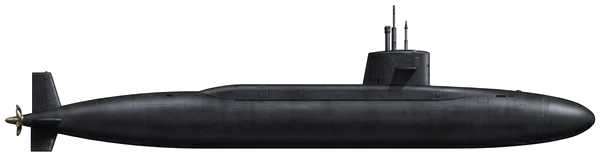
| Subtype | Nuclear-powered ballistic missile submarine |
| Displacement | 7057 tons |
| Displacement submerged | 8011 tons |
| Crew | 140 members |
| Width | 10.1 m (33.1 ft) |
| Length | 125.07 m (410.3 ft) |
| Max. depth | 400 m (1312.3 ft) |
| Propulsion | 1 S5W PWR, 2 geared steam turbines (15,000 shp (11,000 kW)), 1 shaft |
| Units | Ethan Allen, Sam Houston, Thomas A. Edison, John Marshall, Thomas Jefferson |
| Range | Unlimited, except by food supplies |
| Maximum speed | 16 knots |
| Max. speed submerged | 22 knots |
- 16 Polaris A2/A3 missiles
- 4 x 21-inch (533 mm) torpedo tubes
- 12 torpedoes
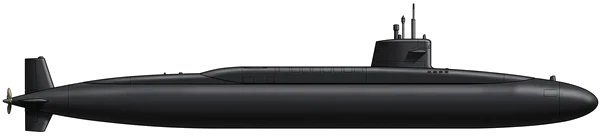
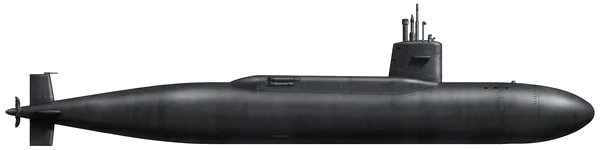


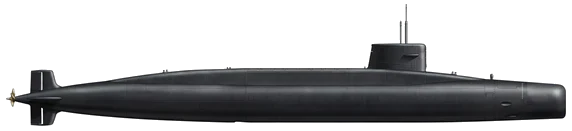
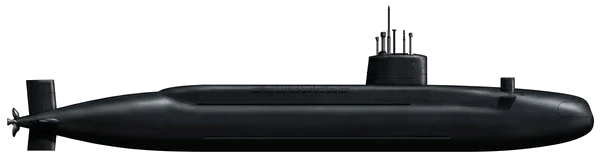
Description
The Ethan Allen class was a United States Navy class of five fleet ballistic missile submarines. It was an evolutionary development from the George Washington class and the first class designed from the keel up for the ballistic missile role under project SCB 180. The vessels were built between 1959 and 1963.
The design was more streamlined and longer than the preceding George Washington class. While functionally similar to its predecessors, this class was a purpose-built design rather than a modification of an attack submarine. The vessels were designed for the Polaris missile system. Although the class received missile upgrades in the 1970s, the hull dimensions could not be modified to accommodate the Poseidon missile.
The class served as part of the "41 for Freedom" fleet, which comprised the primary naval nuclear deterrent through the late 1980s. The submarines were commissioned between 1961 and 1963 and remained in active service until the early 1990s.
To comply with the SALT II treaty as Ohio-class submarines entered service, the Ethan Allen class was re-designated as attack submarines in the early 1980s. During this conversion, missile fire control systems were removed and missile tubes were filled with concrete. The USS Sam Houston and USS John Marshall underwent further modifications to support special operations. These changes included the installation of dry deck shelters for SEAL Delivery Vehicles and additional accommodations for special operations personnel. The class was decommissioned between 1983 and 1992. All five vessels were disposed of through the nuclear Ship-Submarine Recycling Program between 1992 and 1999.
Frequently Asked Questions
What type of ship is the Ethan Allen-class?
What is the displacement of the Ethan Allen-class?
What is the maximum speed of the Ethan Allen-class?
What is the range of the Ethan Allen-class?
How many crew members serve on the Ethan Allen-class?
How many Ethan Allen-class ships have been built?
Which countries operate the Ethan Allen-class?
- JUL 242026 Updated Type updated
- APR 72026 Updated Description updated in a site-wide editorial pass
- JAN 242026 Updated Range added
- JAN 182026 Updated Number built and submerged displacement added; type, manufacturer and 6 more fields updated