Lada-class (Project 677)
Russian attack submarine, 1,793 tons displacement, uses an electric propulsion motor on permanent magnets. Key figures: displacement 1,793 tons, length 72 m, top speed 10 knots, crew 35, built 3. In service with 1 navy — Russia (2).
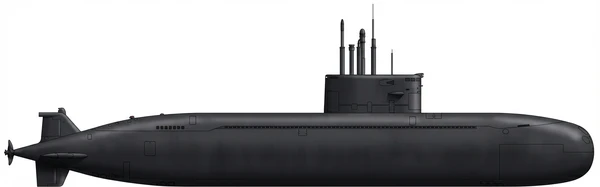
| Subtype | Attack submarine |
| Displacement | 1793 tons |
| Displacement submerged | 2743 tons |
| Crew | 35 members |
| Width | 7.1 m (23.3 ft) |
| Length | 72.0 m (236.2 ft) |
| Max. depth | 300 m (984.3 ft) |
| Propulsion | Electric propulsion motor on permanent magnets, Storage battery with increased service life, 1 shaft, 2,700 hp (2,013 kW) |
| Range | 7,500 nm |
| Endurance | 45 days |
| Maximum speed | 10 knots |
| Max. speed submerged | 21 knots |
- 6 x 533 mm (21 in) torpedo tubes
- 16 torpedoes or SSMs or 44 mines
- 10 Kalibr / Club land-attack cruise missiles, anti-ship missiles and anti-submarine missiles
- RPK-6/SS-N-16 Vodopad/Stallion
Description
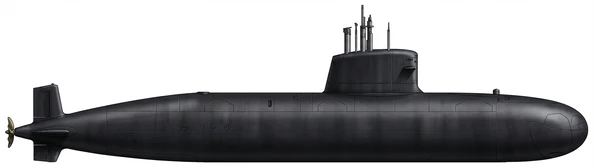
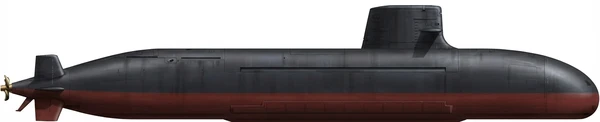
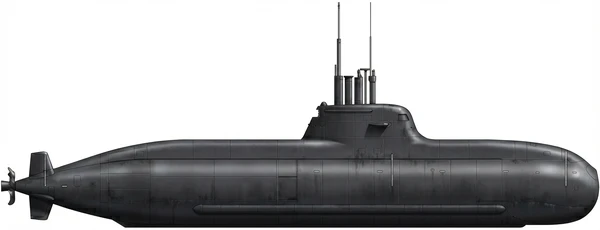
The Lada class, designated Project 677, is a series of diesel-electric attack submarines designed by the Rubin Design Bureau. Developed as a fourth-generation successor to the Project 636 Kilo class, the design aims for reduced acoustic signatures and updated combat systems. While early development included research into air-independent propulsion (AIP), the shipyard indicated in 2019 that the class would not be equipped with such systems. However, development of an electrochemical generator to produce hydrogen from diesel fuel and oxygen resumed in 2019, with completion scheduled for the mid-2020s. An export variant is designated as the Project 1650 Amur class.
The Project 677 utilizes a mono-hull design, a configuration not used in Russian attack submarines since the 1940s. The class is equipped with the Litiy automated combat control system and an electric propulsion motor using permanent magnets. The submarines are designed for anti-submarine and anti-surface warfare, reconnaissance, and the protection of naval bases and sea lanes. Armament capabilities include torpedoes, mines, and various cruise missiles, including the Kalibr and Club series.
The lead vessel, Sankt Peterburg, launched in 2004 and began sea trials in 2005. In 2011, the Russian Navy initially declined to accept the class into service after the lead boat failed to meet requirements during testing. Sankt Peterburg was subsequently retained as a test platform for experimental systems. Construction of the class resumed in 2012 following extensive design changes. The Sankt Peterburg was decommissioned in 2024 due to high modernization costs.
The first serial submarine, Kronshtadt, was launched in 2018 and commissioned into the Northern Fleet in 2024. A third unit, Velikiye Luki, was commissioned in 2025 for the Baltic Fleet. Additional units, including Vologda and Yaroslavl, remain under construction. Procurement plans specify the production of further hulls for the Russian Navy, with deployments planned for the Northern and Baltic Fleets.
Frequently Asked Questions
What type of ship is the Lada-class?
What is the displacement of the Lada-class?
What is the maximum speed of the Lada-class?
What is the range of the Lada-class?
How many crew members serve on the Lada-class?
How many Lada-class ships have been built?
Which countries operate the Lada-class?
- APR 72026 Updated Description updated in a site-wide editorial pass
- JAN 182026 Updated Submerged speed added; manufacturer, number built and 9 more fields updated