Amur-class
Russian attack submarine, introduced in 2030, uses a totally new main electric engine. Key figures: displacement 950 tons, length 59 m, top speed 10 knots, crew 18, unit cost $450M. In service with 1 navy — Russia.
| Subtype | Attack submarine |
| Displacement | 950 tons |
| Displacement submerged | 1300 tons |
| Crew | 18 members |
| Width | 5.65 m (18.5 ft) |
| Length | 58.8 m (192.9 ft) |
| Max. depth | 300 m (984.3 ft) |
| Propulsion | Totally new main electric engine using permanent magnets |
| Range | 4,000 nm |
| Endurance | 45 days |
| Maximum speed | 10 knots |
| Max. speed submerged | 21 knots |
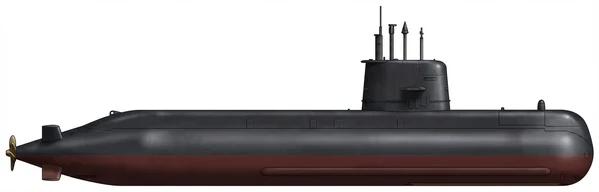
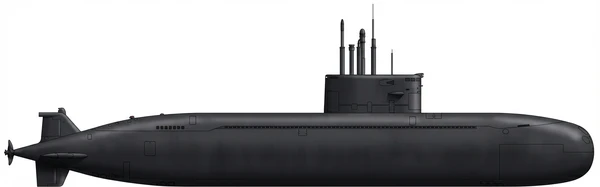
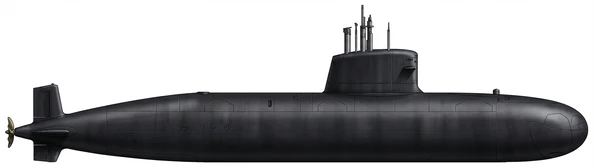
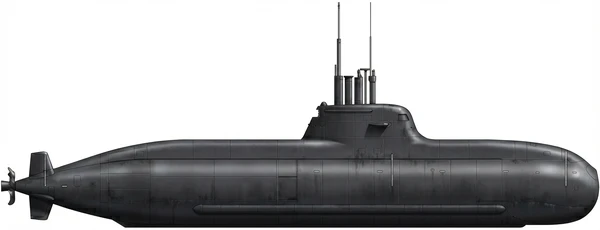
Description
The Amur class is a Russian submarine design developed by the Rubin Central Design Bureau and Admiralty Shipyard in Saint Petersburg. It is the export variant of the Lada class and represents the fourth generation of the Kilo-class submarine family. Designed under the direction of Yuri Kormilitsyn, the class is intended to succeed the Kilo and Lada classes in international markets.
The design utilizes a single-hull configuration to minimize displacement, which is intended to reduce noise signatures and improve propulsion quality. Acoustic stealth is a primary focus of the class; the design incorporates electronic warfare systems and features sonar signatures lower than those of preceding Kilo-class vessels. The submarines are designed to operate in both deep and shallow waters and in all weather conditions, with the exception of areas covered by solid ice.
Propulsion options include the integration of air-independent propulsion (AIP) fuel cells, which can be installed as a hull extension plug during construction or as a refit. This system is designed to extend submerged endurance and range. The class also involves the development of a permanent magnet electric engine intended to provide higher energy conversion efficiency at low speeds. Specific models within the class include the Amur-950, which is equipped with a vertical launch system (VLS) for salvo-firing at multiple targets, and the larger Amur-1650, configured for longer mission durations. A further concept, the Amur e600, envisages a sail-less vessel using all-electric propulsion and lithium-based battery technology.
No vessels of the Amur class have been completed. The project has been marketed to several foreign navies, though it has not yet entered active service. Russia offered the Amur-1650 to India for its 2021 submarine procurement competition, including a 2023 proposal for joint development. India previously evaluated the design but selected the Scorpène class in 2005; more recent reports suggest India may opt for additional Kalvari-class vessels due to the Amur's projected availability date of 2030. Other marketing efforts have included a 2013 offer to Morocco and 2021 negotiations with Argentina regarding licensed production by the Tandanor shipyard.
Frequently Asked Questions
What type of ship is the Amur-class?
What is the displacement of the Amur-class?
What is the maximum speed of the Amur-class?
What is the range of the Amur-class?
How many crew members serve on the Amur-class?
Which countries operate the Amur-class?
How much does a Amur-class cost?
- AUG 62026 Updated Description updated
- APR 72026 Updated Description updated in a site-wide editorial pass
- JAN 242026 Updated Max speed and submerged speed updated
- JAN 182026 Updated Number built, submerged displacement and submerged speed added; manufacturer, range and 5 more fields updated