GlobalMilitary.net Open-source military intelligence Updated daily
Corvette ·Vympel Shipyard

Project 1241.1 Molniya-class (Tarantul III)

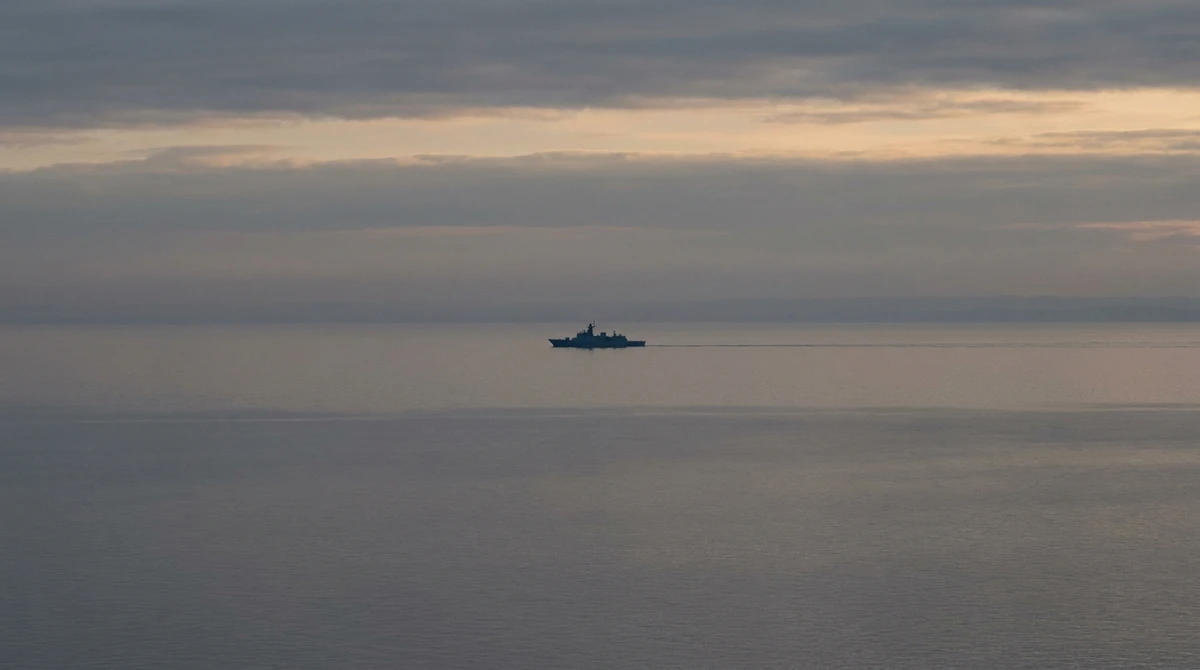
Soviet missile corvette, introduced in 1977, reaches 42 knots and has a crew of 50. Key figures: displacement 549 tons, length 56 m, top speed 42 knots, crew 50, unit cost $30M, built 80. In service with 6 navies — Russia (16), Vietnam (12), Romania (3) and 3 others.

Displacement
549tons
Max speed
42knots
Ships built
80
Approx. unit cost
$30million
Technical Specifications
SubtypeMissile corvette
Displacement549 tons
Crew50 members
Width10.5 m (34.4 ft)
Length56.0 m (183.7 ft)
Propulsion

2 shaft COGAG turbines at 11,000 hp each, plus 2 cruising engines at 4,000 hp each

Shaft power30,000 hp
Performance
Range 2,400 nm at 12 knots
Endurance10 days
Maximum speed42 knots
Armament
Armament
Operators
🇧🇬 Bulgaria· 🇪🇬 Egypt· 🇩🇪 Ex-East Germany· 🇩🇪 Germany· 🇮🇳 India· 🇱🇾 Libya· 🇳🇮 Nicaragua· 🇵🇱 Poland· 🇷🇴 Romania· 🇷🇺 Russia· 🇹🇲 Turkmenistan· 🇺🇦 Ukraine· 🇺🇸 United States· 🇻🇳 Vietnam· 🇾🇪 Yemen
Ships In Class
no. 124101 Malniya211 Edermen214 Gayratly371 371372 372373 373374 374375 375376 376377 377378 378379 379380 380382 382383 383705 Stupinets706 Strelok801 Ahmed Fadel825 Dimitrovgrad855 Zarechnyy870 Chuvashiya874 Morshansk916 R-29921 R-20924 R-14937 R-18940 R-11946 R-24951 R-297953 Naberezhnye Chelny955 R-60971 R-298978 R-19991 R-261NPR 188 ZborulNPR 189 PescărușulNPR 190 Lăstunul
Russia-Ukraine War Updated daily
Losses logged
2
30 days to Sep 16
0
Latest loss
Jul 252026
Most losses
🇷🇺 Russia2 of 2
  1. Jul 252026 Damaged Stupinets · Caspian Sea
  2. Feb 12024 Sunk Ivanovets
Similar Ships
Project 1241.1 Molniya-class vs

Description

Project 1241 Molniya, designated by NATO as the Tarantul class, is a series of Soviet and Russian missile corvettes. Designed in the late 1970s, the class was developed as a successor to the Project 205M Tsunami missile cutters. Development focused on providing a more seaworthy platform with higher-positioned air search radars and improved gun armament. Construction was centered at the Petrovsky, Rybinsk, and Ulis shipyards.

The initial variant, Project 1241.1, utilized a hull derived from the Pauk-class corvette and a COGOG propulsion system consisting of gas turbines for both cruising and high-speed operations. Its sensor suite included the Plank Shave radar for surveillance and target acquisition. An export version, Project 1241.RE, was distinguished by the relocation of the fire control radar to the mast and the use of the Garpun-Bal radar system.

The Project 12411 variant introduced a CODAG propulsion arrangement, combining cruise diesels with gas turbines. This version featured a redesigned superstructure and a straight lattice mast. Later developments, designated Project 1241.8 and 1242.1, integrated modern anti-ship missile systems and phased array radars. The Project 12418 variant, which uses CODAD propulsion and stealth-shaped gun turrets, is represented by Stupinets, launched at Rybinsk in July 2024 and moved to the Caspian Sea for trials in September 2025. On 25 July 2026 Ukraine's security service reported a long-range drone strike on a Project 12418 missile boat in the Caspian, mounted alongside strikes on two cargo ships and an offshore oil platform; the boat was not named publicly, and its identification rests on Stupinets being the only unit of the type stationed there.

The class has been operated by numerous navies. The Indian Navy license-produced the design as the Veer-class, while Vietnam established a domestic production line for the Project 1241.8 variant with assistance from the Almaz Central Design Bureau. Following the dissolution of the Soviet Union, ships were distributed among successor states. In March 2014, Russian forces captured four Ukrainian vessels. During the conflict in 2024, the Russian Black Sea Fleet vessel Ivanovets was sunk by uncrewed naval drones.

Other operators have included the navies of Bulgaria, Poland, Romania, Yemen, Egypt, and Turkmenistan. The German Volksmarine operated five vessels; one was transferred to the United States Navy for evaluation and later served as a museum ship. Several decommissioned vessels are preserved as museums in Germany, India, and Russia.
Wikipedia (CC BY-SA) and other open sources. Last updated on 18 August 2026. Suggest a change

In the News

All news →

Frequently Asked Questions

What type of ship is the Project 1241.1 Molniya-class?
The Project 1241.1 Molniya-class is a corvette (Missile corvette) built by Ex-USSR.
What is the displacement of the Project 1241.1 Molniya-class?
The Project 1241.1 Molniya-class has a displacement of 549 tons.
What is the maximum speed of the Project 1241.1 Molniya-class?
The Project 1241.1 Molniya-class has a maximum speed of 42 knots (77 km/h).
What is the range of the Project 1241.1 Molniya-class?
The Project 1241.1 Molniya-class has a range of 2,400 nautical miles (4,444 km) at 12 knots.
How many crew members serve on the Project 1241.1 Molniya-class?
The Project 1241.1 Molniya-class has a crew complement of 50 personnel.
How many Project 1241.1 Molniya-class ships have been built?
Approximately 80 vessels of the Project 1241.1 Molniya-class have been built.
Which countries operate the Project 1241.1 Molniya-class?
The Project 1241.1 Molniya-class is operated by 15 countries, including Bulgaria, Egypt, and Ex-East Germany.
How much does a Project 1241.1 Molniya-class cost?
The Project 1241.1 Molniya-class has an estimated unit cost of approximately $30 million.
Latest Data Updates
  1. AUG 182026 Updated Corrected the Soviet project name misspelling and added the designations reports actually use
  2. AUG 82026 Updated Thrust updated
  3. AUG 62026 Updated Description updated
  4. APR 72026 Updated Description updated in a site-wide editorial pass
  5. JAN 182026 Updated Cost and endurance added; units, displacement and 6 more fields updated