Ula-class
Norwegian Ula-class submarine, introduced in 1989, uses a silent electric motor for propulsion. Key figures: displacement 1,040 tons, length 59 m, top speed 11 knots, crew 21, built 6. In service with 1 navy — Norway (6).
| Subtype | Submarine |
| Displacement | 1040 tons |
| Displacement submerged | 1150 tons |
| Crew | 21 members |
| Width | 5.4 m (17.7 ft) |
| Length | 59.0 m (193.6 ft) |
| Max. depth | 200 m (656.2 ft) |
| Propulsion | Diesel-electric, 2 MTU 16V 396 diesel engines (970kW each), 1 propeller, 1 Siemens Permasyn "silent" electric motor 2,200 kW (3,000 hp) |
| Range | 5,000 nm at 8 knots |
| Maximum speed | 11 knots |
| Max. speed submerged | 23 knots |
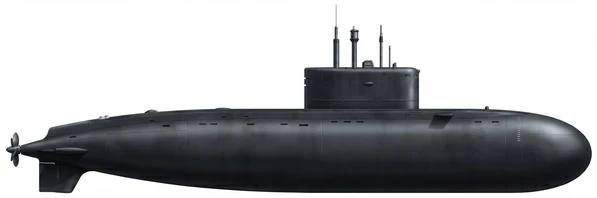
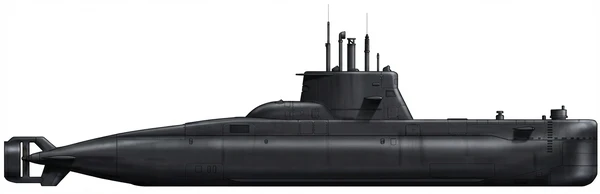
Description
The Ula class is a fleet of six diesel-electric submarines operated by the Royal Norwegian Navy. The origins of the Ula class date to a 1972 decision to modernize Norway's submarine flotilla, which then consisted of the aging Kobben-class submarines. On 30 September 1982, Norway signed a contract with Thyssen Nordseewerke in Emden, Germany, to build six boats. Under the designation U-Boot-Klasse 210, the construction was conducted as an international project: hull sections were built in Norway, while final assembly took place in Germany. The combat systems were manufactured by Kongsberg in Norway, the attack sonar was sourced from Germany, and the flank sonars were produced in France. The submarines were commissioned between 1989 and 1992, with all six based at Haakonsvern in Bergen.
The Ula class is designed for coastal operations, utilizing a small hull size to minimize detection by surface vessels. Propulsion is provided by two MTU 16V 396 diesel engines and a Siemens Permasyn electric motor. The sensor suite includes a Kelvin Hughes 1007 surface search radar, an Atlas Elektronik CSU83 attack sonar, and a Thomson Sintra flank array sonar. For armament, the submarines are equipped with eight bow 21-inch torpedo tubes capable of launching 14 Atlas Elektronik DM2A3 torpedoes. The design was the first in Norwegian service to feature individual bunks for the entire crew and a shower.
Over their operational life, the submarines have undergone several modernizations. Between 2006 and 2008, the Royal Norwegian Navy upgraded the boats with Link 11 communication equipment, electronic warfare support measures, and upgraded periscopes. A contract for new sonars was signed in May 2008, followed by a combat system upgrade by Kongsberg in 2012. In September 2024, Kongsberg Defence and Aerospace received a contract for further combat system updates, and in October 2024, Hensoldt completed a critical design review for the integration of new periscope and optronic mast systems.
During initial sea trials in 1989, HNoMS Ula was damaged by a practice torpedo. HNoMS Uredd suffered a docking accident in March 1991 and a control room fire in February 1992. Several boats in the Ula class deployed to the Mediterranean Sea in support of the NATO Operation Active Endeavour for intelligence-gathering missions. To address high operating temperatures during these operations, HNoMS Ula and two other vessels were modified with upgraded cooling systems.
Although originally planned for retirement around 2020, the Royal Norwegian Navy decided to extend the service lives of the Ula class through the 2020s. In July 2021, Norway and Germany signed a contract with ThyssenKrupp to build replacement Type 212CD submarines, with construction beginning in September 2023. The Ula-class submarines are scheduled to remain active until their replacement by the new vessels around 2030.
Frequently Asked Questions
What type of ship is the Ula-class?
What is the displacement of the Ula-class?
What is the maximum speed of the Ula-class?
What is the range of the Ula-class?
How many crew members serve on the Ula-class?
How many Ula-class ships have been built?
Which countries operate the Ula-class?
- JUL 292026 Updated Description updated
- JAN 182026 Created Page created: Ula