Type 212CD-class
Designed by Germany and Norway for planned 2029 commissioning, the Type 212CD-class air-independent propulsion attack submarine features a diamond-shaped hull to reduce active sonar detection. Key figures: displacement 2,500 tons, length 73 m, top speed 20 knots, crew 30. In service with 2 navies — Germany, Norway.
| Subtype | Attack submarine |
| Displacement | 2500 tons |
| Crew | 30 members |
| Width | 10.0 m (32.8 ft) |
| Length | 73.0 m (239.5 ft) |
| Propulsion | Lithium battery, new 4th gen AIP PEM fuel cells (HDW), and 2 MTU 4000 series diesel engines |
| Endurance | 41 days |
| Maximum speed | 20 knots |
- 6 x 533 mm torpedo tubes
- DM2A5 (CHWT) heavyweight torpedoes
- Seaspider anti-torpedo torpedo
- IDAS anti-air/anti-light vessel missiles
- NSM-SL anti-ship missiles (under consideration)
- 3SM Tyrfing anti-ship missiles (under consideration)
- IAI BlueWhale UUV (potentially)
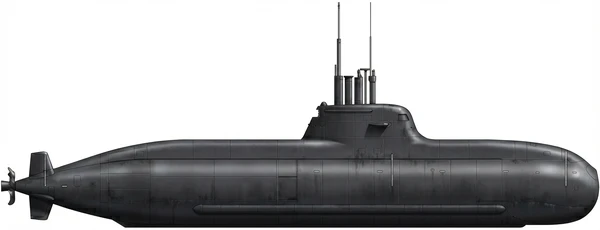
Description
The Type 212CD is a submarine class developed by ThyssenKrupp Marine Systems (TKMS) for the Norwegian and German navies. It is derived from the Type 212A design but is larger.
The Norwegian government established a partnership with Germany and TKMS in 2017 to replace its Ula-class submarines. In March 2021, Germany and Norway reached an agreement in principle, leading to a development and procurement contract signed on 8 July 2021. Under the joint program, a Building Program Office operates in Kiel, and a Lifetime Management Program Office will handle maintenance from Haakonsvern Naval Base in Norway. Construction on the first submarine began in September 2023. In July 2026, Canada selected the Type 212CD for its Canadian Patrol Submarine Project to replace its Victoria-class fleet, joining a trilateral partnership with Germany and Norway.
The hull design features a diamond shape to reduce active sonar signatures. The class utilizes a hydrogen fuel cell-based air-independent propulsion system, supported by two MTU 4000 series diesel engines. For command and control, the submarines will use the ORCCA combat system, developed by kta naval systems, which integrates sensor data from air and surface assets. Sensor systems include Hensoldt photonics masts and panoramic surveillance systems, alongside Kongsberg mine avoidance sonar and echo sounders. The weapons suite is designed to deploy heavyweight torpedoes, anti-torpedo torpedoes, anti-ship and anti-air missiles, and unmanned underwater vehicles.
There is no active service history as the vessels are under construction. Germany has ordered six submarines, with the first deliveries scheduled for 2032 and 2034. Norway has ordered six submarines, with deliveries planned between 2029 and 2035. German and Norwegian vessels are scheduled to be based together at Haakonsvern in Southern Norway, where new pier, maintenance, and test facilities are planned. Canada plans to acquire up to twelve submarines, with at least five delivered by 2036.
Frequently Asked Questions
What type of ship is the Type 212CD-class?
What is the displacement of the Type 212CD-class?
What is the maximum speed of the Type 212CD-class?
How many crew members serve on the Type 212CD-class?
Which countries operate the Type 212CD-class?
- JUL 272026 Updated Endurance updated
- JUL 252026 Created Page created: Type 212CD; then built removed