AMX-VCI
The AMX-VCI is a French tracked armoured personnel carrier introduced in 1957, derived from the AMX-13 light tank chassis and carrying ten infantrymen behind a turret-mounted machine gun. Key figures: weight 15 t, top speed 60 km/h, range 350 km, built 3,000. In service with 4 armies — Mexico (409), Ecuador (82), Indonesia (75) and 1 other.
| Sub-type | Infantry Fighting Vehicle |
| Crew | 3 + 10 passengers personnels |
| Range | 350 km |
| Mass | 15.0 tons |
| Height | 2.41 m (7.9 ft) |
| Width | 2.67 m (8.8 ft) |
| Length | 5.7 m (18.7 ft) |
| Max. speed | 60 km/h (37 mph) |
| Engine | Diesel engine |
| Weapon 1 | 20 mm cannon |
| Weapon 2 | 12.7 mm M2 Browning machine gun |
| Weapon 3 | 7.62 mm AA-52 machine gun |
Description
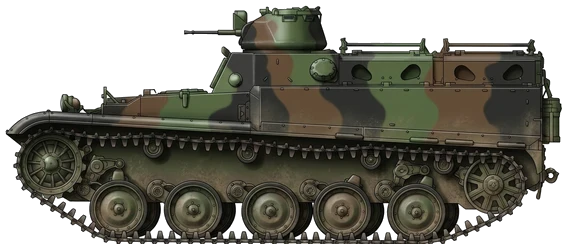
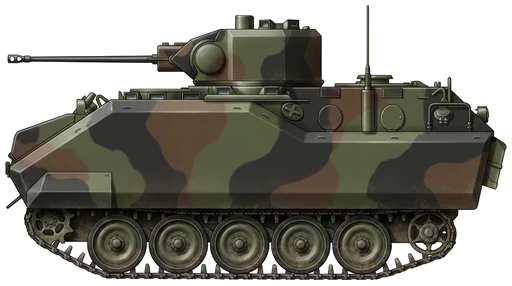
The AMX-VCI (Véhicule de Combat d'Infanterie) is a tracked armoured personnel carrier derived from the chassis of the AMX-13 light tank. Production began in 1957, with some 3,000 vehicles built. It served as the French Army's standard front-line APC until superseded by the AMX-10P.
The vehicle entered production as the AMX-13 VTT (véhicule de transport de troupe), carrying ten infantrymen and armed with either an AA-52 7.62 mm machine gun or a 12.7 mm M2 Browning on an open mounting. Later production replaced the open mount with a turret, and final versions mounted a 20 mm autocannon, placing the type among the earliest infantry fighting vehicles. Sharing the AMX-13 automotive layout, the hull retains the forward-mounted engine and rear troop compartment.
The chassis served as the basis for a broad family of variants. These included the AMX-LT artillery fire control vehicle, the AMX-PC command post, the AMX-VCA ammunition and support vehicle for the Mk F3 155 mm self-propelled howitzer, the AMX-VCG combat engineer vehicle, the AMX-VCTB ambulance, and 81 mm and 120 mm mortar carriers (VCPM de 81 and VCPM de 120). Anti-tank variants carried the NA2 ATGM launcher, while the Roland surface-to-air missile system was mounted on a VTT-derived hull. Other versions included the AMX-13 RATAC ground surveillance radar carrier, a dozer-blade variant, and a vehicle fitted with the Minotaur scatterable mine-laying system. A 1987 modernisation package incorporated the automotive improvements developed for the tank.
National variants proliferated. Belgium fielded the AMX-13 mod.56 series in APC, command post, cargo, 81 mm mortar, ENTAC and MILAN configurations. The Netherlands operated the AMX-PRI infantry vehicle alongside command (PRCO), cargo (PRVR) and ambulance (PRGWT) versions, converting a portion of its PRI fleet to mortar carriers and to TOW-armed tank destroyers. Argentina used the AMX-13 VCPC. Indonesia's retrofit programme lengthened the hull by 20 cm to accommodate a 400 hp Navistar engine, with a redesigned engine deck, revised exhaust, additional frontal armour, and modified transmission and suspension. Mexico's SEDENA upgraded its vehicles to DNC-1 standard with a diesel engine and 20 mm cannon.
Lebanon received 60 AMX-VCIs in 1971–72, with a reported further 30 delivered in May 1983. Following the defeat of government forces by Shia and Druze militias during the Mountain War, a number were seized in February 1984 by the Amal Movement and the South Lebanon Army. The SLA employed captured vehicles throughout the South Lebanon conflict of 1985–2000 until the militia's collapse after the Israeli withdrawal of April 2000; Amal returned its vehicles to the Lebanese Army in October 1990. During the Elimination War at East Beirut in February 1990, troops loyal to General Michel Aoun used VCIs up-armed with M40 106 mm recoilless rifles against the Lebanese Forces, which captured several vehicles from army barracks and returned them between 1991 and 1994. The Israel Defense Forces captured two abandoned Lebanese VCIs during the 1982 Lebanon War.
Current operators include Cyprus, Ecuador, Indonesia, Mexico, Qatar, Sudan, Venezuela and the United Arab Emirates. Former operators include France, Belgium, Italy, Lebanon and the Netherlands.
Frequently Asked Questions
What type of vehicle is the AMX-VCI?
What is the weight of the AMX-VCI?
What is the maximum speed of the AMX-VCI?
What is the operational range of the AMX-VCI?
How many crew members does the AMX-VCI require?
How many AMX-VCI have been built?
What weapons does the AMX-VCI carry?
- SEP 42026 Verified Weight verified against the published specifications
- AUG 152026 Created AMX-VCI page created (specifications, overview, 14 operators)