K200
Introduced in 1985, the K200 KIFV is a South Korean armored personnel carrier constructed with aluminum alloy armor. Key figures: weight 13.2 t, top speed 70 km/h, range 480 km, unit cost $1.41M, built 2,500. In service with 1 army — South Korea (2,500).
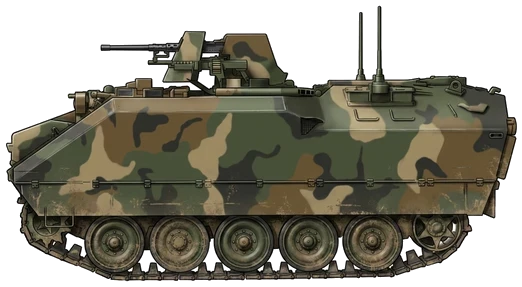
| Sub-type | Armored personnel carrier |
| Crew | 3 + 9 passengers personnels |
| Range | 480 km |
| Mass | 13.2 tons |
| Height | 2.52 m (8.3 ft) |
| Width | 2.85 m (9.4 ft) |
| Length | 5.49 m (18.0 ft) |
| Max. speed | 70 km/h (43 mph) |
| Engine | Daewoo/MAN D2848T 350 hp (261 kW) at 2,300 rpm |
| Weapon 1 | 1 x M2 machine gun |
| Weapon 2 | 1 x M60 or K12 machine gun |
Description
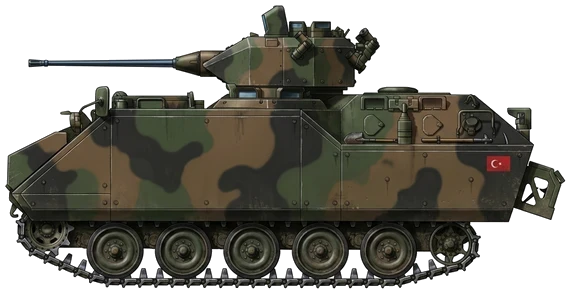
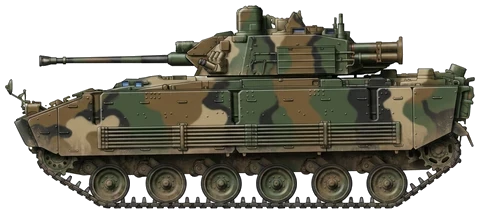
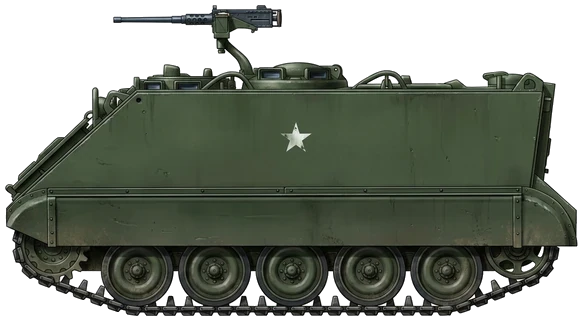
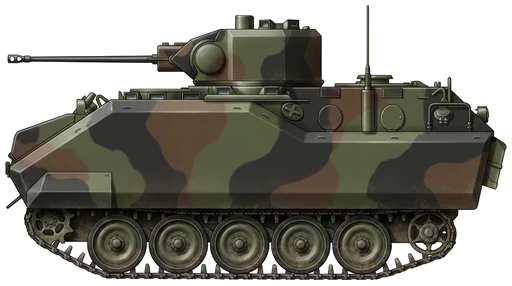
The K200 Korean Infantry Fighting Vehicle (KIFV) was developed by South Korea’s Agency for Defense Development under Project Toad to replace older armored personnel carriers such as the M113. Development began in 1981 following a Republic of Korea Army requirement for a cost-effective, amphibious infantry transport. Daewoo Heavy Industries served as the prime contractor. Production began in 1985 and serial manufacturing concluded in 2006, with production facilities eventually passing to Hanwha Aerospace. Upgraded variants include the K200A1, featuring increased engine power, upgraded transmissions, NBC protection, and automatic fire suppression, as well as the K200A2 standardization program which integrates front and rear cameras and updated mechanical systems.
The hull consists of all-welded aluminum armor with a layer of spaced laminate steel armor bolted to the exterior, protecting against 12.7 mm rounds on the sides, 7.62 mm rounds at the rear, ground shell splinters, and anti-personnel mines. The front-right engine compartment is separated from the main cabin by a bulkhead and features fire extinguishing systems operable internally or externally. Roof-mounted air inlets, louvers, and exhaust pipes permit amphibious operations across shallow rivers. Countermeasures include six electrically operated smoke grenade launchers mounted on the hull or turret to counter electro-optical and infrared targeting. The interior accommodates a driver, gunners, and an infantry squad. Standard armament consists of a 12.7 mm M2 machine gun and a 7.62 mm secondary machine gun. The vehicle's design supports alternative configurations, including 20 mm Vulcan air defense systems, 81 mm or 107 mm mortars, and Metis-M anti-tank guided missile platforms. Modular variants fulfill NBC reconnaissance, smoke generation, command post, and vehicle recovery roles.
The platform is operated by South Korea and has been exported to countries including Malaysia and Haiti. Malaysian forces adopted the vehicle in the 1990s and subsequently upgraded their inventory to the K200A1 configuration. The K200 series saw deployment during the Yugoslav Wars, the 1999 East Timorese crisis, the Iraq War, and anti-gang operations during the Haitian conflict.
Frequently Asked Questions
What type of vehicle is the K200?
What is the weight of the K200?
What is the maximum speed of the K200?
What is the operational range of the K200?
How many crew members does the K200 require?
How many K200 have been built?
What weapons does the K200 carry?
- SEP 42026 Verified Weight verified against the published specifications
- AUG 112026 Created Page created: K200