YPR-765
The YPR-765, an American-designed infantry fighting vehicle introduced by the Netherlands in 1977, features spaced steel armor mounted over an aluminum hull. Key figures: weight 13.7 t, top speed 61 km/h, range 491 km, built 2,000. In service with 7 armies — Jordan (441), Egypt (390), Ukraine (353) and 4 others.
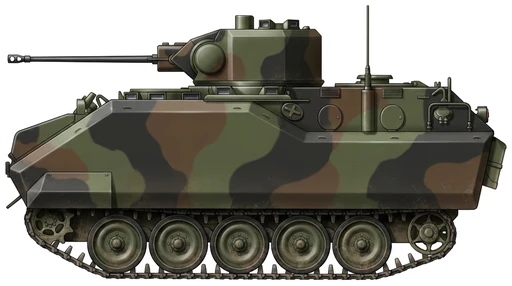
| Sub-type | Infantry fighting vehicle |
| Crew | crew of three plus seven passengers personnels |
| Range | 491 km |
| Mass | 13.7 tons |
| Height | 2.62 m (8.6 ft) |
| Width | 2.82 m (9.3 ft) |
| Length | 5.26 m (17.3 ft) |
| Max. speed | 61 km/h (38 mph) |
| Engine | Detroit Diesel 6V-53T six-cylinder turbocharged diesel (197 kW) |
| Weapon 1 | 25 mm Oerlikon KBA-B02 cannon |
| Weapon 2 | coaxial FN MAG co-axial machine gun |
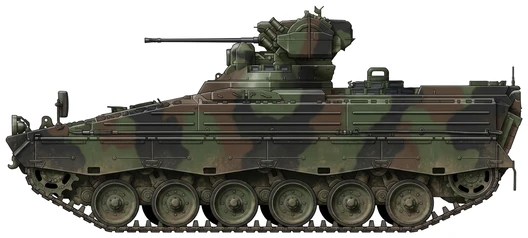
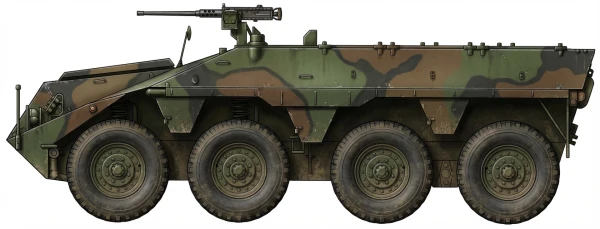
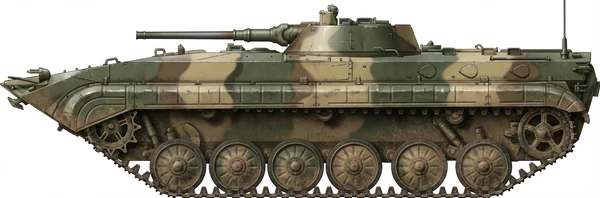
Description
The YPR-765 is an armored infantry fighting vehicle based on the Armored Infantry Fighting Vehicle (AIFV) design developed by the FMC Corporation. In 1973, the Royal Netherlands Army initiated a project to replace its AMX-VCI fleet. Following evaluations of the modified M113 design in 1974, the Dutch Ministry of Defence ordered an initial batch in 1975. Manufacturing was shared between FMC, which constructed the chassis, and Dutch companies including DAF, Philips, and RSV, which produced the turrets, fire control systems, interiors, and performed final assembly. Subsequent orders were placed in 1978 and 1980, including a series produced entirely in the Netherlands under license to replace the YP-408 fleet. The vehicle entered service in 1977 and was eventually phased out by the Netherlands in favor of the CV90, Fennek, and Boxer.
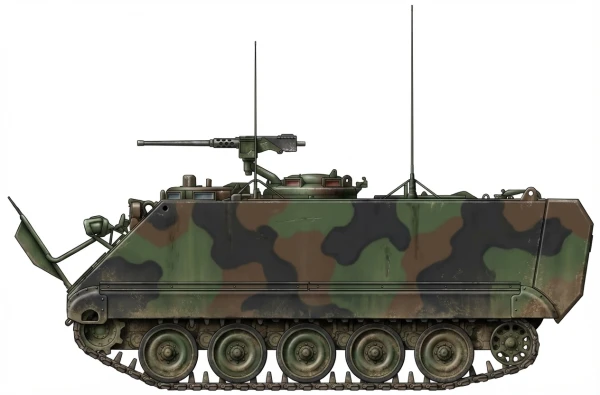
The platform was produced in numerous specialized configurations. The primary infantry fighting vehicle variant, the YPR-765 PRI, incorporates an Enclosed Weapon Station turret armed with a 25 mm Oerlikon KBA-B02 cannon and a coaxial FN MAG machine gun, accommodating a crew of three and up to seven passengers. Armored personnel carrier and command variants replace the primary turret with M113-type or M26 cupolas mounting a .50-caliber M2 HB machine gun. Specialized configurations include the PRAT tank destroyer equipped with an Emerson twin-TOW launcher, the PRMR mortar tractor configured to tow a 120 mm MO-120-RT mortar while storing 150 rounds, the PRRDR fitted with a ZB-298 battlefield surveillance radar, the unarmed PRGWT medical evacuation vehicle equipped with suspended stretcher chains and a diesel heater, and the YPR-806 recovery vehicle featuring an internal winch and rear earth anchors.
The vehicle has operated with several armed forces worldwide, including the Netherlands, Bahrain, Chile, Egypt, Jordan, Ukraine, and Russia. Dutch units deployed the YPR-765 during operations in Bosnia and Herzegovina with UNPROFOR, IFOR, and SFOR, as well as during ISAF missions in Afghanistan between 2004 and 2010. Significant quantities were supplied to Ukraine during the Russo-Ukrainian War, where the platform saw extensive combat service, with instances of destruction, recovery, and capture by Russian forces.
Frequently Asked Questions
What type of vehicle is the YPR-765?
What is the weight of the YPR-765?
What is the maximum speed of the YPR-765?
What is the operational range of the YPR-765?
How many crew members does the YPR-765 require?
How many YPR-765 have been built?
What weapons does the YPR-765 carry?
- SEP 42026 Verified Weight verified against the published specifications
- AUG 42026 Updated Number built added
- AUG 22026 Created Page created: YPR-765