Ababil-3
Iranian multirole tactical unmanned aerial vehicle, introduced in the 2000s, primarily utilized for intelligence, surveillance, and reconnaissance missions. Key figures: top speed 200 km/h, range 100 km, service ceiling 5,000 m, built 217.
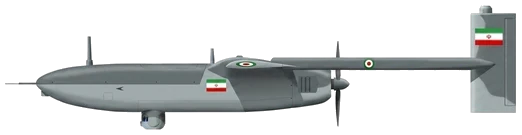
| Wingspan | 7 m (23.0 ft) |
| Powerplant | 1 × Limbach L550 |
| Maximum speed | 200 km/h (124 mph) |
| Operational range | 100 km (62 mi) |
| Endurance | 4 hours |
| Service ceiling | 5,000 m (16,404 ft) |
Description
The Ababil-3 is a multirole tactical unmanned aerial vehicle (UAV) manufactured by the Iran Aircraft Manufacturing Industrial Company (HESA). Introduced in the 2000s as a redesign of the Ababil series, the aircraft is primarily configured for intelligence, surveillance, and reconnaissance (ISR) missions. It is reportedly based on the South African Denel Dynamics Seeker, specifically the Seeker-2D model. Production was underway by 2008, with certain components manufactured as early as 2006, followed by an official unveiling in 2010. As of July 2019, an estimated 217 units had been produced.
Design
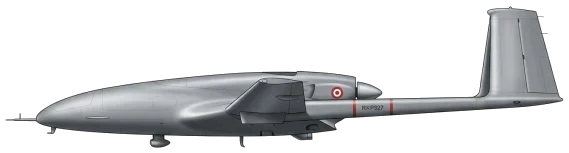
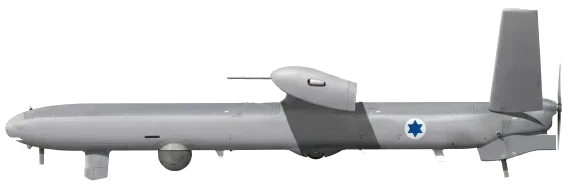
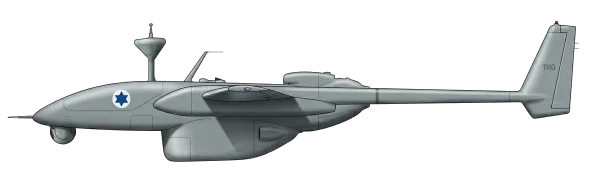
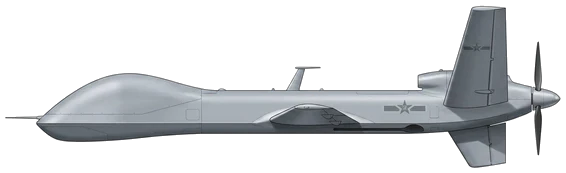
The aircraft features a cylindrical fuselage with high-mounted rectangular wings that taper toward the tips and an H-shaped twin-boom tail. The airframe is constructed from composite materials and has a wingspan of approximately 7 meters. Propulsion is provided by a piston engine, identified as either a German Limbach Flugmotoren unit or Chinese/Iranian L550 clones, driving a pusher propeller. Performance specifications include a maximum airspeed of 200 km/h, a service ceiling of 5,000 meters, and a four-hour endurance. The roundtrip range is 100 km. While initial models were intended for daytime use, night vision capabilities were integrated in 2014.
Armament
Although designed for ISR, armed versions of the Ababil-3 were introduced by 2020. In the Syrian conflict, the platform has been utilized in combat roles and to provide targeting data for Krasnopol precision-guided heavy artillery strikes.
Operational History
Iran is the primary operator, deploying the Ababil-3 with the IRGC Aerospace Force, IRGC Navy, and the Islamic Republic of Iran Army. Units are based at Bandar Abbas International Airport and an airstrip near Minab. The type has seen extensive use in the Syrian Civil War since 2012, where it is produced under license by the Syrian Scientific Studies and Research Center. In Iraq, the Ababil-3 has been operated from Rasheed Air Base since 2014 and is used by the Popular Mobilization Forces; Kataib Hezbollah operates the type under the designation "Basir-1." A US F-16 shot down an Ababil-3 over Iraqi territory in February 2009. Sudan operates the aircraft under the name "Zagil III-B," reporting losses in 2008 and 2012. An additional unit was lost in Pakistan in July 2019.
Variants
- Ababil-1: A 1980s-era loitering munition designed to carry 40 kg of explosives.
- Ababil-2: A surveillance and target drone featuring a cylindrical fuselage, front canard, and pusher propeller.
- Ababil-4: A reconnaissance and combat platform introduced in 2022 with greater endurance than its predecessors.
- Ababil-5: A combat variant unveiled in 2022 capable of carrying Almas anti-tank missiles or Qaem series precision-guided bombs.
Frequently Asked Questions
What type of aircraft is the Ababil-3?
What is the maximum speed of the Ababil-3?
What is the range of the Ababil-3?
When did the Ababil-3 first fly?
How many Ababil-3 have been built?
Which countries operate the Ababil-3?
What is the service ceiling of the Ababil-3?
- MAR 102026 Created Page created: Ababil-3