GlobalMilitary.net Open-source military intelligence Updated daily
Asia ยท Damascus

Syria Military Forces

Open-source order of battle for 2026: 169,000 active troops, 414 aircraft, 526 ground vehicles.

World rank #71 Military index 29.8/100
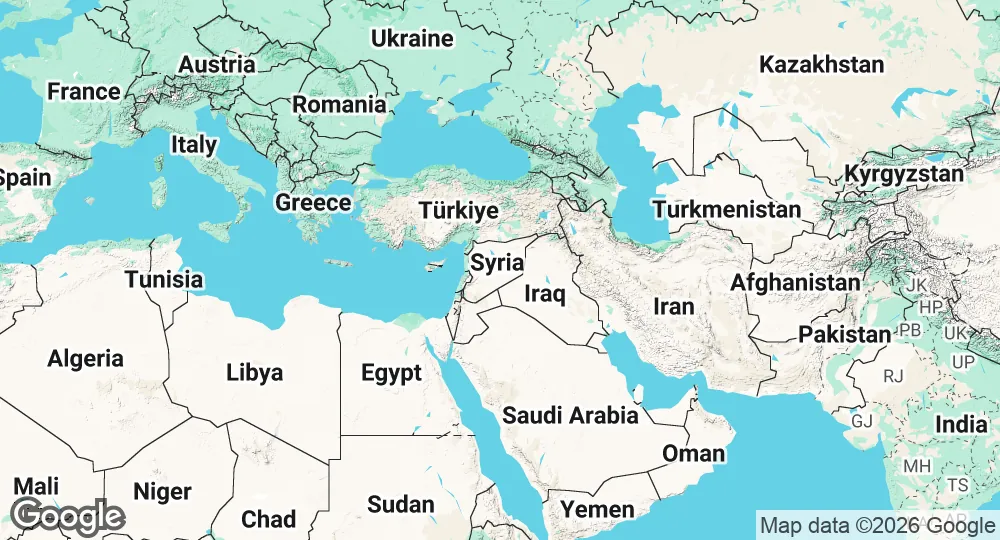
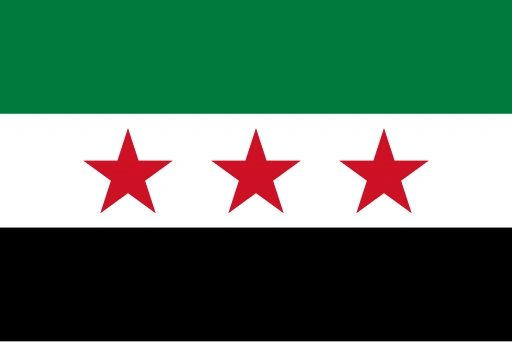
Map of Syria Flag of Syria
Active troops
169K
Defense budget
$2.5B2011
Share of GDP
4.1%
Population
24.7M2024

Armed Forces in 2026

Domain Strength Composition
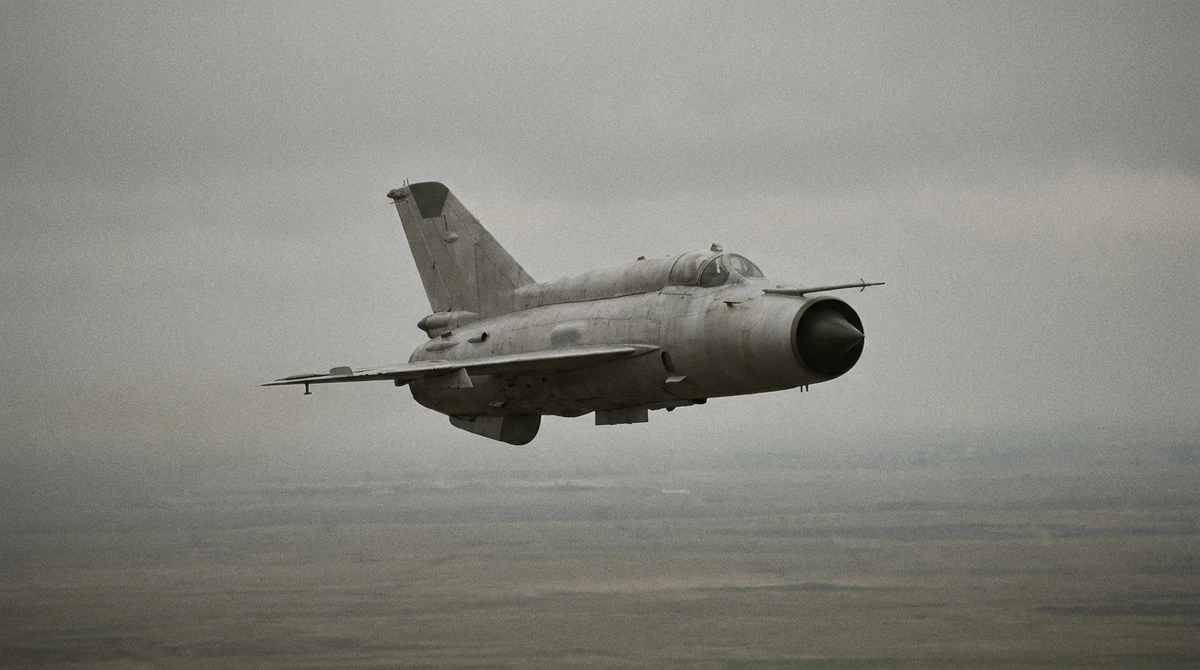
Syrian Arab Air Force 414 aircraft 225 combat 153 helicopters
Ground Forces 526 vehicles 365 main battle tanks
Personnel 169,000 active

Global Military Index

Full ranking โ†’
Score & Pillar Breakdown World #71
29.8/ 100
The Global Military Index scores Syria's overall capability on a 0โ€“100 scale from verifiable data across six pillars: manpower, ground forces, naval power, air power, nuclear deterrent and defense budget, with a readiness modifier derived from budget per soldier.
Pillar Weight Score Basis
Manpower 15% 70.8 Active, reserve & paramilitary personnel
Ground forces 20% 38.7 Tanks, armor & artillery weighted by type
Naval power 20% 0.0 Weighted by hull type: carrier tiers, nuclear vs conventional submarines
Air power 25% 54.5 Weighted by aircraft type and fleet age
Nuclear deterrent 10% 0.0 No declared nuclear capability
Defense budget 10% 40.6 Annual spending, purchasing-power adjusted
Readiness modifier ×0.94 Budget per soldier: proxy for training, maintenance & technology

Country File

Defense Statistics & Key Metrics
Population24.7M (2024)
GDP$23.6 billion (2022)
GDP per capita$957
Military budget$2.5 billion (2011)
Share of GDP4.1% (2010)
Share of govt spending13.6% (2010)
Military spending per capita$110 (2011)
Inflation rate13.42% (2019)
Military Budget History SIPRI
1956 โ€” $0.1B 1956 1957 โ€” $0.0B 1958 โ€” $0.1B 1959 โ€” $0.1B 1960 โ€” $0.1B, 10.52% of GDP 1961 โ€” $0.1B, 9.54% of GDP 1962 โ€” $0.1B, 13.47% of GDP 1964 โ€” $0.1B, 8.64% of GDP 1964 1965 โ€” $0.1B, 8.88% of GDP 1966 โ€” $0.1B, 7.75% of GDP 1967 โ€” $0.1B, 8.21% of GDP 1968 โ€” $0.2B, 12.16% of GDP 1969 โ€” $0.2B, 10.83% of GDP 1970 โ€” $0.2B, 11.22% of GDP 1971 โ€” $0.2B, 8.44% of GDP 1971 1972 โ€” $0.3B, 10.77% of GDP 1973 โ€” $0.4B, 15.07% of GDP 1974 โ€” $0.5B, 12.66% of GDP 1975 โ€” $0.9B, 15.95% of GDP 1976 โ€” $0.9B, 14.73% of GDP 1977 โ€” $1.0B, 14.50% of GDP 1978 โ€” $1.2B, 14.71% of GDP 1978 1979 โ€” $1.6B, 15.93% of GDP 1980 โ€” $2.3B, 17.25% of GDP 1981 โ€” $2.4B, 14.55% of GDP 1982 โ€” $2.7B, 15.56% of GDP 1983 โ€” $2.7B, 14.64% of GDP 1984 โ€” $3.4B, 17.69% of GDP 1985 โ€” $3.5B, 16.56% of GDP 1985 1986 โ€” $3.7B, 14.45% of GDP 1987 โ€” $3.7B, 11.22% of GDP 1988 โ€” $3.7B, 7.85% of GDP 1989 โ€” $1.5B, 7.97% of GDP 1990 โ€” $1.6B, 6.87% of GDP 1991 โ€” $2.9B, 10.43% of GDP 1992 โ€” $3.0B, 8.99% of GDP 1992 1993 โ€” $1.4B, 7.24% of GDP 1994 โ€” $1.6B, 7.36% of GDP 1995 โ€” $1.0B, 6.95% of GDP 1996 โ€” $1.0B, 6.04% of GDP 1997 โ€” $1.0B, 5.88% of GDP 1998 โ€” $1.1B, 5.81% of GDP 1999 โ€” $1.1B, 5.81% of GDP 1999 2000 โ€” $0.9B, 5.45% of GDP 2001 โ€” $1.0B, 5.48% of GDP 2002 โ€” $1.1B, 5.41% of GDP 2003 โ€” $1.4B, 6.25% of GDP 2004 โ€” $1.4B, 5.54% of GDP 2005 โ€” $1.5B, 5.03% of GDP 2006 โ€” $1.4B, 4.39% of GDP 2006 2007 โ€” $1.6B, 4.10% of GDP 2008 โ€” $1.7B, 3.55% of GDP 2009 โ€” $2.2B, 4.03% of GDP 2010 โ€” $2.3B, 4.06% of GDP 2011 โ€” $2.5B, 3.69% of GDP 2011
Budget (US$) Share of GDP (0-20%)
Geography
CapitalDamascus
RegionAsia
Land area183,630 kmยฒ
Coastline193 km
Land borders2,253 km
Bordering countries5
CurrencySYP
National Flag Adopted 1980
Flag of Syria
Aspect ratio2:3
ColorsRed, green, white, black
Compare this Country
๐Ÿ‡ธ๐Ÿ‡พ Syria vs

Strategic Overview in 2026

Strategic Position

The Syrian defense posture is currently defined by the transition following the collapse of the Ba'athist government in December 2024. Under the interim administration led by Ahmed al-Sharaa, Syria has shifted away from the "Axis of Resistance" and its historical military alliances with Iran and Russia. Strategic priorities have pivoted toward internal consolidation, the integration of fragmented armed factions into a national structure, and the restoration of territorial integrity.

Primary security concerns in 2026 involve the presence of foreign military forces and the unresolved status of the Syrian Democratic Forces (SDF) in the northeast. While the interim government has pursued de-escalation with regional neighbors, tensions remain over the integration of Kurdish-led autonomous regions. A March 2025 agreement to merge the SDF into the national military remains partially unimplemented, leading to the designation of closed military zones in the Aleppo countryside in January 2026.

Regional relationships are undergoing a realignment. Syria has established a defense cooperation agreement with Turkey, which provides training and logistical support. Simultaneously, the government is engaged in United States-mediated talks in Paris as of January 2026 to establish a new security framework with Israel, focused on the 1974 Disengagement Agreement and the demarcation of the Golan Heights border.

Military Forces

The Syrian Arab Armed Forces (SAAF) are currently being reconstructed under the authority of the Ministry of Defense. The transitional government formally dissolved the previous military structure in early 2025, ousting officers loyal to the former regime and calling for all non-state militias to merge into a unified command.

Army: The ground forces form the core of the nascent military, with a recruitment target of approximately 200,000 to 300,000 personnel. Manpower is drawn from former insurgent groups, including Hayat Tahrir al-Sham (HTS) and the Turkish-backed Syrian National Army (SNA), as well as some former regime defectors. The Ministry of Defense has organized at least 23 divisions through a "reflagging" process that retains the internal structure of constituent factions while placing them under centralized oversight.

Air and Air Defense Forces: These branches were significantly degraded during the 2024-2025 transition by Israeli airstrikes targeting strategic assets to prevent their seizure by non-state actors. Current capabilities are limited to a small number of functional fighter aircraft and short-range air defense systems. The military increasingly relies on unmanned aerial vehicles (UAVs) for surveillance and strike operations.

Navy: The naval branch is minimal, following the destruction of major assets at Tartus and Latakia. It remains focused on coastal patrolling with light missile boats.

Key Equipment: The military operates a mix of salvaged Soviet-era hardwareโ€”including T-72 and T-62 tanksโ€”and newly acquired equipment. Since 2025, Syria has received light armored vehicles from Jordan and Turkish-manufactured armored personnel carriers and UAVs. Turkish military academies have begun training the first cohorts of Syrian officers to professionalize the force.

Defense Industry

The domestic defense industry is in a state of rehabilitation. Prior state-run manufacturers, such as those under the Scientific Studies and Research Center (SSRC), faced significant disruption during the change in government. Current industrial activity is concentrated in the Aleppo region, where efforts are underway to restore facilities for the production of small arms, ammunition, and spare parts.

Syria remains heavily dependent on foreign imports for complex systems. While the government aims for greater self-sufficiency in basic ordnance, modernization is largely contingent on military-technical cooperation with Turkey and potentially Saudi Arabia. Agreements signed in 2025 include provisions for joint industrial projects and the establishment of specialized industrial zones to support military and civilian engineering needs.

Strategic Trends

The primary strategic trend is the professionalization and centralization of the military to move beyond its insurgent origins. Modernization efforts prioritize mobility, border security, and counter-insurgency capabilities rather than conventional regional power projection.

Defense spending is constrained by the requirements of national reconstruction. However, the government has received external financial support, including grants and investments from Gulf states and Turkey, to cover military salaries and infrastructure repairs. A major challenge remains the "Shadow Government" crisis, where ideological divisions between various military factions threaten the cohesion of the unified command. The future force structure depends on the successful conclusion of negotiations with the SDF and the establishment of a lasting security arrangement with Israel.
In the News

All news โ†’

Frequently Asked Questions

How large is Syria's military?
Syria has 169,000 active military personnel. This includes army, navy, and air force service members.
What is Syria's defense budget?
Syria's annual defense budget is approximately $2.5 billion. This covers personnel costs, equipment procurement, operations, and maintenance of military forces.
How does Syria rank militarily in the world?
Syria ranks #71 globally on the Global Military Index with a score of 29.8 out of 100. This composite index measures military capability across manpower, ground forces, naval power, air power, nuclear deterrent, and defense budget, adjusted for equipment quality and readiness.
Does Syria have nuclear weapons?
No, Syria does not possess nuclear weapons and is a non-nuclear weapon state.
How many aircraft does Syria's air force have?
Syria operates 414 military aircraft including 225 combat aircraft. The fleet includes fighters, transport planes, helicopters, and training aircraft.
How many tanks does Syria have?
Syria operates approximately 365 main battle tanks. This figure includes both active inventory and reserve stocks available for mobilization.
What percentage of GDP does Syria spend on defense?
Syria spends approximately 4.1% of its GDP on defense. This meets the NATO target of 2% of GDP.
What is Syria's military personnel per capita?
Syria has approximately 6.8 active military personnel per 1,000 citizens. This ratio reflects the country's military manpower relative to its population of 24,672,760.
Population, GDP, Inflation and Personnel: World Bank.
Military Expenditure: information from the Stockholm International Peace Research Institute (SIPRI) Military Expenditure Database. Suggest a change