Atlas Cheetah
South African jet fighter, evolved in the Cold War era, extensively deployed for air defence and aerial refuelling missions. Key figures: top speed 2,338 km/h, range 2,600 km, service ceiling 17,000 m, max takeoff weight 16,500 kg, built 38.
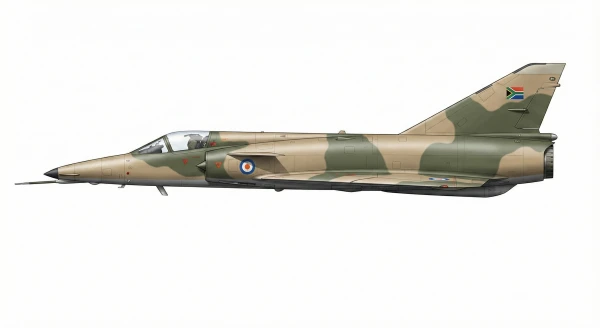
| Crew | 1 |
| Length | 15.7 m (51.3 ft) |
| Wingspan | 8.2 m (27.0 ft) |
| Height | 4.6 m (14.9 ft) |
| Wing area | 34.8 m² (374.6 sqft) |
| Empty weight | 7,400 kg (16,314 lbs) |
| Max. takeoff weight | 16,500 kg (36,376 lbs) |
| Ejection seat | Martin-Baker Mk 6 |
| Maximum speed | 2338 km/h (Mach 2.34) |
| Operational range | 2,600 km (1,616 mi) |
| Service ceiling | 17,000 m (55,774 ft) |
Recent Events — Atlas Cheetah
1 event →
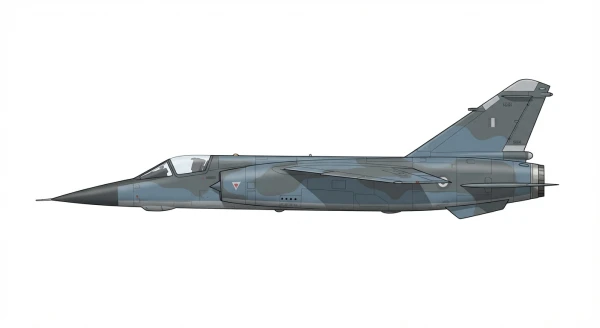
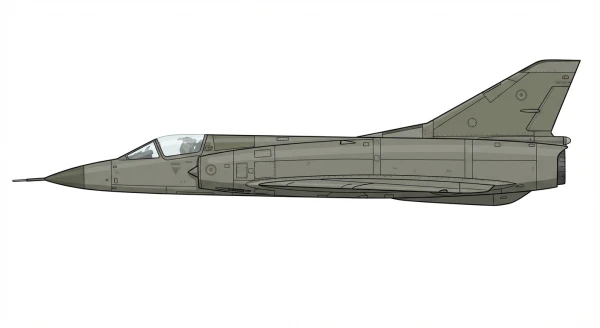
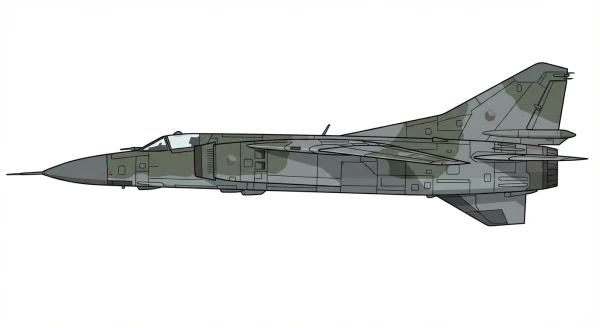
Description
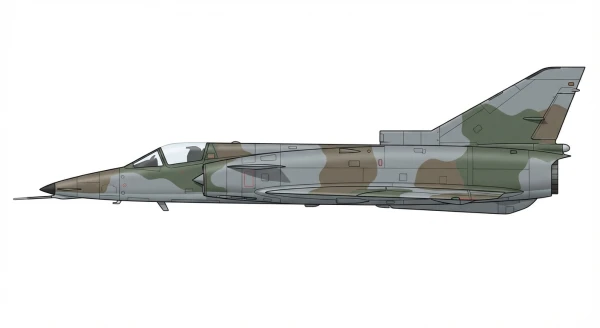
The Atlas Cheetah is a South African multirole fighter and strike aircraft produced by the Atlas Aircraft Corporation, later Denel Aeronautics, as a rebuild of the South African Air Force's Dassault Mirage III fleet. It entered SAAF service in 1986 and served as the country's primary fast jet until 2008. The type is known for combining French Mirage III airframes with Israeli IAI Kfir-derived technology, developed under the arms embargo imposed by UN Security Council Resolution 418.
Development
The programme originated in the 1980s from the SAAF's requirement to counter Soviet-built aircraft such as the MiG-23 supplied to Angolan and Cuban forces during the Border War, compounded by rising maintenance costs and airframe age under sanctions. The Mirage F1 fleet was excluded because withdrawing it for conversion would have opened a gap in air defence and strike coverage, so the Mirage III fleet was selected under Project Cushion. Atlas Aviation carried out the work, recruiting Israeli technicians released after the cancellation of the IAI Lavi; IAI has acknowledged involvement in related projects, and according to ACIG five IAI Neshers may have been acquired from the Israeli Air Force for trials. The first Cheetah D was publicly unveiled on 16 July 1986 and declared operational in 1987. The D and E conversion lines closed in 1991 with 16 of each type reported in service; Cheetah C production began that year, with the first aircraft rolled out in January 1993.
Design
The upgrade included refurbishment of the airframe to zero-hour condition, with roughly 50% of the original structure replaced. Aerodynamic changes comprised fixed canards aft of the intakes, a new main wing spar with drooped leading edge and dog-tooth incision, nose strakes for high-AoA behaviour, and elevons controlled by a twin-computer flight control system. Two further stores pylons were added at the wing roots, along with an in-flight refuelling probe and new ejection seats. The nose was lengthened to house a pulse-Doppler radar, new avionics, an EW suite with missile approach warning and radar warning receivers, and a self-protection system of jammers and chaff/flare dispensers. A locally developed helmet-mounted sight and an oversized HUD were fitted. The D and E retained the SNECMA Atar 9C; the C used the Atar 9K50C-11 rated at 70.6 kN with afterburner.
Armament
Fixed armament consists of two 30 mm DEFA 552 cannons with 125 rounds per gun. Five external hardpoints carry up to 4,000 kg, including 250 kg laser-guided, GPS-guided and TV-guided bombs, unguided bombs, Matra SNEB 68 mm rocket pods, reconnaissance pods and drop tanks. Air-to-air weapons include the V4 R-Darter, V3S Snake (Rafael Python 3), U-Darter and Matra R530. Stand-off weapons comprised the MUPSOW and TORGOS.
Operational History
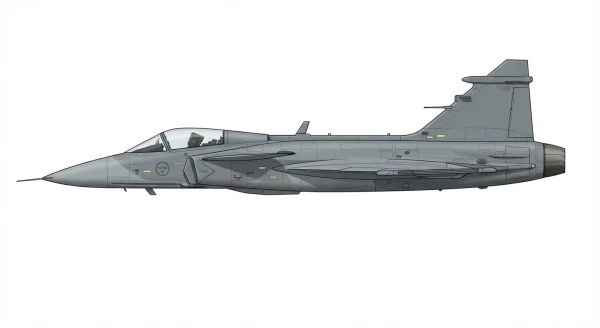
Cheetah Ds first served with 89 Combat Flying School at AFB Pietersburg, Cheetah Es with 5 Squadron and Cheetah Cs with 2 Squadron, both at AFB Louis Trichardt. In-flight refuelling proved harder than with the Mirage F1, and there is no evidence any Cheetah flew offensive missions in the Border War. The Cheetah E was withdrawn in 1992; the C and D were retired in April 2008 and replaced by the Saab JAS 39 Gripen. Chile bought five stored Cheetah Es in 2003 as spares for its ENAER Pantera fleet, retired in 2006–2007; Ecuador also received aircraft, since grounded. In December 2017 Draken International announced the purchase of 12 ex-SAAF Cheetahs for adversary training in the United States, while Denel Aviation retained two Cheetah Ds as testbeds.
Variants
- Cheetah C: Final production variant with ELTA multi-mode pulse-Doppler radar, data link, updated HMS, HUD and HOTAS, wrap-around windshield, new undercarriage and Atar 9K50 engine.
- Cheetah D: Two-seat conversion trainer with secondary PGM strike capability; ten were re-engined with the Atar 9K50C-11 under Project Recipient.
- Cheetah E: Interim single-seat interceptor with simplified avionics and the Atar 9C-3, typically standing alert armed with V3B or V3C missiles.
- Cheetah R: Single reconnaissance prototype converted from Mirage IIIR2Z No. 855, with a new nose, Cheetah E radar, no cannons and no refuelling probe; not proceeded with.
Frequently Asked Questions
What type of aircraft is the Atlas Cheetah?
What is the maximum speed of the Atlas Cheetah?
What is the range of the Atlas Cheetah?
When did the Atlas Cheetah first fly?
How many Atlas Cheetah have been built?
What is the service ceiling of the Atlas Cheetah?
- AUG 302026 Updated Description updated
- AUG 122026 Updated Range corrected to the ferry range
- JUL 272026 Updated Name updated
- JUL 232026 Updated Sources and cross-references refreshed
- APR 72026 Updated Picture credits updated in a site-wide editorial pass
- APR 52026 Updated Ejection seat added
- JAN 122026 Updated Range updated in a site-wide editorial pass