J-36
Chinese large trijet tailless stealth combat aircraft developed by Chengdu under China's sixth-generation fighter program, first observed in flight in December 2024.
| Crew | 2 (side-by-side) |
- PL-17 (assessed)
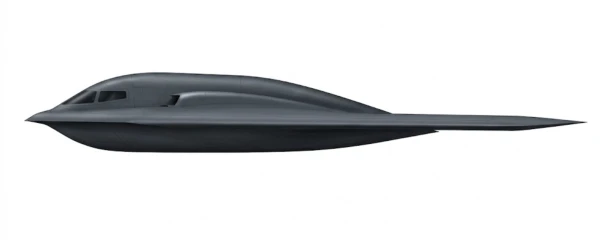
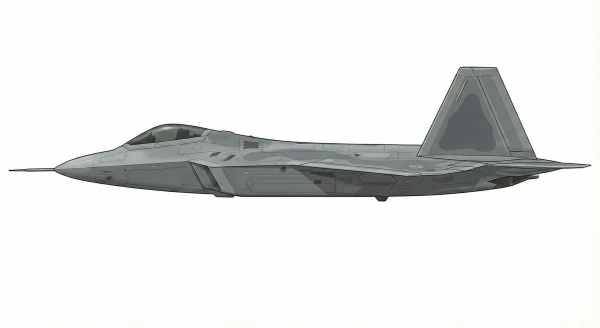
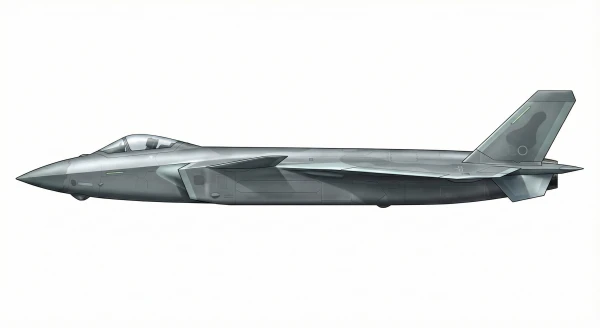
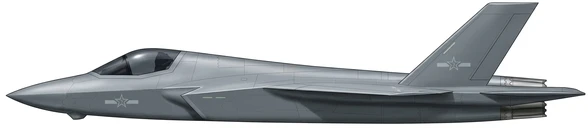
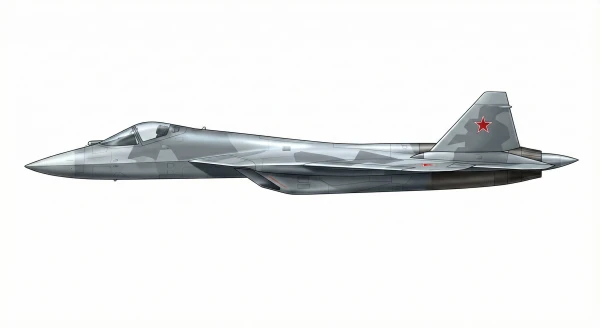
Description
The Chengdu J-36 is the designation applied by analysts to a large tailless combat aircraft developed by the Chengdu Aircraft Corporation under China's sixth-generation program. A prototype carrying the serial 36011 was first observed in flight over Chengdu on 26 December 2024, escorted by a J-20S chase aircraft. Beijing has still never officially named the type, but it broke eighteen months of silence on 28 June 2026, when a four-minute video published by China Military Bugle, the People's Liberation Army's official press account, showed the aircraft flashing past a Y-20 cockpit window under the nickname "Xiao Liu" - Little Six. Chinese state media had earlier referred to it as the "ginkgo leaf jet", and PLAAF deputy commander Wang Wei has described it as the PLAAF's interpretation of a sixth-generation aircraft; by mid-2026 both the PLAAF and USAF leaderships were treating it as a sixth-generation air superiority platform.
Design
The aircraft is a trijet flying wing with a diamond-like double-delta planform, no vertical tails, two underwing intakes plus a dorsal diverterless supersonic inlet, and a side-by-side two-seat cockpit. Three ventral weapons bays are visible, the main bay assessed at roughly 7.6 m long and apparently sized for PL-17 very-long-range air-to-air missiles or large air-to-surface munitions. Analysts have debated its role - heavy fighter, interceptor, regional bomber, or a supercruising "airborne cruiser" acting as a command hub for teamed unmanned aircraft.
It is the largest combat aircraft China has ever built, but no dimensions, weights, engine identities or performance figures have been published and the open-source estimates disagree. Commercial satellite imagery of the type parked at Lop Nur in August 2025 was measured at about 20 m of wingspan for a slightly shorter length, while photogrammetry from ground photographs puts it nearer 23 m long for a 19 m span. Nothing is known of the three engines beyond their number and, on later prototypes, the shape of their nozzles.
Flight testing
Flight testing escalated through 2025 and 2026: a second public flight in March 2025, close-up imagery from April onward, and a second prototype from October 2025 featuring two-dimensional thrust-vectoring exhausts and revised intakes and landing gear. Satellite imagery placed the J-36 alongside the Shenyang J-50 at a secretive test airfield near Lop Nur in late 2025, and a third prototype flew on 25 December 2025. A fourth aircraft was spotted in February 2026 and a fifth in July 2026, the latter showing further changes to the nose, intakes, engine nozzles and landing gear - differences analyst Andreas Rupprecht judged too structural for the sightings to be a single airframe repeatedly modified.
Frequently Asked Questions
What type of aircraft is the J-36?
When did the J-36 first fly?
- AUG 132026 Updated Overview updated: first official PLA footage, the fourth and fifth prototypes, and confirmed side-by-side seating
- JUL 232026 Created Page created: J-36