RQ-21 Blackjack
American tactical unmanned aerial vehicle, developed in the early 2010s, used for forward reconnaissance and intelligence gathering by naval and land forces. Key figures: top speed 170 km/h, range 93 km, service ceiling 5,900 m, max takeoff weight 61 kg, unit price $2M. In service with 5 air forces as of 2026 — Australia (24), Canada (10), Poland (10) and 2 others.
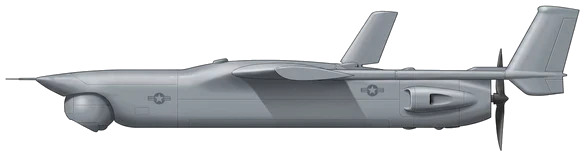
| Length | 2.5 m (8.2 ft) |
| Wingspan | 4.9 m (16.1 ft) |
| Empty weight | 37 kg (82 lbs) |
| Max. takeoff weight | 61 kg (134 lbs) |
| Powerplant | 1 × EFI Piston Engine 6 kW each |
| Maximum speed | 170 km/h (106 mph) |
| Operational range | 93 km (58 mi) |
| Endurance | 16 hours |
| Service ceiling | 5,900 m (19,357 ft) |
Description
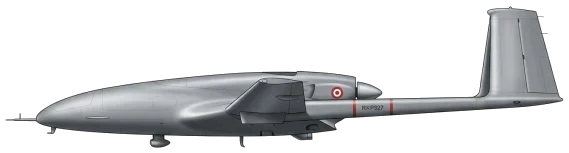
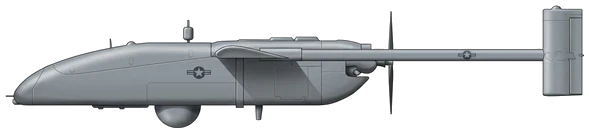
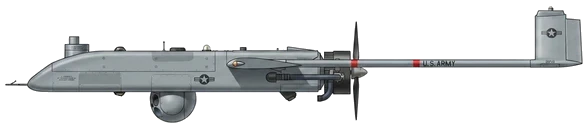
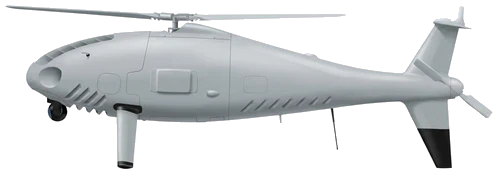
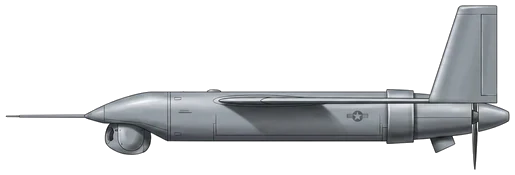
The Boeing Insitu RQ-21 Blackjack, marketed by the manufacturer as the Integrator, is an American unmanned aerial vehicle built to meet a United States Navy small tactical unmanned aircraft system (STUAS) requirement. A twin-boom, single-engine monoplane weighing 61 kg (135 lb), it was developed as a supplement to the ScanEagle and uses the same pneumatic launcher and Skyhook recovery system. It entered low-rate production in 2013 and served with the US Navy and US Marine Corps in the intelligence, surveillance and reconnaissance role.
Development
The Insitu entry was selected in June 2010 over the Raytheon Killer Bee, AAI Aerosonde and General Dynamics/Elbit Systems Storm. The RQ-21A first flew on 28 July 2012 and began developmental testing on 10 September 2012 with a 66-minute flight. The first at-sea flight was conducted from the USS Mesa Verde on 10 February 2013, following three months of land-based flights. The Block II aircraft first flew on 19 February 2013, weighing 55 kg (121 lb) and carrying the sensor from the Nighteagle, the night-capable ScanEagle. Milestone C approval was granted on 15 May 2013, authorising low-rate initial production. The first East Coast flight took place on 12 June 2013 from Webster Field Annex, a 1.8-hour sortie ending in recovery by the STUAS Recovery System. The type was renamed Blackjack in September 2013, and on 28 November 2013 Insitu received an $8.8 million contract for one low-rate production aircraft. Initial Operational Test and Evaluation began in January 2014; the Navy ordered three systems in December 2014 and had received two by July 2015.
Design
A Blackjack system comprises five air vehicles and two ground control systems, with rail launch and skyhook recovery equipment that is towable by vehicle and usable from land or ship. Wingspan is 4.9 m (16 ft), length 2.5 m (8.2 ft), and payload capacity 18 kg (39 lb). Power comes from a single 8 hp (6.0 kW) EFI piston engine driving a two-bladed propeller, giving a maximum speed of 170 km/h, endurance of 16 hours and a service ceiling of 5,900 m. Payloads include day and night full-motion video cameras, an infrared marker, laser range finder, communications relay and automatic identification system receivers; the day/night camera achieves NIIRS 7 at 2,400 m. Proposed fuselage enlargement would raise maximum takeoff weight to 66 kg and endurance to 24 hours, with synthetic-aperture radar, laser designator and foliage-penetration payloads studied. The Marine Corps sometimes applied the designation MQ-21.
Operational History
The Marine Corps deployed its first system to Afghanistan in late April 2014 using early operational capability aircraft lacking shipboard software; it returned on 10 September 2014 after nearly 1,000 flight hours in 119 days. MARSOC deployed the type to Iraq during summer 2016, and full operational capability was declared in 2019. In July 2018 the Marines phased out the RQ-7 Shadow in favour of the Blackjack. Export and allied operators include Australia (24 systems ordered March 2022), Bangladesh, Belgium, Brunei, Canada, the Netherlands, Poland and an unidentified Middle Eastern customer that bought six systems.
Variants
- RQ-21A Blackjack: Baseline US Navy and Marine Corps production variant.
- CU-172 Blackjack: Version for the Canadian Armed Forces, including frigate-based launch and recovery fits.
Frequently Asked Questions
What type of aircraft is the RQ-21 Blackjack?
What is the maximum speed of the RQ-21 Blackjack?
What is the range of the RQ-21 Blackjack?
When did the RQ-21 Blackjack first fly?
Which countries operate the RQ-21 Blackjack?
How much does a RQ-21 Blackjack cost?
What is the service ceiling of the RQ-21 Blackjack?
- AUG 302026 Updated Description updated
- AUG 202026 Updated Unit price filled (2.0 $M, estimate) for the UAV inventory weighting.
- JUL 232026 Updated Sources and cross-references refreshed
- JUL 12026 Created Page created: RQ-21 Blackjack