WZ-7 Soaring Dragon
Chinese high-altitude long-endurance unmanned aerial vehicle, developed in the early 21st century, primarily used for aerial reconnaissance and maritime targeting. Key figures: top speed 750 km/h, range 7,000 km, service ceiling 18,000 m, unit price $25M, built 20. In service with 1 air force as of 2026 — China (20).
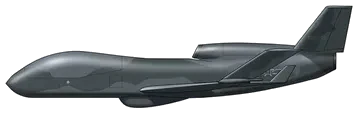
| Length | 14.3 m (47.0 ft) |
| Wingspan | 24.9 m (81.6 ft) |
| Height | 5.4 m (17.7 ft) |
| Powerplant | 1 × Guizhou WP-13 turbojet 43 kN each |
| Maximum speed | 750 km/h (466 mph) |
| Operational range | 7,000 km (4,350 mi) |
| Endurance | 10 hours |
| Service ceiling | 18,000 m (59,055 ft) |
Description
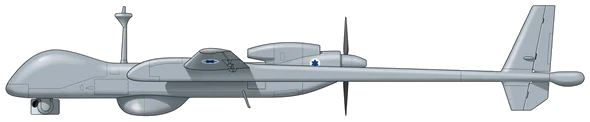
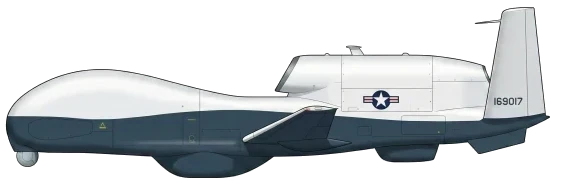
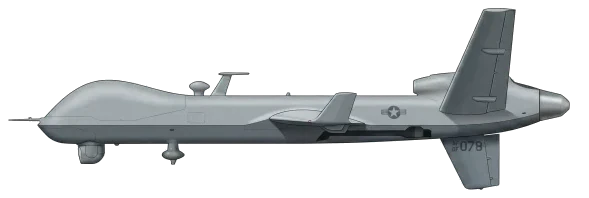
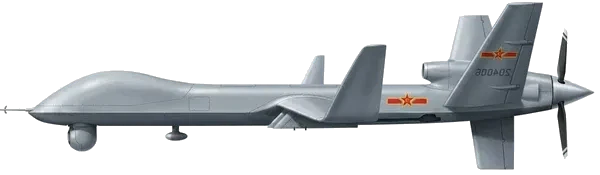
The Guizhou WZ-7 Soaring Dragon is a high-altitude long endurance (HALE) unmanned aerial vehicle (UAV) designed by the Chengdu Aircraft Industry Group and manufactured by the Guizhou Aircraft Industry Corporation. A model of the aircraft was first displayed at the 2006 China International Aviation & Aerospace Exhibition. Serial production commenced between 2015 and 2016, and the aircraft was officially unveiled by the Chinese military at the 2021 Zhuhai Airshow. A 2020 redesign modified the original configuration, introducing V-tails, a WS-13 turbofan engine, and changes to the ventral fin and sail structure.
Design
The WZ-7 features a tandem, joined-wing aerodynamic design. This configuration provides a more rigid wing structure than conventional HALE UAVs, intended to increase the lift-to-drag ratio and simplify flight controls. The aircraft utilizes a dorsal engine intake mounted atop the fuselage. While the prototype was powered by a Guizhou WP-13 turbojet engine (a variant of the Soviet Tumansky R-13), the production model uses a turbofan engine. Prototype specifications include a length of 14.33 meters, a wingspan of 24.86 meters, and a height of 5.41 meters. Performance data for the prototype indicates a cruise speed of 750 km/h, a service ceiling of 18,000 meters, and a range of 7,000 km. The endurance of the production turbofan model is expected to exceed the 10 hours specified for the turbojet prototype.
The primary mission of the WZ-7 is aerial reconnaissance. It is also designed to provide targeting data for anti-ship ballistic missiles and cruise missiles.
Operational History
The aircraft entered service with the People's Liberation Army Air Force (PLAAF) in 2018. As of 2022, the PLAAF operated 12 units, while the People's Liberation Army Naval Air Force (PLANAF) operated eight units as of 2018. Operational deployments have been identified in the Tibet Autonomous Region, Hainan Island, and Yishuntun Airbase. In July 2019, a WZ-7 shadowed the Ticonderoga-class cruiser USS Antietam during its transit of the Taiwan Strait. In December 2022, the UAV was deployed near the Indian border in Tibet. More recent operations include flight maneuvers over the Sea of Japan in March 2024 and reconnaissance over the West Philippine Sea in April 2024 to monitor the deployment of the United States Typhon missile launcher. Satellite imagery indicates the WZ-7 began regular operations over the South China Sea in 2022.
Identified in 34 sorties in the official China-Taiwan Tensions activity reports between 2022 and 2024 — a floor, not a census: only sorties the source identified by type are counted, and how much it disclosed varies by year.
Frequently Asked Questions
What type of aircraft is the WZ-7 Soaring Dragon?
What is the maximum speed of the WZ-7 Soaring Dragon?
What is the range of the WZ-7 Soaring Dragon?
How many WZ-7 Soaring Dragon have been built?
Which countries operate the WZ-7 Soaring Dragon?
How much does a WZ-7 Soaring Dragon cost?
What is the service ceiling of the WZ-7 Soaring Dragon?
- AUG 202026 Updated Unit price filled (25.0 $M) for the UAV inventory weighting. Basis: estimate.
- MAR 282026 Created Page created: WZ-7 Soaring Dragon