Airbus A319 CJ vs Boeing 737
Airbus A319 CJ vs Boeing 737 at a glance — top speed 870 vs 904 km/h, range 11,650 vs 4,800 km, built 1,499 vs 11,535 units.
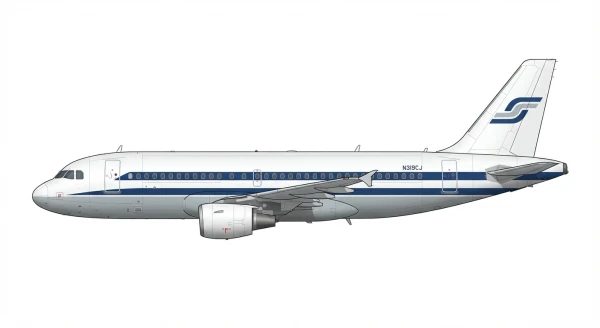
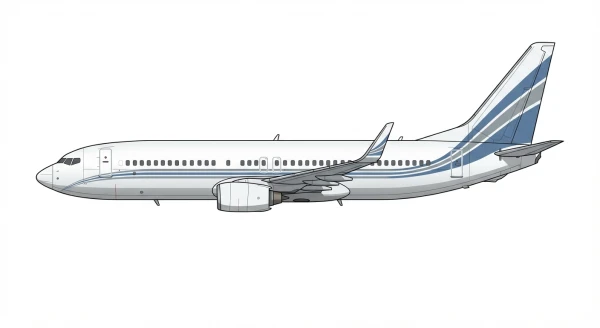
| Airbus A319 CJ | Boeing 737 | |
|---|---|---|
| Origin country | 🇪🇺 Europe | 🇺🇸 United States |
| Category | Military Transport Aircraft | Military Transport Aircraft |
| Manufacturer | Airbus | Boeing |
| First flight | 25 August 1995 | 9 April 1967 |
| Year introduced | 1995 | 1968 |
| Number produced | 1499 units | 11535 units |
| Average unit price | $80 million | $115 million |
| Wing area | 122.6 m² | 91.0 m² |
| Wingspan | 34.1 m | 28.0 m |
| Height | 11.8 m | 11.0 m |
| Length | 33.8 m | 30.0 m |
| Maximum speed | 870 km/h | 904 km/h |
| Operational range | 11,650 km | 4,800 km |
| Service ceiling | 1,350 m | 11,278 m |
| Max. takeoff weight | -- kg | 52,163 kg |
| Empty weight | 42,300 kg | 29,071 kg |
| Total thrust | 2 x 9,993 kgf | 2 x 6,577 kgf |
Detailed Comparison
The Airbus A319 CJ and the Boeing 737 airframe family provide a contrast between a modern, derivative design optimized for specific roles and a legacy platform continuously adapted for diverse military applications over many decades. The A319 stems from the A320 family of the 1990s, while the 737 traces its design heritage to the 1960s, using structures from the even earlier Boeing 727 and 707. This generational difference is central to their respective characteristics and military adaptations.
Development and Design
The A319 was developed as a shortened, minimum-change derivative of the A320, a philosophy emphasizing manufacturing efficiency and systems commonality. Launched in 1993, its design is contemporary, featuring a wingspan (34.1 m) slightly wider than its length (33.84 m) and software-managed flight characteristics to account for the shorter fuselage. The A319CJ variant builds upon this modern base by incorporating removable extra fuel tanks for intercontinental range and an increased service ceiling, making it a purpose-designed platform for government and executive transport.
The Boeing 737, conversely, originated from a 1960s requirement for a short-haul airliner. Its design heavily leveraged existing Boeing 727 structures to expedite development. This legacy is evident in its physical characteristics, such as the low ground clearance, which was practical for smaller airports of the era but posed challenges for later engine upgrades. The data provided reflects an early model, powered by Pratt & Whitney JT8D-9A turbojets, a technology from its period of inception.
Specifications and Performances
The provided data highlights a comparison between a specialized, long-range A319 variant and a much older, shorter-range 737 model. The A319 CJ's standout feature is its exceptional range of 11,650 km, purpose-built for VIP and long-distance missions. Its empty weight is substantial at 42,300 kg. In contrast, the early-model 737 is physically smaller and lighter, with an empty weight of 29,071 kg and a higher maximum speed of 904 km/h compared to the A319's 828 km/h. The 737's service ceiling is listed at a conventional 11,278 m, typical for this class of aircraft. The vast difference in range and weight underscores that these specific versions were designed for entirely different operational profiles.
Deployment and usage
Both airframes have been adapted for military use, but their roles differ significantly.
-
The A319 is predominantly used in its CJ (Corporate Jet) configuration as a head-of-state or government transport aircraft by numerous nations, including Germany, Italy, and Turkey. Its military utility extends to specialized surveillance platforms like the A319 MPA (Maritime Patrol) and the A319 OH, an "Open Skies" treaty observation aircraft equipped with advanced sensors.
-
The 737 has a longer and more varied military history. Early 737-200 models were converted into the T-43 for U.S. Air Force navigator training and adapted for maritime reconnaissance by nations like Indonesia. Critically, the modern 737 airframe serves as the basis for the P-8 Poseidon, a heavily modified, armed platform used for anti-submarine and anti-surface warfare, demonstrating the platform's evolution from a support aircraft to a front-line combat-support asset.
Conclusion
The A319 CJ is a modern, efficient airframe primarily configured for the long-range VIP transport and specialized, unarmed surveillance mission sets. Its value lies in the performance and commonality derived from the successful A320 family. The Boeing 737, while originating from a much older design, has proven remarkably adaptable over its extensive service life. Its evolution from early training and transport roles into a highly capable, armed maritime patrol aircraft like the P-8 Poseidon demonstrates a strategic longevity and a wider spectrum of military application not yet realized by the A319 platform.