AH-64 Apache vs AW249 Fenice
AH-64 Apache vs AW249 Fenice at a glance — top speed 293 vs 287 km/h, range 480 vs 796 km, max takeoff weight 10,107 vs 8,300 kg.
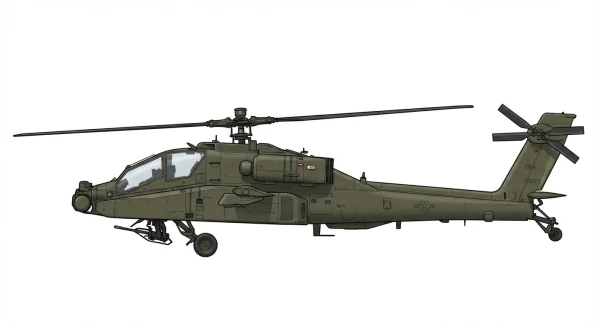
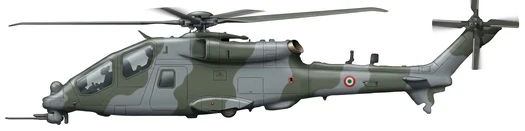
| AH-64 Apache | AW249 Fenice | |
|---|---|---|
| Origin country | 🇺🇸 United States | 🇮🇹 Italy |
| Category | Military Helicopters | Military Helicopters |
| Manufacturer | Boeing | Leonardo |
| First flight | 30 September 1975 | 12 August 2022 |
| Year introduced | 1984 | -- |
| Number produced | 2400 units | N/A |
| Average unit price | $33 million | -- |
| Wingspan | 14.6 m | 14.6 m |
| Height | 5.0 m | 4.3 m |
| Length | 17.7 m | 17.6 m |
| Maximum speed | 293 km/h | 287 km/h |
| Operational range | 480 km | 796 km |
| Service ceiling | 5,670 m | 6,096 m |
| Max. takeoff weight | 10,107 kg | 8,300 kg |
| Empty weight | 5,352 kg | -- kg |
| Total thrust | 2 x 1,208 kW | 2 x 1,491 kW |
Detailed Comparison
Boeing’s AH-64 Apache defines the heavy attack helicopter market with 2,400 units built and four decades of combat doctrine shaping its evolution. In contrast, Leonardo’s AW249 Fenice enters the arena as an 8,300 kg maximum takeoff weight (MTOW) replacement for the A129 Mangusta, targeting European armies prioritizing lower lifecycle costs and ITAR-free procurement over the Apache’s 10,107 kg mass. The comparison pits an iteratively upgraded Cold War platform against a clean-sheet, networked airframe designed for reduced logistical footprints.
Development and Design
The Apache originated in the 1970s to defeat Soviet armor arrays in Europe, prioritizing heavy armor, redundant flight systems, and high weapon payloads. Its design scales from the analog AH-64A to the AH-64E, which retrofits Longbow fire-control radar and Manned-Unmanned Teaming into the legacy architecture. The Fenice approaches design through commercial-military commonality. Leonardo explicitly integrated the AW249’s dynamic components—engines, transmissions, and rotors—with the AW149 transport helicopter. This lowers acquisition and maintenance costs but forces a compromise on bespoke attack-optimized kinematics. The AW249 integrates open-architecture avionics and helmet-mounted displays directly into the baseline, bypassing the Apache's decades of bolt-on modernization packages.
Specifications and Performances
The AH-64 operates in a heavier weight class, translating to higher payload capacity.
- The Apache utilizes a 10,107 kg MTOW to carry up to 16 Hellfire missiles alongside its 30mm M230 chain gun.
- The Fenice relies on an 8,300 kg MTOW, mounting a lighter 20mm TM197B rotary cannon and Rafael Spike missiles.
Both platforms utilize General Electric turboshafts. The AW249 uses twin 1,867 kW CT7-8E6 engines against the AH-64’s 1,208 kW T700-GE-701Cs. This gives the lighter Italian airframe a higher power-to-weight ratio, reflected in a 796 km range compared to the Apache's 480 km. The Apache retains an advantage in vertical climb rate at 15.7 m/s versus the Fenice's 11.9 m/s.
Deployment and usage
The AH-64’s operational record spans Operation Desert Storm, Operation Iraqi Freedom, and Israeli strikes in Gaza. Combat feedback dictates its current armor configurations and sensor suites. US Army aviation learned heavily from the 1999 Kosovo deployment, where logistical demands grounded the fleet, and from urban environment vulnerabilities over Iraq. The AW249 is a developmental asset with no combat history. Italy ordered 17 units against a 48-airframe requirement. Without direct combat data, the Fenice relies on the A129’s operational lessons in Afghanistan, where Italian aviation identified the need for greater payload, endurance, and digitized networking.
Conclusion
The AH-64 Apache holds the edge in high-intensity, heavy-armor conflicts. Its raw payload capacity, integrated Longbow radar, and 40 years of iterative combat hardening make it the preferred choice for militaries requiring maximum anti-tank volume and immediate interoperability with US forces. The AW249 Fenice holds the edge for middle-tier powers prioritizing operational endurance and budget sustainability. Armies looking to avoid US export controls and seeking fleet commonality between transport and attack platforms will find the AW249 a more structurally efficient asset than the maintenance-heavy Apache.