AW249 Fenice vs EC665 Tiger
AW249 Fenice vs EC665 Tiger at a glance — top speed 287 vs 315 km/h, range 796 vs 800 km, max takeoff weight 8,300 vs 6,100 kg.
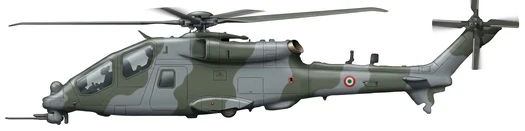
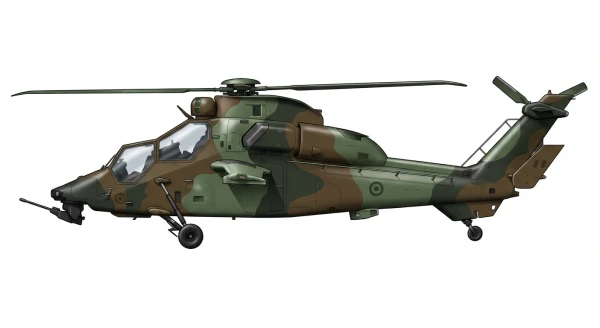
| AW249 Fenice | EC665 Tiger | |
|---|---|---|
| Origin country | 🇮🇹 Italy | 🇩🇪 Germany🇫🇷 France |
| Category | Military Helicopters | Military Helicopters |
| Manufacturer | Leonardo | Eurocopter |
| First flight | 12 August 2022 | 27 April 1991 |
| Year introduced | -- | 2002 |
| Number produced | N/A | 180 units |
| Average unit price | -- | $36 million |
| Wingspan | 14.6 m | 4.5 m |
| Height | 4.3 m | 3.8 m |
| Length | 17.6 m | 15.8 m |
| Maximum speed | 287 km/h | 315 km/h |
| Operational range | 796 km | 800 km |
| Service ceiling | 6,096 m | 2,000 m |
| Max. takeoff weight | 8,300 kg | 6,100 kg |
| Empty weight | -- kg | 4,200 kg |
| Total thrust | 2 x 1,491 kW | 2 x 958 kW |
Detailed Comparison
Leonardo’s AW249 Fenice and Airbus Helicopters’ EC665 Tiger occupy different points on the attack helicopter development timeline and weight spectrum. The 8,300-kg AW249 is currently in flight testing as a heavy replacement for the A129 Mangusta, tailored for modern multi-domain operations. The 6,100-kg Tiger, conceived during the late Cold War, has amassed over two decades of combat experience but faces mounting sustainment crises and canceled modernization programs among its primary operators.
Development and Design
The Tiger emerged from a complex Franco-German requirement to counter Soviet armor, resulting in a composite-heavy, agile airframe prioritizing a low radar cross-section over raw payload. Airbus developed bespoke components and highly specific variants (HAP, HAD, UHT), complicating the logistics chain. Conversely, Leonardo designed the AW249 around pragmatism and cost-control. By porting the drivetrain and General Electric CT7-8E6 turboshafts directly from the AW149 transport helicopter, the Fenice minimizes development risk and lowers lifecycle costs. The AW249 incorporates open-systems architecture and manned-unmanned teaming capabilities from the design phase, whereas the Tiger’s aging avionics require invasive upgrades.
Specifications and Performances
The AW249’s 8,300 kg maximum takeoff weight places it firmly in the heavy attack category alongside the AH-64E Apache, while the Tiger remains a medium-weight platform at 6,100 kg. This mass disparity dictates their powerplant choices. The Tiger relies on twin MTU MTR 390 engines producing 958 kW each. The Fenice’s GE CT7-8E6 engines deliver 1,867 kW per side, granting it the excess thrust required for heavy armor and long-range munitions like the Spike ER2. The Tiger holds a slight top-speed advantage at 315 km/h compared to the AW249’s 287 km/h, but the Fenice absorbs more battle damage and carries heavier sensor payloads.
Deployment and usage
The Tiger’s combat record spans operations in Afghanistan, Libya, and Mali. French HAD and HAP variants executed close air support and anti-armor missions in austere environments. However, operator feedback is marred by dismal availability rates, leading to severe procurement shifts:
- Australia is retiring its Tiger ARH fleet early in favor of the AH-64E due to persistent technical failures.
- Germany opted out of the Tiger Mk III upgrade program entirely, choosing the H145M as a stopgap.
- France is proceeding with a scaled-down Mk II+ upgrade, reflecting reduced confidence in the platform's long-term viability.
The AW249 lacks combat history, with the Italian Army ordering 17 initial airframes against a 48-unit requirement. Leonardo positions it as a direct export rival to the Apache, targeting operators wary of U.S. ITAR restrictions or the Tiger’s logistical overhead.
Conclusion
The AW249 Fenice holds the definitive edge in future high-intensity conflicts and export viability. The Tiger’s agility and low visual signature were valid design choices for 1990s European defense, but its fragmented supply chain and low readiness rates have crippled its fleet viability. The AW249 relies on a heavier airframe optimized for standoff munitions and leverages existing commercial-military supply chains for sustainment. For armies requiring a heavy attack platform without U.S. procurement strings, the AW249 provides a sustainable alternative, while the Tiger is functionally at the end of its developmental lifecycle.