BD-700 Global Express vs Gulfstream G650
BD-700 Global Express vs Gulfstream G650 at a glance — top speed 950 vs 982 km/h, range 11,100 vs 13,890 km, max takeoff weight 45,132 vs 45,360 kg.
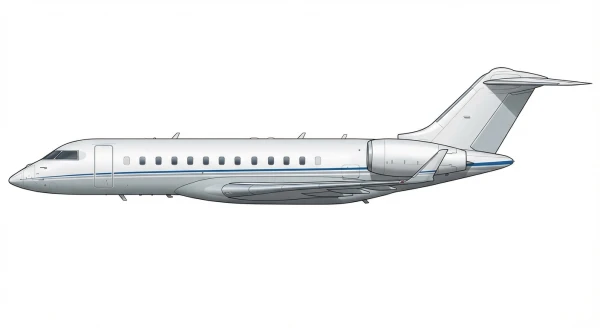
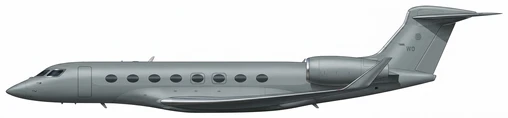
| BD-700 Global Express | Gulfstream G650 | |
|---|---|---|
| Origin country | 🇨🇦 Canada | 🇺🇸 United States |
| Category | Military Transport Aircraft | Military Transport Aircraft |
| Manufacturer | Bombardier | Gulfstream |
| First flight | 13 October 1996 | 25 November 2009 |
| Year introduced | 1999 | 2012 |
| Number produced | 816 units | N/A |
| Average unit price | $25 million | $70 million |
| Wing area | 95.0 m² | -- m² |
| Wingspan | 29.0 m | 30.4 m |
| Height | 7.3 m | 7.7 m |
| Length | 30.3 m | 30.4 m |
| Maximum speed | 950 km/h | 982 km/h |
| Operational range | 11,100 km | 13,890 km |
| Service ceiling | 15,545 m | 15,545 m |
| Max. takeoff weight | 45,132 kg | 45,360 kg |
| Empty weight | 22,566 kg | 25,401 kg |
| Total thrust | 2 x 6,690 kgf | 2 x 75 kN |
Detailed Comparison
Bombardier’s BD-700 Global Express and Gulfstream’s G650 compete for high-altitude, high-endurance military profiles, but their adoption trajectories diverge sharply. The Global Express leverages a 13-year head start and a conventional mechanical architecture to secure the airborne early warning (AEW) and electronic warfare sectors. The G650, arriving in 2012 with fly-by-wire controls and superior kinematic performance, handles tier-one government VIP transport.
Development and Design
Bombardier initiated the Global Express in the early 1990s, prioritizing a 99.5% dispatch reliability and structural simplicity. The design explicitly rejected fly-by-wire in favor of a conventional mechanical flight control system, a decision driven by development costs and operator conservatism at the time. This mechanical simplicity, coupled with a robust semi-monocoque aluminum airframe, inadvertently created a highly adaptable canvas for military engineers. Gulfstream launched the G650 a decade later, focusing on aerodynamic efficiency. Incorporating a highly swept wing and a full fly-by-wire flight control system, the G650 maximizes cruise speed and altitude, minimizing time-on-route for heads of state rather than prioritizing heavy sensor payload adaptability.
Specifications and Performances
The G650 outpaces the baseline BD-700 kinematically. Gulfstream's airframe cruises between Mach 0.85 and 0.90, compared to the Global's Mach 0.80. Powered by Rolls-Royce BR725 engines generating 75 kN of thrust, the G650ER pushes its maximum range to 13,890 km, a 2,790 km advantage over the baseline Global Express. However, the BD-700's $25 million unit cost for early production models heavily undercuts the G650’s $70 million price. Both platforms operate at a 15,545-meter (51,000-foot) ceiling, which keeps ISR packages and VIPs above standard commercial traffic and weather systems.
Deployment and usage
The Global Express maintains an established special mission record. Its structural parameters tolerate heavy airframe modifications, leading to several dedicated military programs:
- The USAF E-11A BACN relays tactical communications across mountainous terrain.
- The UAE GlobalEye integrates Saab’s heavy Erieye ER AESA radar dorsally for AEW&C operations.
- The German Hensoldt Pegasus operates as a dedicated signals intelligence platform.
Conversely, the G650’s military footprint remains restricted to executive transport. The Italian Air Force operates the G650ER for VIP airlift, utilizing the aircraft's speed to project diplomatic presence. While Gulfstream’s older G550 airframe handles the EC-37B Compass Call and CAEW roles, the G650 has not yet secured a heavily modified ISR or AEW contract.
Conclusion
The BD-700 Global Express possesses the edge in the special missions and AEW&C market. Its structural tolerance for heavy external modifications—specifically dorsal radar arrays and ventral radomes—combined with a lower acquisition cost makes it the pragmatic choice for airborne early warning and electronic warfare conversions. The G650 wins in the head-of-state transport category. Its Mach 0.90 cruise speed, 13,890 km range, and modern flight architecture justify its premium price for governments requiring rapid global mobility, but it lacks the BD-700's proven utility as a heavy airborne sensor truck.