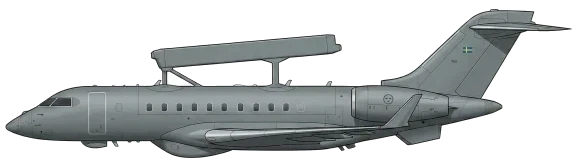
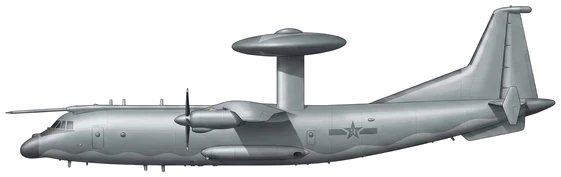
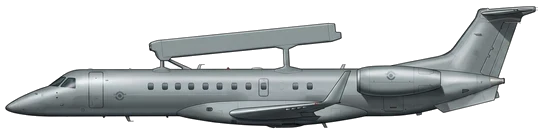
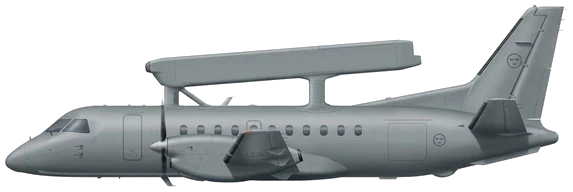
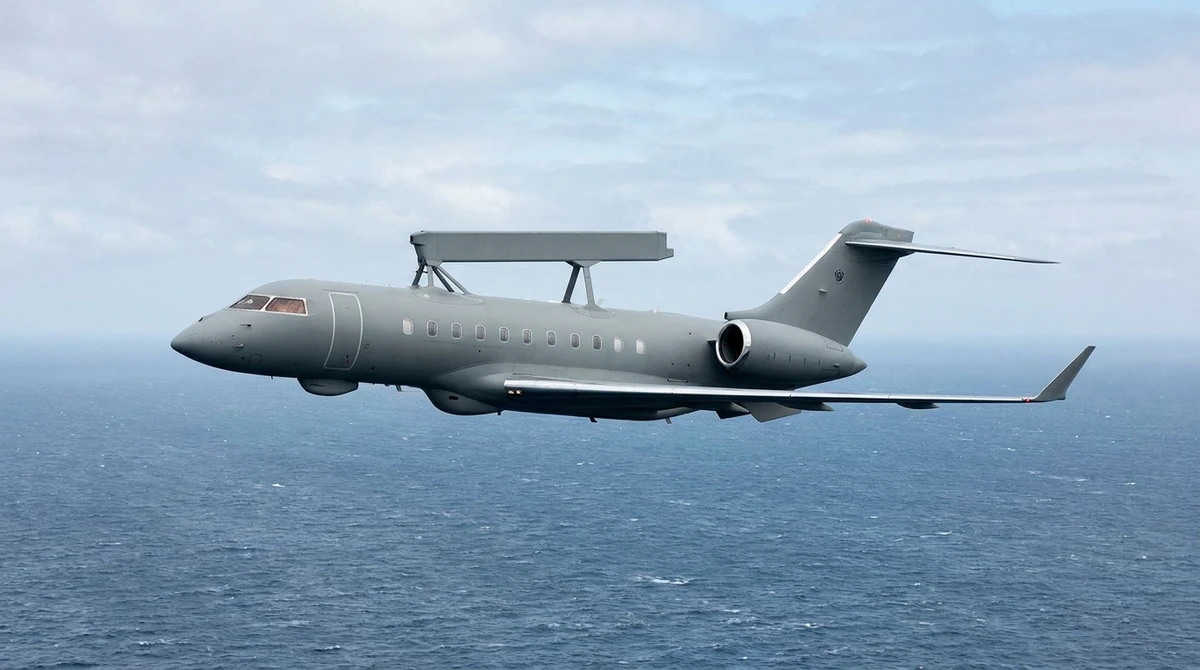
The Saab GlobalEye is a multi-role airborne early warning and control (AEW&C) aircraft produced by Saab of Sweden on the Canadian Bombardier Global 6000/6500 long-range business jet. It pairs Saab's Erieye ER (Extended Range) radar and mission system with a maritime radar and an electro-optical sensor to conduct air, sea and land surveillance on the same sortie. First flown on 14 March 2018, it entered service with the United Arab Emirates Air Force in April 2020, and by 2026 it had been ordered by Sweden, France and a second Middle Eastern customer and selected by NATO as its next airborne early warning platform.
Development
Saab launched the programme on 16 February 2016, with the United Arab Emirates, which had ordered the system the previous November, as launch customer, building on earlier Erieye installations aboard the Saab 340 AEW&C and the Embraer R-99. The launch announcement promised a mission endurance of up to 11 hours and signals-intelligence sensors, and Saab claimed the system could track very low-observable air and sea targets such as cruise missiles and submarine periscopes. The company obtained a supplemental type certificate authorising the conversion of the Global 6000, carried out at Linköping on completed airframes delivered by Bombardier. The modification strengthens the fuselage and wing to carry the dorsal radar, the other sensors and wingtip electronic-warfare equipment, adds an extended tailfin and ventral strakes beneath the rear fuselage, fits additional power and cooling, and installs a self-protection suite of laser and radar warning receivers and countermeasure dispensers.
The first aircraft was unveiled on 23 February 2018 and flew from Linköping on 14 March 2018 for 1 hour 46 minutes, and the second aircraft followed in January 2019. Bombardier has since replaced the Global 6000 with the Global 6500, which introduces two Rolls-Royce Pearl 15 turbofans of 67.3 kN (15,125 lbf) each, an optimised wing and new avionics for 10 per cent more speed and range; new-build GlobalEyes use that airframe.
Design
The primary sensor is the Erieye ER active electronically scanned array radar, a dorsal unit with a 10 m (33 ft) antenna weighing about 1 tonne (2,200 lb). Saab gives a detection range of up to 450 km (280 mi) at an operating altitude of 9,100 m (30,000 ft) and 550 km (340 mi) at 10,700 m (35,000 ft), an instrumented range of 650 km (350 nmi) and a 70 per cent increase in detection range over earlier Erieye versions through gallium nitride transmit/receive modules. The array covers a 300° arc, leaving the baseline aircraft blind through 30° fore and aft, with fore- and aft-facing radars available for customers requiring 360° radar coverage. A Leonardo Seaspray 7500E maritime surveillance radar with synthetic-aperture, inverse synthetic-aperture and ground moving target indication modes and a FLIR Systems Star SAFIRE 380-HD electro-optical/infrared turret beneath the forward fuselage, together with the main radar, give all-round coverage of airborne, sea and land targets.
The cabin houses a command and control suite with five to seven operator stations depending on configuration, data links, and voice and satellite communications; the aircraft can also fly without operators aboard, streaming its surveillance picture to ground stations. Saab now gives an endurance of 12 hours, while Janes lists more than 13 hours and a maximum speed of 833 km/h (450 kt). The aircraft operates from a 1,980 m (6,500 ft) runway and has no air-to-air refuelling capability.
Operational History
The United Arab Emirates ordered the system, which it calls the Swing Role Surveillance System, in November 2015 in a US$1.27 billion deal, added a third aircraft for US$238 million in February 2017 and two more for US$1.018 billion in January 2021. Deliveries ran from April 2020, with three aircraft handed over by February 2021; in January 2024 the UAE signed a three-year, US$190 million support contract for the fleet, the fourth aircraft arrived in April 2024 and the fifth and last on 17 September 2024.
Sweden's defence materiel agency FMV contracted for two aircraft in June 2022 for SEK 7.3 billion (US$710 million). In May 2024 the Swedish government decided to buy a third and to bring the first two forward, to offset the donation of one of its two ASC 890 (Saab 340 AEW&C) aircraft to Ukraine; the option for the third was exercised on 27 June 2024 for about SEK 2.6 billion, with a delivery period of 2024–2029. Deliveries are due from 2027 under the Swedish Air Force designation S 106, and the fleet is to be based at Ärna, near Uppsala.
France signed a letter of intent at the Paris Air Show on 18 June 2025 and placed a firm order through the DGA on 30 December 2025 for two Global 6500-based aircraft, with options on two more, ground equipment, training and support, worth about SEK 12.3 billion (US$1.3 billion); deliveries are planned for 2029–2032, and the aircraft will replace the four E-3F Sentries at Avord, which are to remain in service alongside them until 2035. On 27 July 2026 Saab announced an order worth SEK 10.1 billion (€910 million, about US$1.03 billion) for two aircraft from an undisclosed Middle Eastern country, for delivery in 2030.
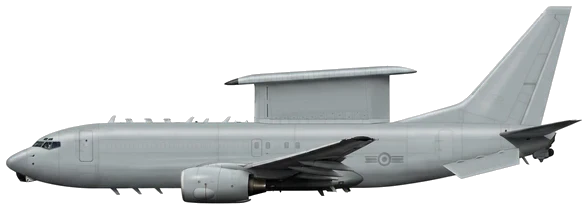
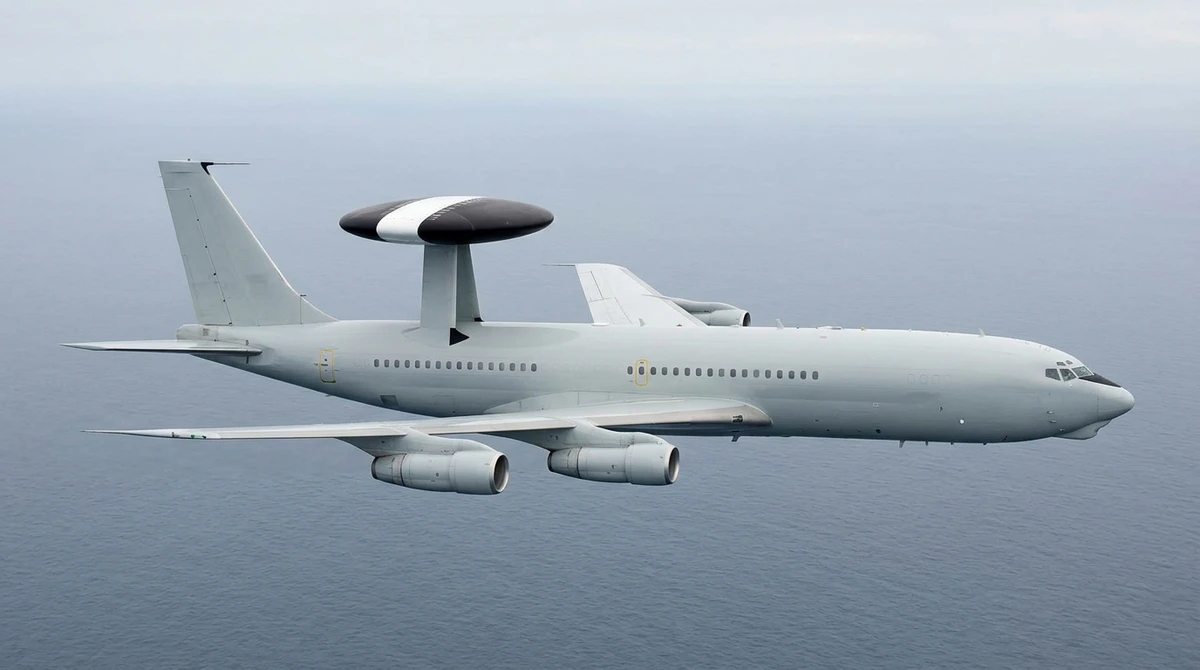
NATO had passed over the GlobalEye in November 2023 in favour of six E-7 Wedgetails but abandoned that purchase on 13 November 2025. On 7 July 2026, at the Ankara summit, the alliance selected the GlobalEye and opened formal negotiations through the NATO Support and Procurement Agency for up to ten aircraft to replace the 14 E-3A Sentries at Geilenkirchen, on behalf of eleven participating allies: Belgium, Canada, Denmark, Germany, Latvia, Lithuania, Luxembourg, the Netherlands, Norway, Romania and Sweden. Saab stressed that no contract had been signed; its chief executive estimated the unit price at US$400–450 million and said deliveries could begin in 2030 if a contract came quickly.
Canada named Saab preferred supplier on 27 May 2026, over the E-7 and L3Harris's AERIS X; under the partnership announced that day, no less than one-third of the projected GlobalEye fleet, at least 40 aircraft including allied orders, is to be built in Canada over 15 years; a non-binding term sheet for six aircraft was signed with the Defence Investment Agency on 25 September 2026. The Netherlands signed a letter of intent on 10 September 2026 for one aircraft, for delivery in 2031; Dutch crews are to gain access to the three Swedish aircraft from 2028 ahead of a joint four-aircraft pool.
Variants
- GlobalEye (Global 6000): Initial production standard on new-build Global 6000 airframes, delivered to the United Arab Emirates.
- GlobalEye (Global 6500): New-build standard on the Pearl 15-engined Global 6500, ordered by France.
- SRSS: Swing Role Surveillance System, the United Arab Emirates Air Force designation for its five aircraft.
- S 106: Swedish Air Force designation for the three aircraft on order to replace the Saab 340 AEW&C.
- WatchEye: Configuration offered to South Korea with additional fore and aft X-band radars for a full 360° field of regard, not selected.