Gulfstream G650 vs Gulfstream V
Gulfstream G650 vs Gulfstream V at a glance — top speed 982 vs 940 km/h, range 13,890 vs 12,000 km, max takeoff weight 45,360 vs 41,050 kg.
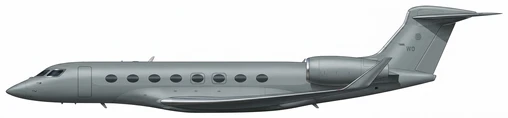
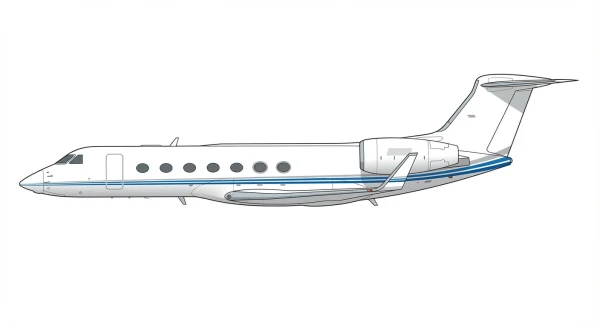
| Gulfstream G650 | Gulfstream V | |
|---|---|---|
| Origin country | 🇺🇸 United States | 🇺🇸 United States |
| Category | Military Transport Aircraft | Military Transport Aircraft |
| Manufacturer | Gulfstream | Gulfstream |
| First flight | 25 November 2009 | 28 November 1995 |
| Year introduced | 2012 | 1997 |
| Number produced | N/A | 193 units |
| Average unit price | $70 million | $18 million |
| Wing area | -- m² | 106.0 m² |
| Wingspan | 30.4 m | 28.5 m |
| Height | 7.7 m | 7.7 m |
| Length | 30.4 m | 29.4 m |
| Maximum speed | 982 km/h | 940 km/h |
| Operational range | 13,890 km | 12,000 km |
| Service ceiling | 15,545 m | 15,545 m |
| Max. takeoff weight | 45,360 kg | 41,050 kg |
| Empty weight | 25,401 kg | 20,956 kg |
| Total thrust | 2 x 75 kN | 2 x 6,690 kgf |
Detailed Comparison
The United States and allied militaries utilize commercial derivative aircraft for high-priority transport and specialized electronic missions. The Gulfstream V, designated the C-37A in U.S. service, established the baseline for ultra-long-range executive airlift in the late 1990s. The G650, introduced over a decade later, expands this envelope with higher cruise speeds and increased payload capacity, transitioning from a civil transport into a multi-domain special mission asset.
Development and Design
The Gulfstream V emerged from the GIV (military C-20 series) architecture, altering the platform by integrating Rolls-Royce BR710 turbofans and a redesigned, swept wing. This airframe became the foundation for the C-37A and later the G550, which dominates current airborne early warning and electronic intelligence fleets. The G650 is a clean-sheet design rather than an iterative stretch. Gulfstream discarded the traditional circular fuselage cross-section for an oval shape, widening the cabin and increasing internal volume. Aerodynamically, the wing is swept at 36 degrees, optimizing it for Mach 0.85 to 0.90 cruise, and is powered by Rolls-Royce BR725 engines yielding 75 kN of thrust each, compared to the GV's 65.6 kN (6690 kgf).
Specifications and Performances
The G650 outpaces the GV in speed, reach, and mass. The BR725 engines allow the G650 to maintain a Mach 0.90 cruise and reach a maximum range of 13,890 km, outdistancing the GV's 12,000 km limit. Both operate at a 15,545 m service ceiling, keeping them above standard commercial traffic—a tactical requirement for uninterrupted signals intelligence (SIGINT) operations. The G650's maximum takeoff weight of 45,360 kg is 4,310 kg heavier than the GV. This additional MTOW translates into a higher payload margin, accommodating the heavy radomes, antennas, and operator consoles required for modern electronic warfare without sacrificing fuel fraction or endurance.
Deployment and usage
The Gulfstream V, operating as the C-37A, routinely transported U.S. combatant commanders into conflict zones across Iraq and Afghanistan. Its architecture directly informed foreign special mission variants, including the Swedish S102B Korpen ELINT aircraft. Current military integration of these Gulfstream airframes falls into two primary categories:
- Executive airlift, moving military leadership and cabinet officials with secure, anti-jam communication suites.
- Intelligence, Surveillance, and Reconnaissance (ISR), deploying side-looking airborne radar and ventral payload canoes for standoff monitoring.
The G650 is in the early stages of its military life cycle. The Italian Air Force began operating G650ERs for government transport in 2025. Concurrently, defense contractors are bidding the airframe for next-generation electronic attack and battle management programs, using its high electrical power generation to support standoff jamming pods.
Conclusion
The G650 holds the definitive edge for future specialized military procurement, while the Gulfstream V is relegated to legacy transport roles. At $70 million, the G650 provides the necessary margins in MTOW, speed, and power generation to support the heavy, energy-intensive payloads required for modern electronic warfare and persistent ISR. Militaries operating the GV face an aging airframe lacking the electrical and payload headroom required for next-generation standoff sensors. For forces recapitalizing a special mission fleet, the G650 dictates the new baseline.