North Korea Fires Two Short-Range Ballistic Missiles Toward the East Sea
North Korea launched two short-range ballistic missiles from the Wonsan area toward the East Sea on September 20, 2026, one flying about 450 km and the other more than 600 km, South Korea's Joint Chiefs of Staff said; Japan said neither landed in its territorial waters.
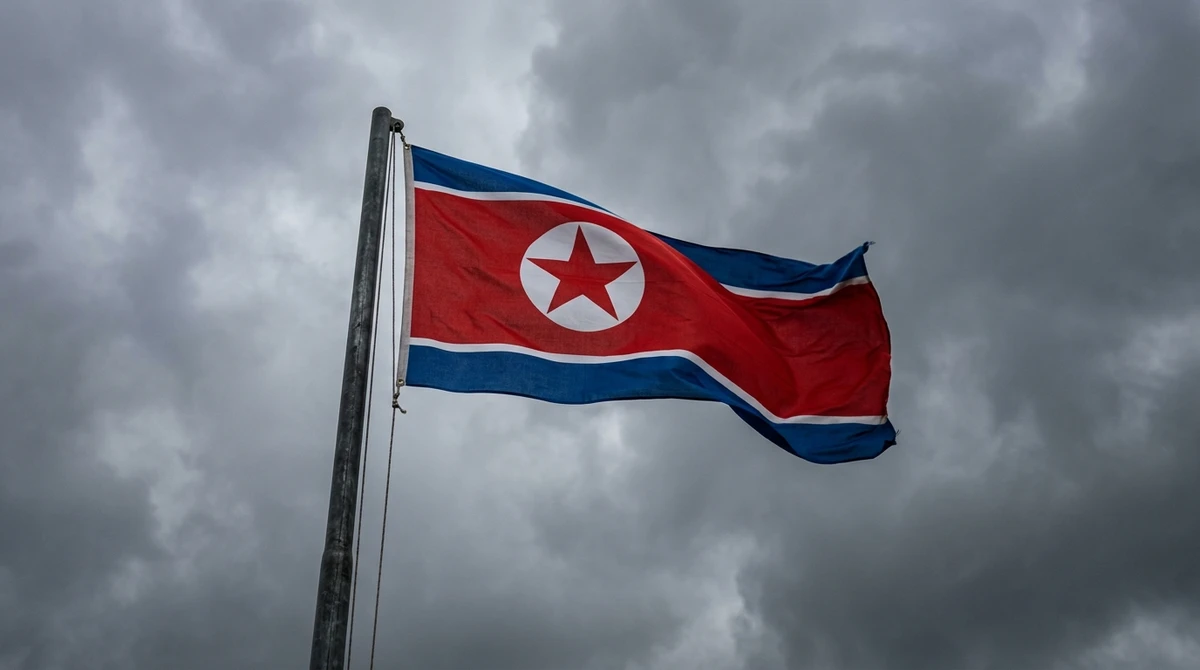
North Korea fired two short-range ballistic missiles toward the East Sea, also known as the Sea of Japan, on Sunday, September 20, 2026, South Korea's Joint Chiefs of Staff said. According to the Joint Chiefs, the first missile was launched from the Wonsan area at around 3:00 p.m. and the second from the same area at around 5:50 p.m.
The first missile flew approximately 450 km and the second more than 600 km, the Joint Chiefs said. The launches came eight days after North Korea's previous firings, on September 12, 2026, which took place during a joint firepower drill.
"Our military detected an additional short-range ballistic missile launched from the Wonsan area of North Korea towards the East Sea at around 5:50pm," the Joint Chiefs said in its statement on the second launch. It added that it is working with the United States on a detailed analysis of both launches.
The South Korean government called on Pyongyang to "immediately cease" its ballistic missile launches, describing Sunday's firings as a "grave act" that violated UN Security Council resolutions.
Japan's Defense Ministry reported a suspected North Korean missile and said it did not land in Japan's territorial waters. The Japanese government lodged a "stern protest" over the launches and condemned them as a threat to regional peace and security.
The firings followed a period in which North Korea rejected an International Atomic Energy Agency resolution demanding that it halt its nuclear activities. Pyongyang also reasserted that its status as a nuclear weapons state is "irreversibly and permanently fixed."
North Korea is ranked 17th in GlobalMilitary.net's ATLAS military power index. The site's record of the country's nuclear warhead inventory puts it at an estimated 60, up from an estimated 50 in 2025; both are estimates rather than declared holdings, as the nuclear forces pages state.
Sunday's flights sit at the opposite end of that arsenal from the systems the site catalogues. Coverage of North Korean ballistic missiles on GlobalMilitary.net is confined to the long-range tier: the shortest-ranged type with a page is the Hwasong-8, listed at 4,000 km, followed by the Hwasong-12 at 4,500 km, the Hwasong-14 at 10,400 km, the Hwasong-15 at 13,000 km and the Hwasong-17 at 15,000 km. At roughly 450 km and more than 600 km, the two missiles fired on September 20 flew an order of magnitude shorter than anything in that catalogue.
The intercontinental systems dominate attention paid to the arsenal, but the short-range, road-mobile tier is the one North Korea fires most often, and Sunday's launches were of that kind.
South Korea's Joint Chiefs of Staff said its analysis of the launches, carried out with the United States, is continuing. Neither it nor Japan's Defense Ministry identified the two missiles by type in its statements on Sunday.
More News
All news →
Davis-Monthan Inactivates Four A-10 Units, Ending the Base's Thunderbolt II Mission
The US Air Force inactivated four A-10 units at Davis-Monthan Air Force Base, Arizona, on September 18, 2026, ending the type's presence at the base while the FY2026 defense authorization act holds the fleet at no fewer than 103 aircraft through fiscal 2026.
Nuclear vs Air-Independent Propulsion: How a Submarine Runs Without Air, and What Japan Is Weighing
After Japan's defense minister declined on September 11, 2026 to rule out nuclear-powered submarines, a technical explainer on how a reactor, a Stirling engine, a fuel cell and a lithium-ion battery each keep a boat under water, and what each one buys.
US Air Force to Extend B-1 and B-2 Service Lives With Only Three B-21s in the Fleet
Air Force Global Strike Command said on 17 September 2026 that the B-1 Lancer and B-2 Spirit will fly beyond their planned retirements, keeping a US bomber force built on 1955, 1986 and 1993 designs in service while the B-21 Raider arrives at three aircraft.
Japan Will Not Rule Out Nuclear-Powered Submarines as Six Navies Field 140 Between Them
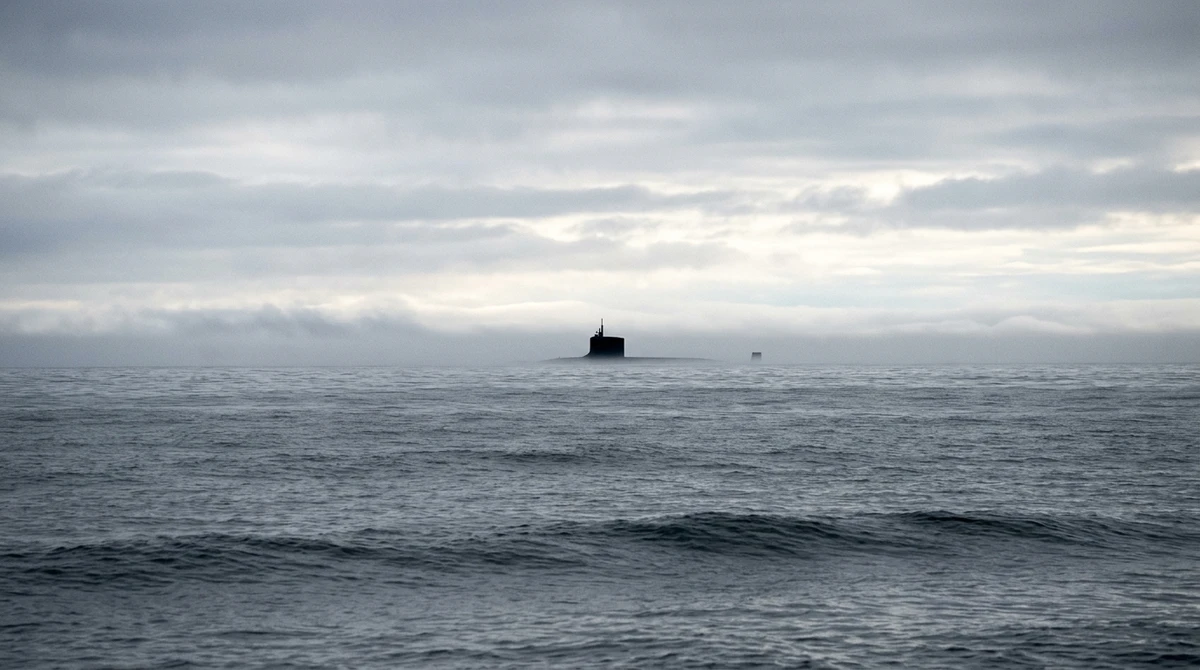
Japan's defense minister said on 11 September 2026 that nuclear-powered submarines "will not be ruled out" in the year-end revision of the country's security documents, an option that would put the JMSDF alongside the six navies operating 140 nuclear boats today.
Former Italian Carrier Giuseppe Garibaldi Enters Indonesian Waters Ahead of Handover to Jakarta
The Indonesian Navy said on 17 September 2026 that the former Italian carrier Giuseppe Garibaldi, to be renamed KRI Sriwijaya, had entered Indonesian waters and was due at Tanjung Priok in Jakarta on 18 September, ahead of a formal transfer whose date is reported differently by outlets.

Only Four Air Forces Fly High-Altitude Surveillance Drones, and Japan Has Just Lost One of Its Three
A Japan Air Self-Defense Force RQ-4B Global Hawk went down over international waters north of Tottori prefecture on 15 September 2026, the first loss of a Japanese Global Hawk and one of only 39 high-altitude surveillance drones GlobalMilitary.net records in service worldwide.