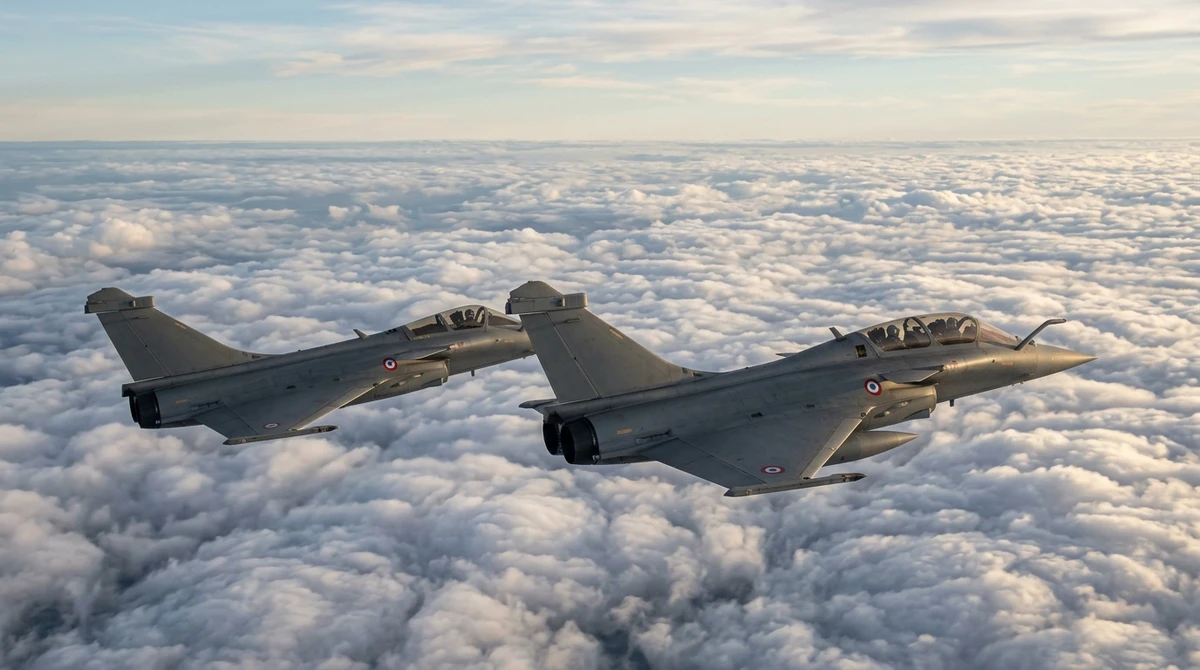
On 10 September 2026 the Direction générale de l'armement (DGA), France's defense procurement agency, set out the content of the F5 standard of the Dassault Rafale. The announcement is a reminder that the question "which Rafale?" has two answers. Every Rafale is identified by two labels at once: a version and a standard.
The version is the physical airframe, fixed at the factory. French forces fly three, the Rafale C, B and M, and export aircraft carry two-letter codes. The standard is the hardware and software configuration, qualified by the DGA, that the aircraft is built or upgraded to. Unlike the version, it changes over the aircraft's life: airframes built to one standard are retrofitted to the next. F2 aircraft were upgraded to F3, and all French Air and Space Force and Navy Rafales are being progressively brought to F4.1. A full description therefore uses both, as in "a Rafale M at F4.1": the version says what the aircraft is, the standard what it can do.
The versions: Rafale C, B and M
| Rafale C | Rafale B | Rafale M | |
|---|---|---|---|
| Seats | 1 | 2 (pilot and weapon systems officer or instructor) | 1 |
| Service | Air and Space Force | Air and Space Force | French Navy |
| Roles | Omnirole | Omnirole; training; complex strike and reconnaissance; in French service, nuclear deterrence foremost | Omnirole, from the carrier |
| Carrier fittings | – | – | Reinforced landing gear, catapult bar, arrester hook |
| Prototype flew | 19 May 1991 | 30 April 1993 | 12 December 1991 |
| Export code | E + customer letter (EH, EQ, EM, EG) | D + customer letter (DH, DQ, DM, DG) | – |
The letters are French: C for chasseur (fighter), B for biplace (two-seater) and M for marine (naval). The Rafale C is the baseline land-based aircraft of the French Air and Space Force, flown by a single pilot. The Rafale B adds a second seat behind the pilot and keeps the full multirole capability of the C. The rear seat holds an instructor for conversion training, or a weapon systems officer who shares the workload on complex strike and reconnaissance missions. In French service, nuclear deterrence is the two-seater's main mission.
The Rafale M is the French Navy's single-seat version, flown from the carrier Charles de Gaulle and shore-based at Landivisiau naval air station. What sets it apart from the C is its deck equipment. It has a reinforced landing gear, a catapult bar and an arrester hook, and can land on 105 m of deck and be catapulted on 112 m. Otherwise the three versions share the same weapons and sensors and move through the same standards, with two exceptions: the F1 standard existed only on the M, and F4.2 adds a carrier-landing aid for the M.
Export aircraft are B- and C-type airframes with customer-specific equipment and a two-letter designation: D for the two-seater, E for the single-seater, the second letter identifying the customer.
- India: Rafale DH and EH; the Indian Navy's order is for the Rafale M
- Qatar: Rafale DQ and EQ
- Egypt: Rafale DM and EM
- Greece: Rafale DG and EG
The standards: F1, F2, F3 and F3-R
Each standard is qualified by the DGA, builds on the previous one, and is retrofitted to aircraft built to an earlier one. The table lists what each added; the sections that follow explain the steps.
| Standard | Date | Capability gained |
|---|---|---|
| F1 | 2004In service, Navy | Air defense onlyFirst Rafale M only; no air-to-ground weapons |
| F2 | 2006In service, Air Force | Ground attack addedAir-to-ground weapons |
| F3 | 1 Jul 2008Qualified | Full multirole: anti-ship, reconnaissance, nuclear strikeAM39 Exocet · Reco NG pod · ASMP-A |
| F3-R | 31 Oct 2018Qualified | Longer reachMeteor missile · Talios targeting pod · RBE2 AESA radar, on new aircraft since mid-2013 |
| F4.1 | 13 Mar 2023Qualified | Connected combat beginsCollaborative combat functions · Scorpion helmet sight · 1,000 kg AASM · cyber hardening |
| F4.2 | Oct 2025Qualified | NetworkingSATCOM · Link 16 Block 2 · shared passive geolocation · OSF infrared search and track · carrier-landing aid |
| F4.3 | –In development | Completes F4MICA NG · renewed SPECTRA · Contact radio · AI-assisted Talios |
| F5 | 2033–2035Service entry target | First entry into defended airspace; teaming with a combat droneRBE2-XG radar · M88 T-REX (+20% thrust) · ASN4G · new data link · digital self-protection |
F1 was air-to-air only, with no air-to-ground armament. It equipped only the first French Navy Rafale M, which the Navy put into service in 2004 at Landivisiau. By 2008 the nine F1 aircraft in naval service had been placed in storage pending a retrofit.
F2 added air-to-ground capability. It entered service with the French Air Force in 2006, when the first Air Force Rafale squadron stood up at Saint-Dizier.
F3, qualified on 1 July 2008, completed the multirole picture with three missions: anti-ship strike with the AM39 Exocet, reconnaissance with the Reco NG pod, and airborne nuclear deterrence with the ASMP-A missile. The first F3 aircraft were delivered from early 2009. From F3 the Rafale could carry out air-to-air and air-to-surface tasks in the same mission, hence Dassault's "omnirole" label.
F3-R extended the aircraft's reach. Launched at the end of 2013, it was qualified on 31 October 2018. It added the MBDA Meteor long-range air-to-air missile, which reaches its full effectiveness with the RBE2 active electronically scanned array (AESA) radar, and the Thales Talios new-generation laser designation pod. The radar itself predates the standard: every production Rafale delivered since mid-2013 carries it.
F3-R, F4 and F5 compared
The most common question is what an F4 can do that an F3-R cannot. The short answer is connect: F4 brings collaborative combat.
- Connectivity: satellite communications, Link 16 Block 2, passive target geolocation by networked patrols of aircraft, and the Contact software-defined radio
- Pilot and weapons: the Scorpion helmet-mounted sight and the 1,000 kg AASM guided bomb
- Protection: hardening against cyber threats
- Still to come: the MICA NG missile and the BAN digital autonomous jammer
F4 arrives in three increments. F4.1 was qualified on 13 March 2023 and F4.2 in early October 2025; the first two F4.2 aircraft flew later that month ahead of operational service. F4.3 is still in development. A first "fitness for use review" campaign was flown at Istres in July 2025, and no qualification date has been given. This increment brings the MICA NG, a renewed SPECTRA self-protection suite, the Contact radio and an AI-assisted Talios pod.
New aircraft are also built to F4. In January 2024 France ordered 42 single-seat Rafale, the fifth production tranche, with the Contact radio, the MICA NG and the BAN jammer in SPECTRA; they are delivered from 2027 and designed to evolve toward F5 in the 2030s. Export aircraft follow the same path: the United Arab Emirates' order of 80 Rafale F4, signed on 3 December 2021, made it the first export customer for the standard.
F5 has two stated goals: first-entry capability into hostile theaters, and collaborative combat. It changes six things:
- Radar: the RBE2-XG, an evolution of the RBE2 AESA, with a strong increase in power and detection range within the same footprint
- Data link: a new Thales inter-vehicle link, stealthy, jam-resistant and high-throughput
- Self-protection: a fully digital suite, alongside a new-generation inertial unit
- Engine: the M88 T-REX, with maximum thrust up 20 percent, from 7.5 to 9 tonnes
- Nuclear missile: the ASN4G, which renews the airborne deterrent now carried by the ASMP-A
- Combat drone: a stealthy uncrewed combat air vehicle derived from the nEUROn demonstrator, flying alongside the Rafale
Under the updated 2024-2030 military programming law, 47 Rafale F5 are to be delivered to the Strategic Air Forces by 2035.
The standards also set how long the Rafale stays current. The DGA describes F5 as a deep mid-life renovation, needed to prepare the aircraft for the challenges of the next decade and beyond; it is to be qualified around 2033 and put into service with the French Air and Space Force, then the French Navy. The fifth-tranche aircraft delivered from 2027 will therefore reach F5 early in their lives. A successor is further out: in June 2026 the armed forces minister told the Senate that France would continue work on a fighter aircraft for around 2040, after the Franco-German-Spanish FCAS project ended in its original form. Neither the DGA nor the ministry has published a retirement date for the Rafale; officially, F5 marks its mid-life point.
More News
All news →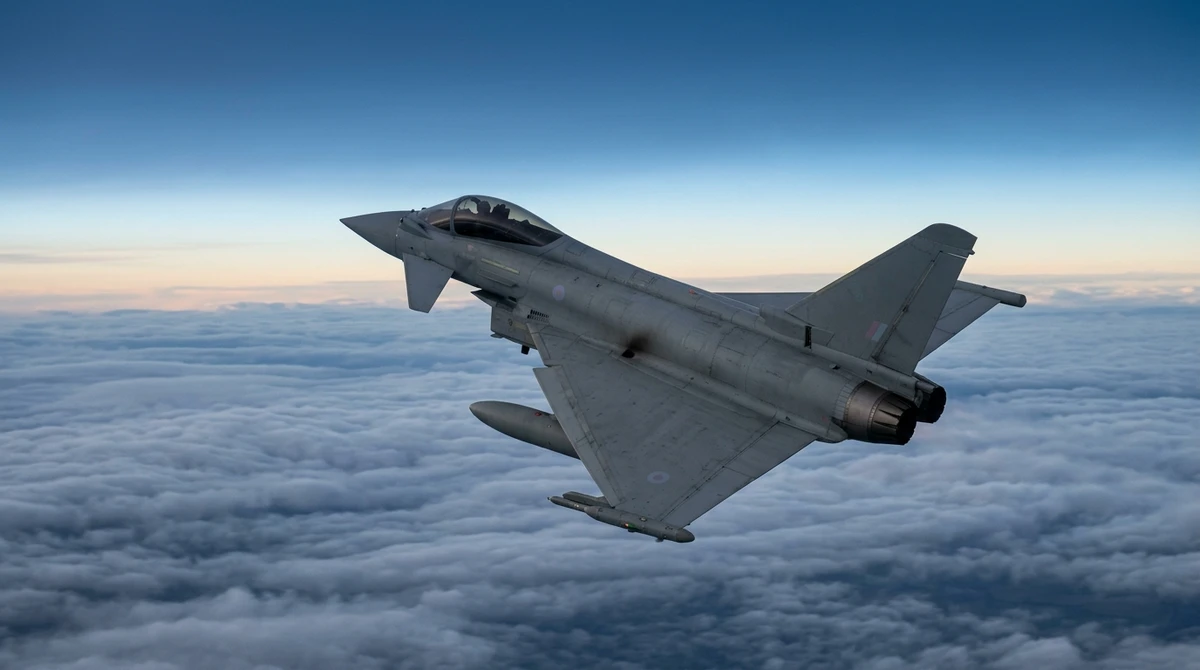
Ramjet vs Rocket: How the Meteor Keeps Thrusting to the Target While the AMRAAM Coasts
The Pentagon's AMRAAM contract of up to $20.7 billion, announced on September 28, 2026, expands output of a missile whose rocket burns early and then coasts; Europe's Meteor uses a throttleable ramjet that MBDA says thrusts until intercept.

Russia Plans $202 Billion Defense Budget for 2027, Highest Since War Began, Budget Documents Show
Russia plans to spend 17.1 trillion roubles ($202.6 billion) on national defense in 2027, around 27% more than originally budgeted and the highest figure since the invasion of Ukraine in 2022, according to government budget documents seen by Reuters on September 28.
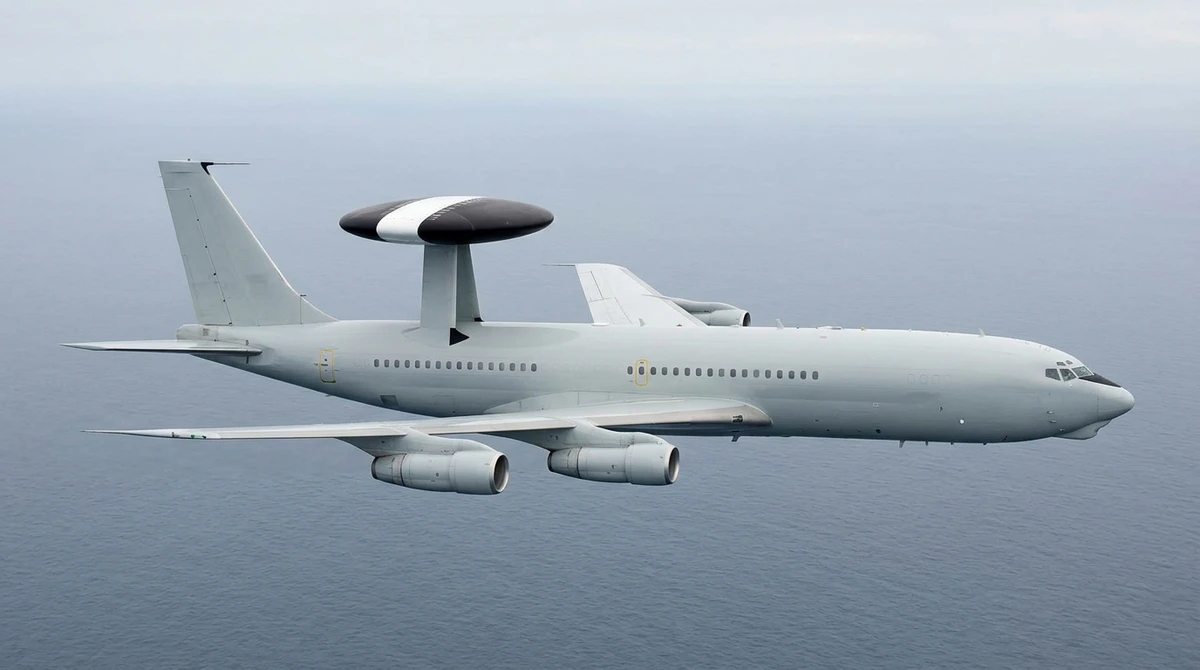
How Early-Warning Aircraft Radars Cover 360 Degrees: Rotodome, Fixed Side Arrays and Three-Face Designs
Canada's term sheet and NATO's joint buy both settle on an aircraft without the E-3's rotating saucer; the physics behind the three designs explains what the flat Erieye array gains in revisit rate and what it gives up ahead and astern.

Canada Signs Preliminary Deal With Saab for Six GlobalEye Early-Warning Aircraft
Saab and Canada's Defence Investment Agency signed a non-binding term sheet on September 25, 2026, setting the framework for negotiations on six GlobalEye airborne early warning aircraft for the Royal Canadian Air Force.
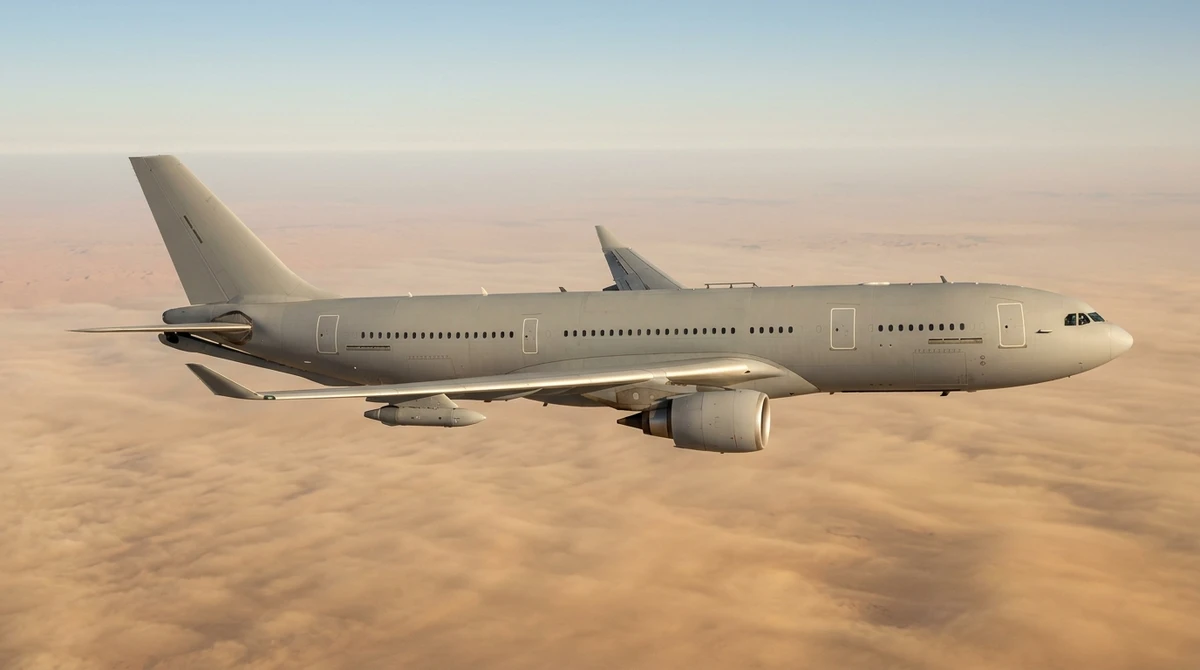
Boom or Drogue: Why the RAF Tanker Sent to Saudi Arabia Cannot Refuel Its F-15s
Britain announced on September 22, 2026 that it will send a Voyager tanker to Saudi Arabia, but its hose-and-drogue pods can serve only the Typhoons and Tornados, not the 232 F-15s that make up 60 percent of the Saudi combat fleet.
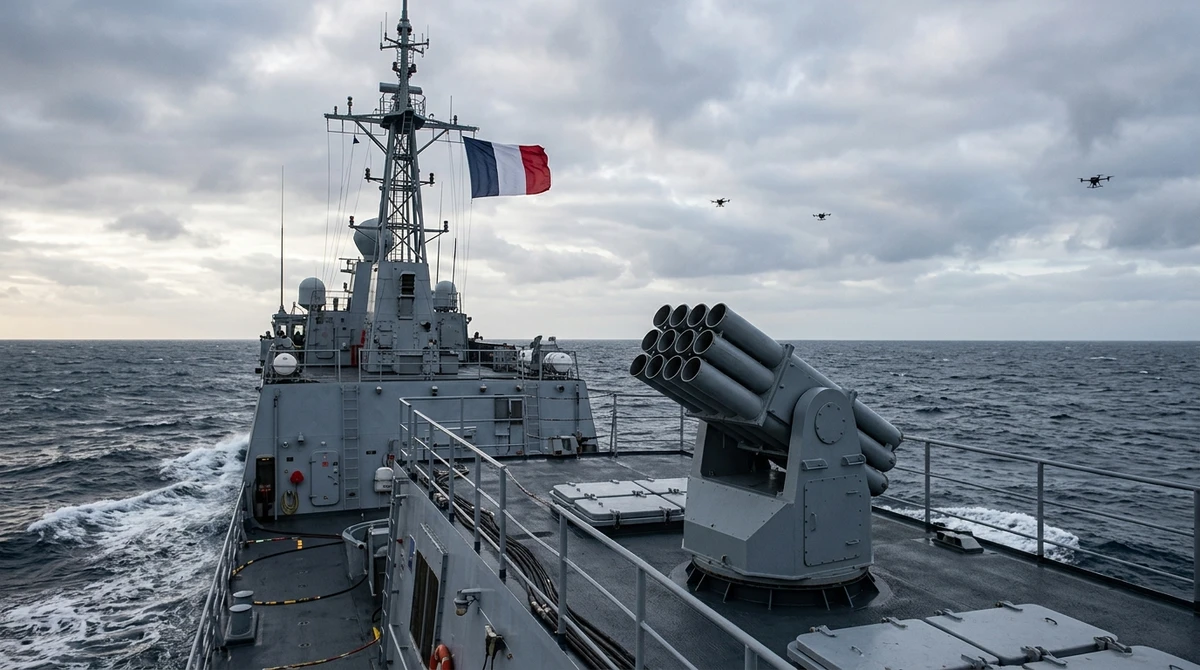
Naval Group's Rampart Counter-Drone Launcher Fitted to French Mistral-Class Ship Ahead of Sea Trials
Naval Group's modular Rampart close-in weapon system was spotted aboard a French Navy Mistral-class amphibious assault ship in Toulon, according to reports of September 22, 2026, ahead of a first at-sea firing campaign scheduled for October during the counter-drone exercise WildFire.