Ramjet vs Rocket: How the Meteor Keeps Thrusting to the Target While the AMRAAM Coasts
The Pentagon's AMRAAM contract of up to $20.7 billion, announced on September 28, 2026, expands output of a missile whose rocket burns early and then coasts; Europe's Meteor uses a throttleable ramjet that MBDA says thrusts until intercept.
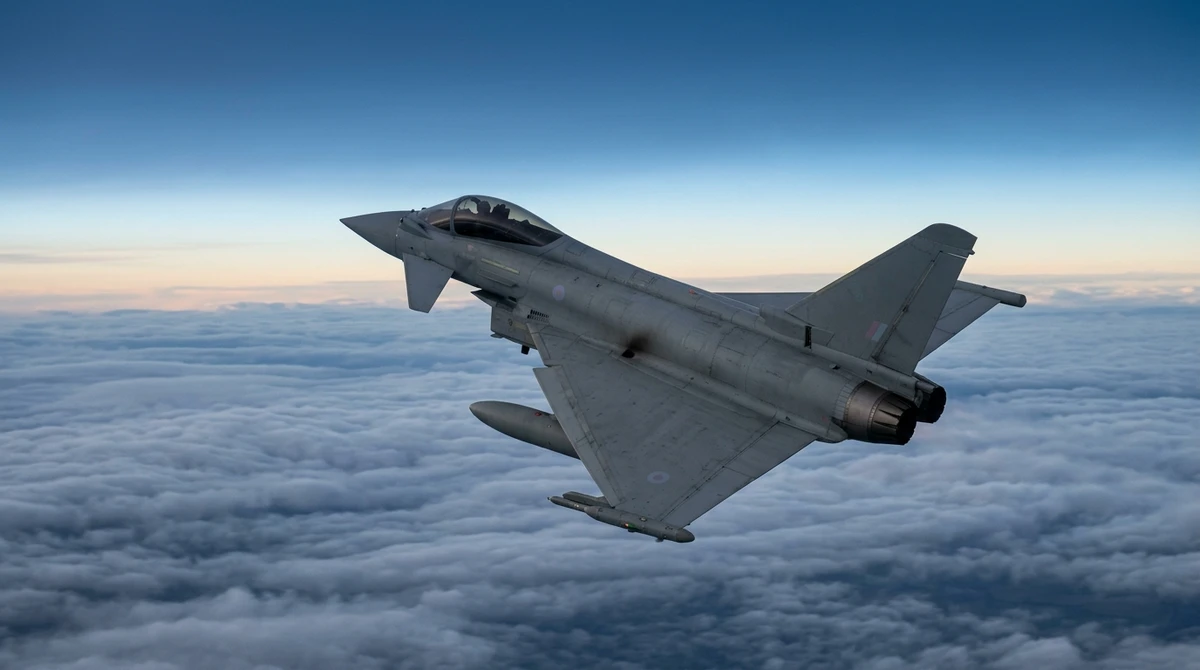
The Pentagon on September 28, 2026 announced a multiyear production contract for the AIM-120 AMRAAM with a ceiling of up to $20.7 billion, awarded to RTX's Raytheon three days earlier, and said the deal would "nearly double" output of the missile, Defense News reported. Breaking Defense reported that the award underwrites a framework agreement to lift production to at least 1,900 missiles a year. Earlier in September the department had signed a framework deal with Lockheed Martin to boost production of the AIM-260 JATM, the round being developed to outrange and eventually replace AMRAAM, according to Defense News.
The missile at the center of the award reached initial operational capability in September 1991, and its newest variant, the AIM-120D, in July 2015, according to Air & Space Forces Magazine. RTX says it is fielded by 44 countries. Across those 35 years its propulsion has stayed the same in principle: a solid rocket that burns early and leaves the missile to coast. Europe's Meteor, in service since 2016, took a different route, with a ramjet that MBDA says "provides the missile with thrust all the way to target intercept."
The two approaches produce missiles of nearly identical size. GMN's database lists AMRAAM at 3.65 m long, 178 mm in diameter and 161.5 kg; MBDA gives Meteor as 3.7 m, 178 mm and 190 kg. What differs is how each spends its energy over the flight, and that difference shows most in a figure that matters more than brochure range: the no-escape zone.
How a rocket-powered missile flies
AMRAAM is driven by what Air & Space Forces Magazine describes as a "boost-sustain solid-propellant rocket motor." A solid rocket carries both its fuel and its oxidizer in the casing, so it can burn anywhere, including in the thin air at high altitude. The cost of that simplicity is duration. The motor burns for seconds early in the flight, accelerating the missile to its top speed, and then it is spent. From that moment the missile is a glider at very high speed, losing energy to drag with every kilometer and bleeding more of it with every turn its seeker commands.
This is why a missile's maximum range is a poor guide to what it can actually do. The brochure figure describes the farthest a missile can fly to reach a target that does not try to escape. Against a target that detects the launch and turns away at full power, the coasting missile must close the gap on energy it stored in the first seconds of flight, while the target keeps adding energy from its own engines. The 105 km range listed for AMRAAM in GMN's database is that kind of figure; the useful one is shorter.
That shorter figure is the no-escape zone, the range inside which a target that sees the missile and runs still cannot outrun it. For any coasting missile it is a fraction of the maximum range, because the end-game, the last few kilometers where the target is maneuvering hardest, is fought at the moment the missile has the least energy left.
How the Meteor's ramjet works
MBDA describes Meteor's propulsion as a "solid fuel, variable flow, ducted rocket"; Saab calls it a "solid rocket booster and throttleable ramjet." A ramjet cannot work from a standstill, because it depends on the missile's own forward speed to compress the air it breathes. So Meteor leaves the rail on a conventional solid booster, which UK Defence Journal reports accelerates it to about Mach 1.5 before the ramjet takes over and pushes it on to Mach 4.
The booster is built into the combustion chamber itself. Once it burns out, the air intakes open and a second solid charge begins to burn in a gas generator. This propellant is deliberately short of oxygen, so instead of burning completely it produces a hot, fuel-rich gas that streams into the chamber, where it meets the air rammed in through the intakes and finishes burning. The oxygen for the main phase therefore comes from the atmosphere, not from the missile, which is the ramjet's central advantage over a rocket: the weight a rocket must give to oxidizer, Meteor can give to fuel and to flight time.
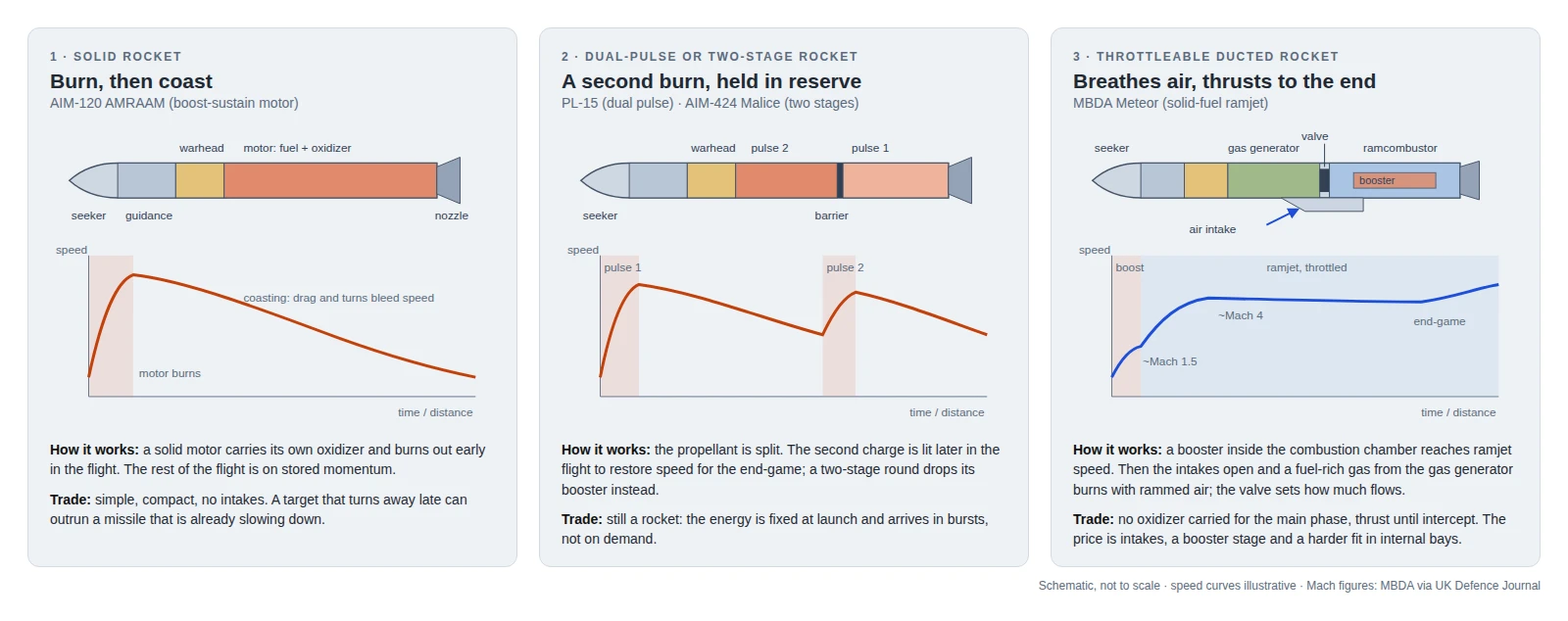
The "variable flow" in MBDA's wording is the other half of the design. Throttling a ducted rocket means varying how much fuel-rich gas flows from the generator into the chamber. The missile can therefore cruise economically through the middle of its flight and open the throttle again as it closes on a maneuvering target, which is the phase where a coasting rocket is weakest. MBDA says this gives Meteor "the largest No Escape Zone of any air-to-air missile system, several times greater than current MRAAMs" (medium-range air-to-air missiles), and claims "three to six times the kinetic performance of current air-air missiles of its type." UK Defence Journal puts the range at "well in excess of 150 kilometres" and the no-escape zone at over 60 km; Saab quotes an operational range of "100+ km" and a speed of "over Mach 4." These are manufacturer and press figures, and they depend on launch altitude, launch speed and what the target does. A side-by-side AMRAAM and Meteor comparison sets the published specifications of the two against each other.
The ramjet is not free. It needs the booster to reach roughly Mach 1.5 before it can light, and it needs intakes, which complicate carriage inside a stealth aircraft's weapons bay. For the F-35B, UK Defence Journal reports, the fins and air intakes had to be modified, with redesigned fins that are "longer in length and shorter in width." MBDA lists the Typhoon, Rafale, Gripen and F-35 as Meteor platforms. According to Saab, "In 2016, Sweden became the first nation taking Meteor into service," on the Swedish Air Force's Gripens, which Saab says can carry up to seven.
How the United States and China answer with rockets
Other answers to the coasting problem have stayed with solid rockets. China's PL-15 uses a dual-pulse rocket motor, The War Zone reports, with a reported range of 124 miles. A dual-pulse motor splits the propellant into two charges: the first boosts the missile off the rail, and the second is lit later in flight to restore speed for the end-game. The War Zone writes that the PL-15 is intended to at least match the AIM-120D, and that Western analysts it cites judge its maximum range comparable to Meteor's, while "the pan-European missile likely has a much larger no-escape zone and better long-range kill probability thanks to its ramjet motor." A Meteor and PL-15 comparison lists the two sets of published figures.
The United States has pursued two paths at once. The US Navy revealed the AIM-424 Malice at the Tailhook symposium on August 22, a Raytheon missile with a two-stage solid-propellant rocket motor and a range The War Zone reports as "in excess of 250 nautical miles," or 463 km, while noting that the published figures may be imprecise. At 1,500 lb (680 kg) and 13.5 ft (4.11 m), against AMRAAM's 161.5 kg and 3.65 m, Malice is a far larger missile. It is intended for the Super Hornet, the F-35C and the future F/A-XX, according to the Navy at the Malice unveiling.
The other path is the AIM-260, whose performance is classified and whose propulsion has not been disclosed. It is not yet operational; Australia became its first foreign buyer in August, in an A$736 million purchase. GMN's database lists an indicative range of about 200 km. The War Zone reports that the JATM keeps "the same general form factor as the AMRAAM, in large part to ensure that it can fit inside the internal bays" of stealth fighters such as the F-22, a constraint that caps how much propellant it can carry, whatever burns it.
The AMRAAM contract buys more of a rocket-powered missile that RTX says 44 countries already field, while its successors are still arriving. The physics it illustrates is older than any of them. A rocket spends its energy at the start of the flight and hopes to have enough left at the end; a ramjet takes its oxygen from the air around it and spends its fuel when it chooses. On a range chart the two can look alike. In the last kilometers, where the target is turning hardest, they behave very differently.
More News
All news →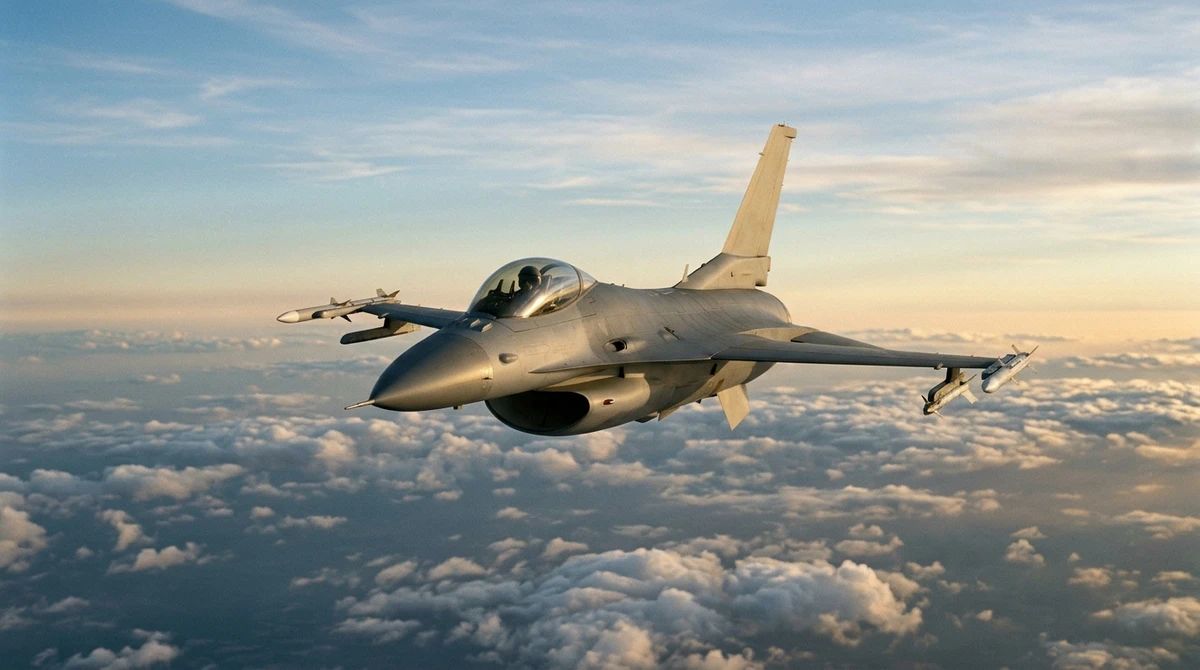
Pentagon Awards Raytheon Up to $20.7 Billion to Nearly Double AMRAAM Production
The Pentagon on 28 September announced a five-year AIM-120 AMRAAM production contract with RTX's Raytheon business worth up to $20.7 billion, an undefinitized award that Reuters described as provisional because Congress has not yet funded the full deal.
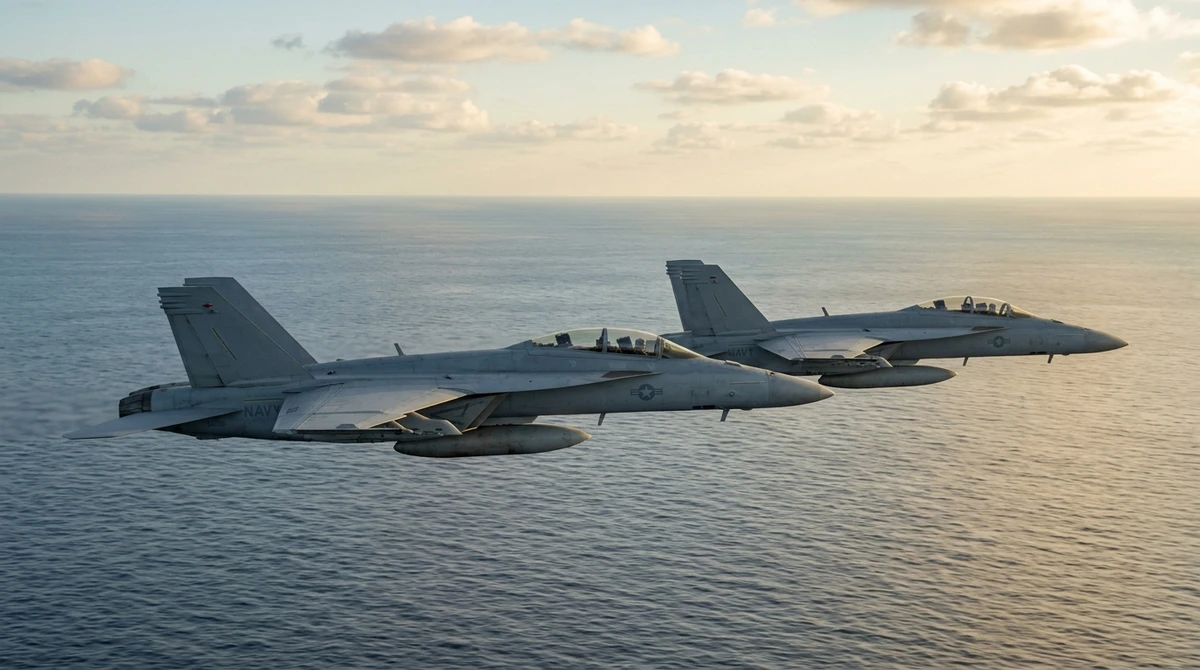
Boeing Wins US Navy's F/A-XX Sixth-Generation Fighter, Successor to 700 Super Hornets and Growlers
The Pentagon announced on September 29, 2026 that Boeing will build the F/A-XX, the US Navy's sixth-generation carrier-based fighter, under a full-scale development contract worth more than $20 billion to replace the F/A-18E/F Super Hornet and EA-18G Growler from the 2030s.

Russia Plans $202 Billion Defense Budget for 2027, Highest Since War Began, Budget Documents Show
Russia plans to spend 17.1 trillion roubles ($202.6 billion) on national defense in 2027, around 27% more than originally budgeted and the highest figure since the invasion of Ukraine in 2022, according to government budget documents seen by Reuters on September 28.
How Early-Warning Aircraft Radars Cover 360 Degrees: Rotodome, Fixed Side Arrays and Three-Face Designs
Canada's term sheet and NATO's joint buy both settle on an aircraft without the E-3's rotating saucer; the physics behind the three designs explains what the flat Erieye array gains in revisit rate and what it gives up ahead and astern.

Canada Signs Preliminary Deal With Saab for Six GlobalEye Early-Warning Aircraft
Saab and Canada's Defence Investment Agency signed a non-binding term sheet on September 25, 2026, setting the framework for negotiations on six GlobalEye airborne early warning aircraft for the Royal Canadian Air Force.
Boom or Drogue: Why the RAF Tanker Sent to Saudi Arabia Cannot Refuel Its F-15s
Britain announced on September 22, 2026 that it will send a Voyager tanker to Saudi Arabia, but its hose-and-drogue pods can serve only the Typhoons and Tornados, not the 232 F-15s that make up 60 percent of the Saudi combat fleet.