The US Army Revived a Canceled Supergun to Test Hypersonic Warheads
Yuma Proving Ground has fired a full-scale hypersonic warhead from a cannon derived from the canceled Strategic Long Range Cannon, giving the Army a cheaper way to measure what a Mach 5 impact actually does to a target.
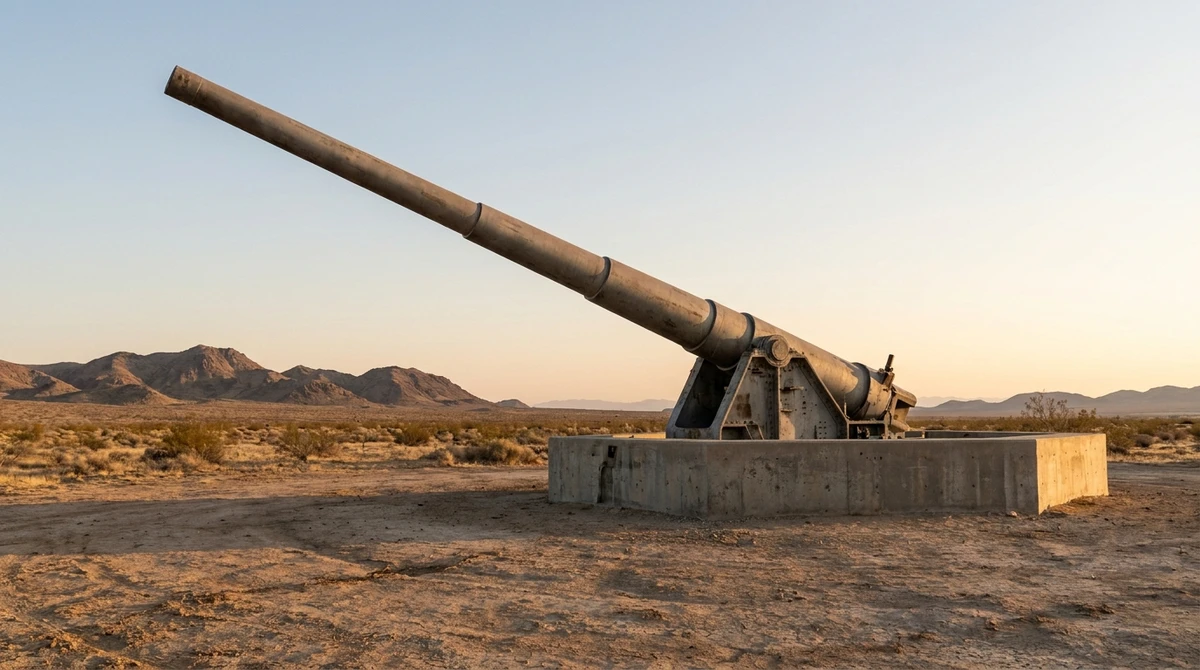
The US Army has fired a full-scale, live hypersonic warhead from a cannon at Yuma Proving Ground in Arizona, in a test disclosed by the range's official publication, The Outpost, on July 30, 2026 and picked up by the defense press on August 4. The gun used is the Heavy Artillery Test System, hardware derived from the canceled Strategic Long Range Cannon programme.
The Strategic Long Range Cannon was conceived as an ultra-long-range artillery piece able to strike targets more than 1,000 miles away. The Army abandoned it as a weapon. What survived is a very large gun capable of accelerating a payload to extreme velocity on a fixed range, and that turns out to be useful for a different problem.
Hypersonic weapons draw most of their destructive effect from kinetic energy rather than from explosive filler, which means the only way to know what a given warhead design does on impact is to bring it to velocity and hit something. Doing that with a rocket-propelled test vehicle costs a flight test each time. A gun does it repeatedly, on a schedule, at a fraction of the price, and with high-speed cameras and telemetry trained on the impact.
The effort was run jointly by Lawrence Livermore National Laboratory, the Department of Energy laboratory that handles much of the country's warhead physics work, and the Army Combat Capabilities Development Command Armaments Center. It began roughly two years ago and ran an inert proof-of-concept firing first, to validate the physics before committing to live ordnance. Design refinements followed, then the live shot.
The engineering problem was surviving the barrel. DEVCOM-AC developed an Integrated Launch Package able to withstand the acceleration inside the gun, which is far more violent than anything a warhead experiences on a missile, along with an electronic safe-and-arm fuze. On test day personnel withdrew to bunkers, a truck backed the launch package up to the weapon, the gun crew loaded the warhead and propelling charge, and the test director counted down. Review of the high-speed footage confirmed the shot as a complete success, according to the range's account.
The distinction worth keeping in view is that this is a test rig, not a weapon. Nothing about the demonstration puts a cannon-launched hypersonic round into service, and no unit will field the HATS. What it changes is the cost and cadence of lethality assessment for the programmes that will be fielded, at a moment when the American hypersonic portfolio, including the Army's own Dark Eagle long-range hypersonic weapon, is moving from development into deployment.
Hypersonic is conventionally defined as sustained flight above Mach 5, roughly 6,174 km/h, a threshold that only a small number of fielded systems cross; the fastest missiles in the world sit well beyond it. Warhead behavior at those speeds is poorly characterized by comparison with subsonic and supersonic weapons, which is precisely the gap the cannon is meant to fill.
Officials said the demonstration has already drawn interest from several other hypersonic programmes considering the approach for their own test campaigns. Neither the exact date of the firing nor the warhead design involved has been released.
More News
All news →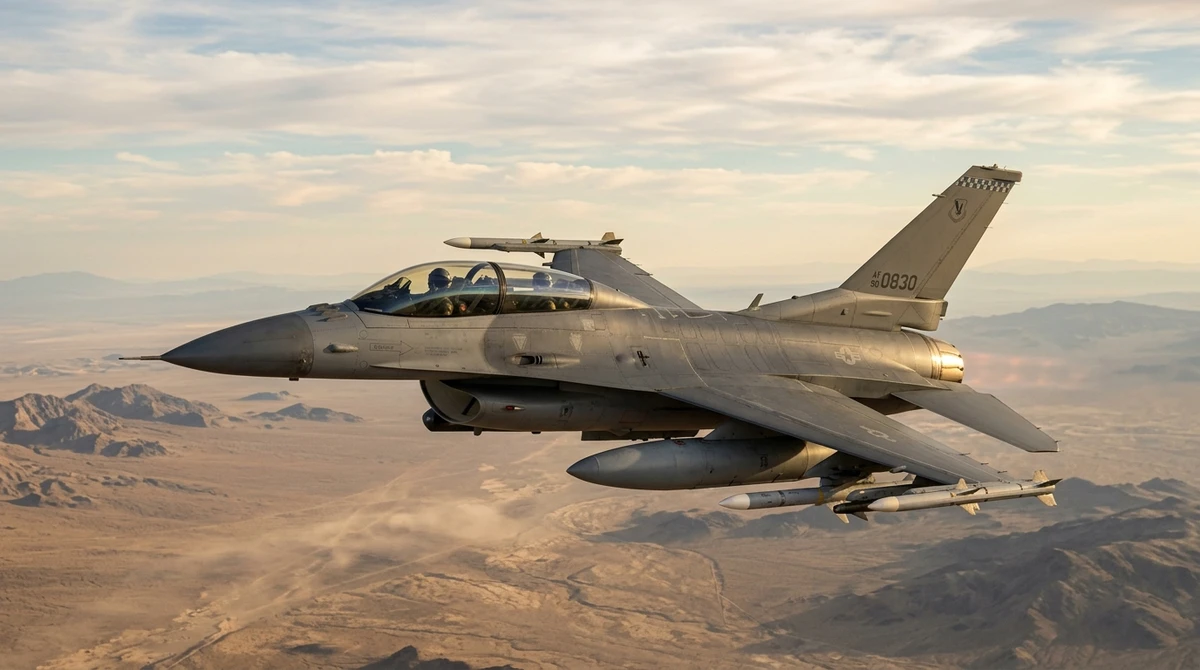
Morocco's First F-16 Block 72 Makes Maiden Flight, the First Pratt & Whitney-Powered Viper to Fly
Lockheed Martin said on October 6 that the Royal Moroccan Air Force's first F-16 Block 72, a two-seat F-16D, had flown from its Greenville, South Carolina, plant, the first flight of the Pratt & Whitney-engined version of the latest-generation Fighting Falcon.

First HACM Hypersonic Cruise Missile Flight Test Unit Released Over Australia
The U.S. Air Force says a Hypersonic Attack Cruise Missile flight test unit was released by the Royal Australian Air Force over an Australian test range, without disclosing the date, the launch aircraft or whether the scramjet-powered weapon achieved powered flight.

Spain Selects Airbus A321 as Platform for Three SIGINT Aircraft in €436M Program
Spain has chosen the Airbus A321 as the platform for three signals-intelligence aircraft for the Spanish Air and Space Force, restoring a dedicated airborne SIGINT capability the country has lacked since its Boeing 707 was retired in 2014.
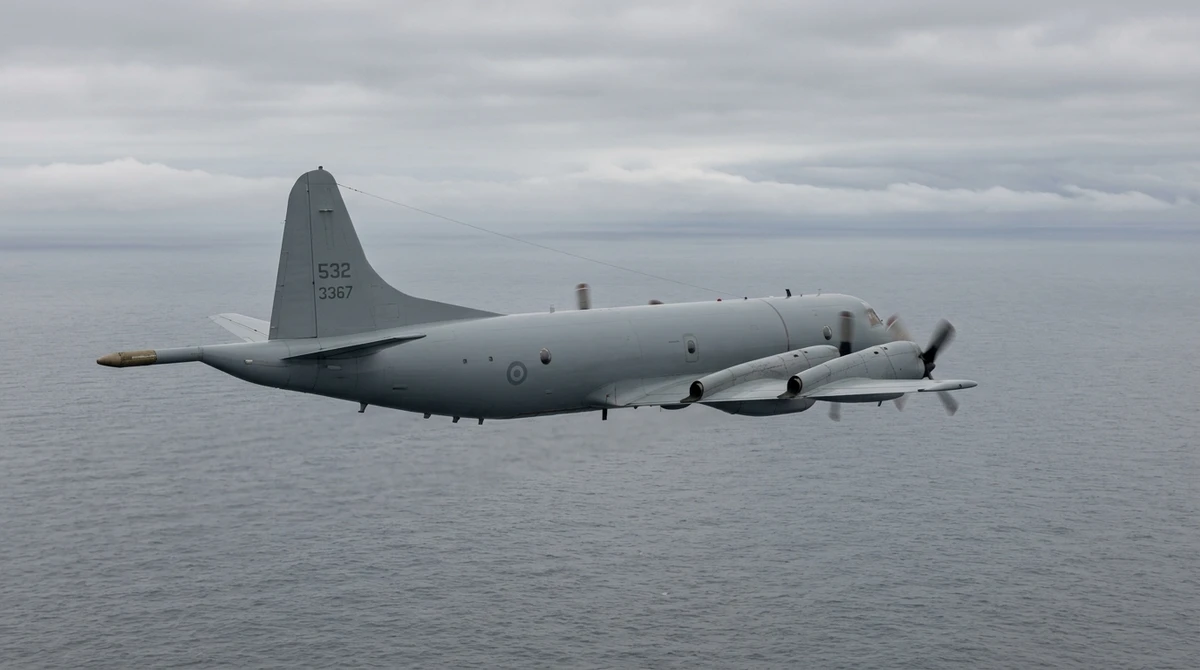
P-3 Orion Fleet Down to 101 Aircraft in 12 Countries, Roughly Half Its 2022 Size
GlobalMilitary.net's inventory data counts 101 P-3 Orions in military service across 12 countries, down from 211 in 16 countries in its 2022 snapshot, as US agencies retire special-mission Orions and Japan draws down the largest remaining fleet.

Northrop Grumman's YFQ-48A Talon Blue Completes First Fully Autonomous Flight at Mojave
Northrop Grumman said on October 3, 2026 that its company-funded YFQ-48A Talon Blue had taxied, taken off, maneuvered and landed without pilot input at Mojave, California, as the US Air Force prepares to select designs for Increment 2 of its Collaborative Combat Aircraft program.
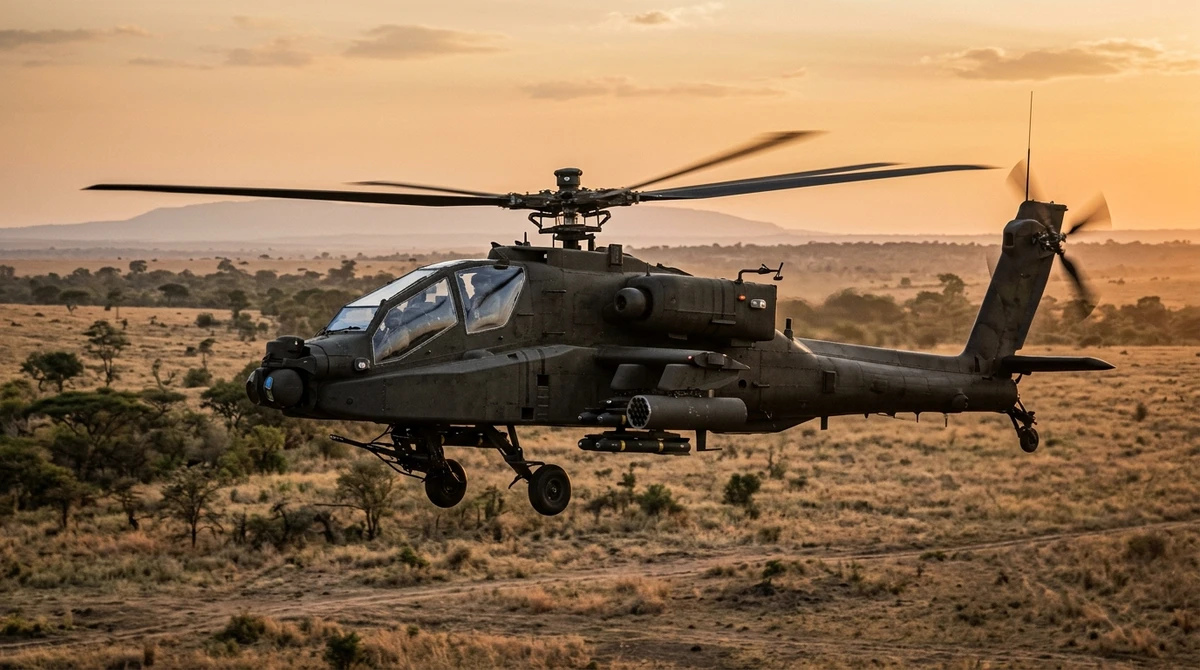
Australia Retires Its Tigers, Leaving Three Operators Among the World's 3,623 Attack Helicopters
The Australian Army has retired its Tiger attack helicopters, marking the fleet's sundown in Darwin on 30 September and leaving France, Germany and Spain as the only users; GlobalMilitary.net data counts 3,623 active attack helicopters in 81 countries.