Borey-class
Russian ballistic missile submarine, introduced in 2013, uses a pump-jet propulsion system. Key figures: displacement 14,720 tons, length 170 m, top speed 15 knots, crew 107, unit cost $713M, built 8. In service with 1 navy — Russia (8).
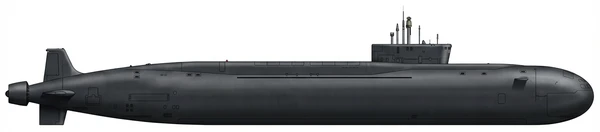
| Subtype | Nuclear-powered ballistic missile submarine |
| Displacement | 14720 tons |
| Displacement submerged | 24000 tons |
| Crew | 107 members |
| Width | 13.5 m (44.3 ft) |
| Length | 170.0 m (557.7 ft) |
| Max. depth | 400 m (1312.3 ft) |
| Propulsion | 1 × ОК-650V nuclear reactor, 1 × Steam turbine, 50,000 SHP, 1 × Pump-jet |
| Range | Unlimited, except by food supplies |
| Maximum speed | 15 knots |
| Max. speed submerged | 29 knots |
- 16 × RSM-56 Bulava SLBMs with 6 MIRV warheads
- 8 x 533mm torpedo tubes (Project 955)
- 6 × 533mm torpedo tubes (Project 955A)
- 6 x 533mm external Special Purpose External Tubes (SPETS) REPS-324 Shlagbaum anti-torpedo defense system
- RPK-2 Vyuga anti-submarine/ship missiles
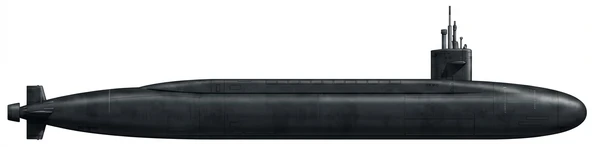
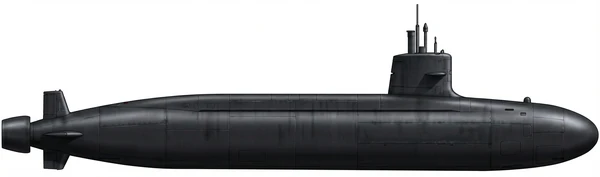
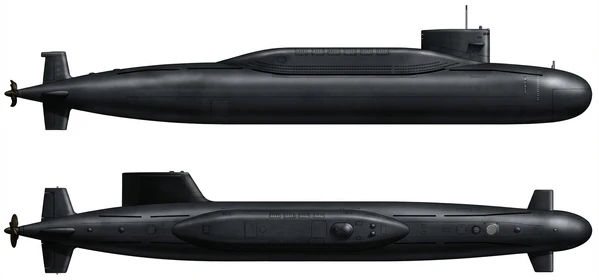

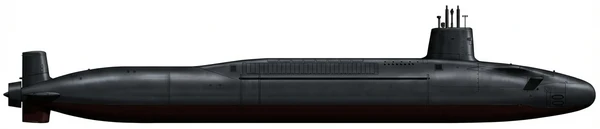
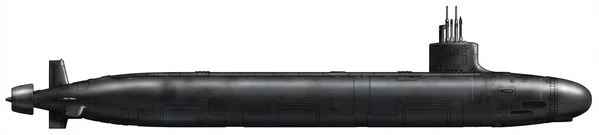
Description
The Borei class, designated Project 955 and Project 955A, is a series of nuclear-powered ballistic missile submarines built by Sevmash for the Russian Navy. Design work began in the mid-1980s at the Rubin Design Bureau. Construction of the first vessel started in 1996. The project was originally designed for the R-39UTTH Bark missile, but the submarine was redesigned to accommodate the RSM-56 Bulava submarine-launched ballistic missile.
The class replaces Soviet-era Delta III, Delta IV, and Typhoon-class submarines. Project 955 features a hydrodynamically efficient hull and represents the first use of pump-jet propulsion on a Russian nuclear submarine. The design includes noise-reduction technologies and a floating rescue chamber for the crew. The Project 955A (Borei-A) variant incorporates structural changes, including all-moving rudders and vertical endplates on the hydroplanes. It also features a different sail geometry, hydraulic jets, and improved screws. Internal amenities on Borei-A units include aspen banyas.
The lead vessel, Yury Dolgorukiy, joined the Russian Navy in 2013. Deployment of the class enabled the resumption of strategic patrols in southern latitudes. Eight vessels are currently active, distributed between the Northern and Pacific Fleets. A total of 14 units are planned, with additional boats currently under construction. The Rubin Design Bureau has proposed a cruise missile variant designated Borei-K. The Arcturus class is scheduled to begin replacing the Borei class in 2037.
Frequently Asked Questions
What type of ship is the Borey-class?
What is the displacement of the Borey-class?
What is the maximum speed of the Borey-class?
What is the range of the Borey-class?
How many crew members serve on the Borey-class?
How many Borey-class ships have been built?
Which countries operate the Borey-class?
How much does a Borey-class cost?
- JUL 242026 Updated Type updated
- APR 72026 Updated Description updated in a site-wide editorial pass
- JAN 182026 Updated Type, manufacturer and 9 more fields updated