Yankee I-class (Project 667A)
The Yankee I-class (Soviet Project 667A Navaga) was a ballistic missile submarine first commissioned in 1967, carrying 16 R-27 (SS-N-6) missiles internally within the pressure hull. Key figures: displacement 7,760 tons, length 132 m, top speed 13 knots, crew 120, built 34. No longer in service; operated by 2 navies over its career.

| Subtype | Nuclear-powered ballistic missile submarine |
| Displacement | 7760 tons |
| Displacement submerged | 9600 tons |
| Crew | 120 members |
| Width | 11.7 m (38.4 ft) |
| Length | 132.0 m (433.1 ft) |
| Max. depth | 400 m (1312.3 ft) |
| Propulsion | 2 VM-4 pressurized-water reactors, 4 steam turbines, 2 shafts |
| Units | K-137 Leninets, K-140, K-26, K-32, K-216, K-207, K-210, K-249, K-253, K-395, K-339, K-408, K-411, K-418, K-420, K-423, K-434, K-426, K-236, K-415, K-403, K-389, K-245, K-219, K-252, K-214, K-228, K-258, K-241, K-444, K-446, K-451, K-436, K-430 |
| Range | Unlimited, except by food supplies |
| Endurance | 70 days |
| Maximum speed | 13 knots |
| Max. speed submerged | 27 knots |
- 16 x R-27 (SS-N-6 Serb) submarine-launched ballistic missiles, D-5 launch system
- 4 x 533 mm torpedo tubes for 14 Type 53 torpedoes or mines
- 2 x 400 mm torpedo tubes for 4 Type 40 torpedoes
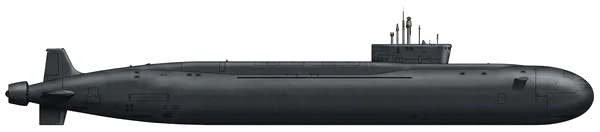
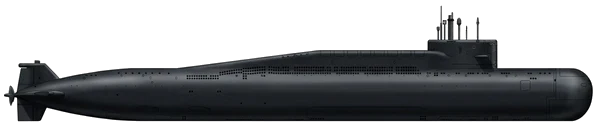
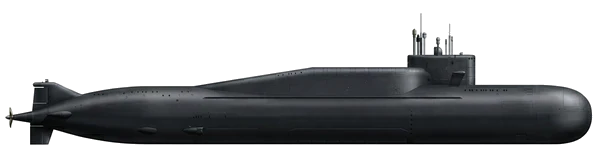
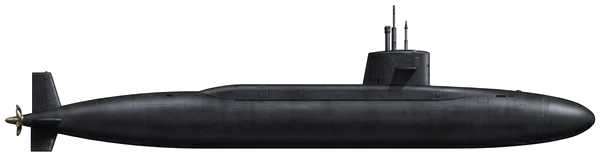


Description
The Yankee I class, Soviet designation Project 667A Navaga, originated in design work begun in 1958. Problems with the launch system forced a redesign, and the revised project, redirected to the Rubin Central Design Bureau, was approved in 1962. Thirty-four boats were built between 1964 and 1974, twenty-four at Sevmash in Severodvinsk for the Northern Fleet and ten at the Leninskiy Komsomol yard in Komsomolsk-on-Amur for the Pacific Fleet. Two Northern Fleet boats were later transferred to the Pacific.
The Yankee I was the first Soviet submarine to carry its ballistic missiles inside the pressure hull rather than in an enlarged sail, as on the earlier Golf and Hotel classes. The hull form was shaped for minimum submerged resistance, and the diving planes were moved to the sail. The cylindrical pressure hull, 9.4 m in external diameter, is divided into ten compartments and built of low-magnetic steel. Propulsion consists of two VM-4 pressurised water reactors, each paired with an independent turbogear set driving one of the two shafts; auxiliary motors provided power for torpedo firing and for emergency use. Noise reduction measures included specially designed propellers, sound-absorbing rubber on the pressure hull, an anti-hydroacoustic outer coating and rubber-isolated machinery mountings, making the boats quieter than the Hotel class.
Armament comprised the D-5 launch system with 16 R-27 (SS-N-6 Serb) liquid-fuelled missiles of about 2,400 km range, stowed in two rows in the fourth and fifth compartments. Missiles could be launched from 40–50 m at 3–4 knots, in four salvos of four rounds, with eight minutes of pre-launch preparation and eight-second intervals within a salvo. Torpedo armament consisted of four 533 mm tubes for 14 Type 53 torpedoes or mines and two 400 mm tubes for four Type 40 torpedoes. The boats carried the "Cloud" battle management system with the towed "Paravan" antenna, usable down to 50 m. Later units received the Tobol navigation set, the first Soviet naval system to take a satellite fix, which supported missile employment as far north as 85 degrees latitude.
K-137, later named Leninets, was laid down at Sevmash in November 1964 and joined the Northern Fleet in November 1967. Northern Fleet boats equipped the 31st and 19th divisions at Sayda, later part of the 3rd Submarine Flotilla; Pacific Fleet units served with the 8th and 25th divisions at Kamchatka, with a further group moved to Pavlovsk. Through the 1970s roughly three boats maintained continuous patrol in "patrol boxes" east of Bermuda and off the US Pacific coast. From 1972 to 1983 thirteen boats were rearmed with the D-5U system and R-27U missiles as Project 667AU. In May 1974 a Yankee I collided with the American attack submarine USS Pintado (SSN-672) near Petropavlovsk. K-219 suffered a missile-tube explosion and fire on 3 October 1986 some 970 km east of Bermuda, sank on 6 October, and four crewmen died. Under SALT I, START I and START II the boats were disarmed and their missile compartments cut out between 1979 and 1994, the type having completed 590 patrols. Surviving hulls were rebuilt as the Yankee Notch, Yankee Sidecar, Yankee Pod, Yankee Stretch and Yankee Big Nose conversions, or scrapped.
Frequently Asked Questions
What type of ship is the Yankee I-class?
What is the displacement of the Yankee I-class?
What is the maximum speed of the Yankee I-class?
What is the range of the Yankee I-class?
How many crew members serve on the Yankee I-class?
How many Yankee I-class ships have been built?
Which countries operate the Yankee I-class?
- SEP 12026 Created Yankee I-class ballistic missile submarine page created (specs, description, 2 operators)