Victoria-class (Upholder)
British submarine Victoria, introduced in 1990, utilizes diesel-electric propulsion with one shaft. Key figures: displacement 2,455 tons, length 70 m, top speed 12 knots, crew 59, built 4. In service with 1 navy — Canada (4).
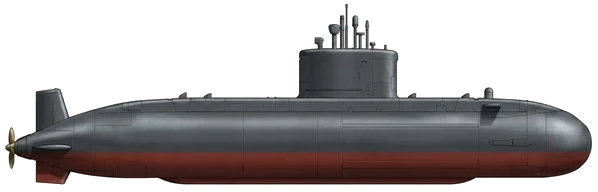
| Subtype | Diesel-electric attack submarine |
| Displacement | 2455 tons |
| Displacement submerged | 2455 tons |
| Crew | 59 members |
| Width | 7.2 m (23.6 ft) |
| Length | 70.26 m (230.5 ft) |
| Max. depth | 200 m (656.2 ft) |
| Propulsion | Diesel-electric – 1 shaft; 2 × Paxman Valenta 2,035 hp (1.517 MW) 1600 RPA SZ diesels; 1 × GEC electric motor (5 MW) |
| Range | 8,000 nm at 8 knots |
| Endurance | 30 days |
| Maximum speed | 12 knots |
| Max. speed submerged | 20 knots |
- 6 x 21 in (533 mm) torpedo tubes
- 18 x Mark 48 Mod 7 AT torpedoes
- Mk 24 Tigerfish Mod 2 torpedoes
- UGM-84 Sub-Harpoon missiles
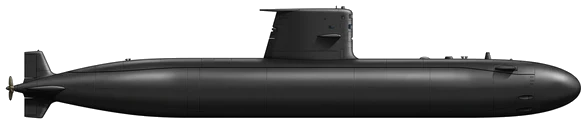
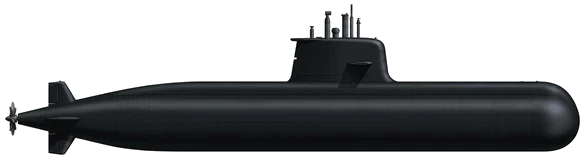
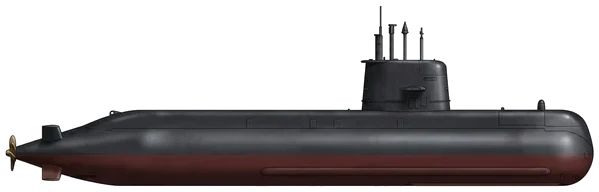
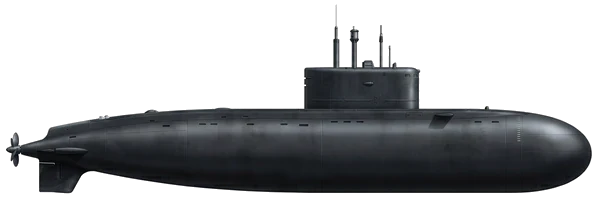
Description
The Victoria class, originally designated the Upholder class or Type 2400, is a series of diesel-electric attack submarines developed in the United Kingdom during the late 1970s. The British Ministry of Defence selected the Vickers Shipbuilding & Engineering Ltd design to replace the Oberon class for coastal defense and training. Although twelve vessels were planned, four were completed by builders VSEL and Cammell Laird. The Royal Navy commissioned the boats between 1990 and 1993 but decommissioned the class in 1994 following a strategic shift toward nuclear-powered submarines. In 1998, Canada purchased the four vessels to replace its own Oberon-class fleet.
The submarines feature a single-skinned, teardrop-shaped hull constructed from NQ1 high tensile steel and coated with elastomeric acoustic tiles to reduce the acoustic signature. Propulsion is provided by a single-shaft diesel-electric system. The class utilizes a Lockheed Martin combat system and sonar suite, including the AN/BQQ-10(v)7 sonar and a towed array. For surveillance, the vessels are equipped with optronic and electro-optical periscopes. While in British service, the vessels were capable of firing missiles and laying mines, but these capabilities were removed during the Canadian refit in favor of the Librascope fire-control system and Mark 48 torpedoes. The fleet also utilizes land-based command team trainers and escape simulators.
In Royal Navy service, the vessels operated in the Atlantic, Mediterranean, and Indian Oceans until 1994. Following their transfer to the Royal Canadian Navy, the submarines were renamed Victoria, Windsor, Corner Brook, and Chicoutimi. The class initially experienced mechanical and electrical issues that delayed full operational status. HMCS Victoria was commissioned in 2000 and participated in the RIMPAC exercise in 2012. HMCS Windsor entered active service in 2005 and has participated in NATO exercises in the North Atlantic. HMCS Corner Brook served in Arctic and Caribbean operations until a 2011 grounding incident off the coast of British Columbia; the vessel returned to service following repairs. HMCS Chicoutimi suffered an electrical fire during its 2004 transit to Canada, resulting in one fatality. After a major refit, Chicoutimi was commissioned in 2015 and completed a 197-day deployment to Asian waters in 2018. In 2017, the Canadian government initiated a life-extension program to maintain the fleet into the 2030s. A replacement procurement project was announced in 2024.
Frequently Asked Questions
What type of ship is the Victoria-class?
What is the displacement of the Victoria-class?
What is the maximum speed of the Victoria-class?
What is the range of the Victoria-class?
How many crew members serve on the Victoria-class?
How many Victoria-class ships have been built?
Which countries operate the Victoria-class?
- JUL 232026 Updated Sources and cross-references refreshed
- APR 72026 Updated Description updated in a site-wide editorial pass
- JAN 182026 Updated Range at cruise speed added; type, manufacturer and 9 more fields updated