Olifant 1
South African tank, 250 units built, manufactured by OMC Engineering. Key figures: weight 56 t, top speed 34 km/h, range 150 km, built 250. In service with 1 army — South Africa (70).
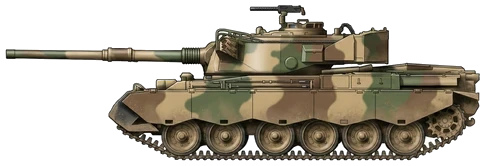
| Sub-type | Heavy Main Battle Tank |
| Crew | 4 personnels |
| Range | 150 km |
| Mass | 56.0 tons |
| Height | 2.94 m (9.6 ft) |
| Width | 3.39 m (11.1 ft) |
| Length | 8.29 m (27.2 ft) |
| Max. speed | 34 km/h (21 mph) |
| Engine | Rolls Royce Meteor 4B V-12 Diesel Engine with 750 hp |
| Weapon 1 | 1 L7A3 105mm rifled barrel gun |
| Weapon 2 | 1 7.62mm AA machine gun |
| Weapon 3 | 1 7.62mm coaxial machine gun |
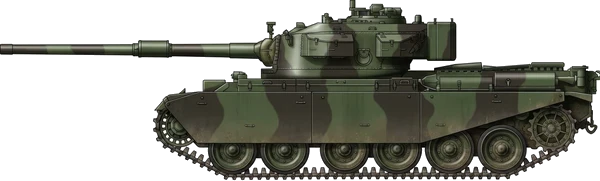
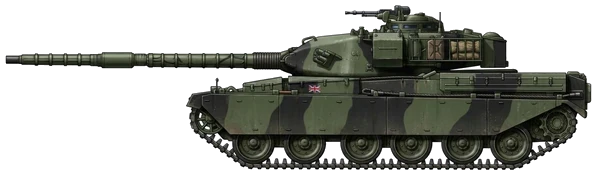
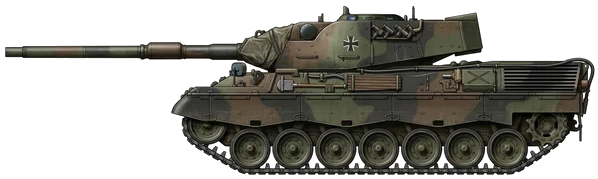
Description
The Olifant is the primary main battle tank of South Africa, developed from British Centurion hulls beginning in 1976. The program was initiated to address maintenance difficulties and overheating issues encountered with the original Centurion fleet in the African climate. Development was also driven by the presence of Soviet-supplied armor during Operation Savannah in 1975. Due to the United Nations Security Council Resolution 418 arms embargo, South Africa established the Olifant Manufacturing Company (OMC) to domestically refurbish and upgrade its armored forces, incorporating technical elements from Israel’s Sho't program.
The initial Olifant Mk.1 entered service in 1979, utilizing an 84 mm Ordnance QF 20-pounder and a petrol engine. This was followed by the Olifant Mk.1A in 1985, which integrated a turbo diesel power pack, an automatic transmission, and a 105 mm L7 rifled gun. The Mk.1B, entering service in 1991, featured a comprehensive redesign including a torsion bar suspension system and a double-armored floor for mine protection. The Mk.2 variant, introduced in 2005, added modular composite armor, a computerized battle system with hunter-killer mode, and the capability to mount either a 105 mm rifled gun or a 120 mm smoothbore gun.
The vehicle is operated by a four-man crew consisting of a commander, gunner, loader, and driver. Protection on the Mk.1B and later variants includes passive armor on the glacis plate and hull nose, stand-off turret armor, and side skirts designed to counter HEAT projectiles. Firepower for the Mk.1A and subsequent versions is centered on a South African variant of the 105 mm L7 rifled gun, with later versions adding thermal sleeves, laser rangefinders, and day/night sights. Mobility is provided by a V-12 turbo diesel engine. The chassis can also be configured as an armored recovery vehicle or equipped with mechanical mine-clearing rollers and dozer blades.
The Olifant is operated by the South African National Defence Force and saw combat during the South African Border War in Angola. During Operation Moduler in 1987, Olifants assigned to the 61 Mechanised Battalion Group engaged and destroyed Angolan T-55 tanks. Tactics typically involved an arrowhead formation with Olifants in the lead and Ratel-90 armored cars on the flanks. During Operation Packer in 1988, several units sustained damage from mines. While most were recovered, two vehicles were abandoned in the Angolan bush due to irreparable suspension damage, and a third disabled unit was captured by Cuban forces.
Frequently Asked Questions
What type of vehicle is the Olifant 1?
What is the weight of the Olifant 1?
What is the maximum speed of the Olifant 1?
What is the operational range of the Olifant 1?
How many crew members does the Olifant 1 require?
How many Olifant 1 have been built?
What weapons does the Olifant 1 carry?
- SEP 42026 Verified Weight verified against the published specifications
- JUL 272026 Updated Olifant 1: service entry year added; Olifant 1: service status added
- APR 72026 Updated Description added
- JAN 172026 Updated Description added