Saeqeh
Iranian single-seat jet fighter, developed in the early 21st century, derived from the Northrop F-5 and used for combat and tactical operations. Key figures: range 3,000 km, built 6.
| Crew | 1 |
| Powerplant | 2 × General Electric J85 |
| Operational range | 3,000 km (1,864 mi) |
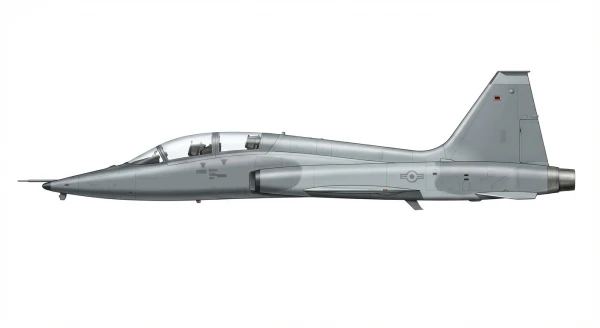
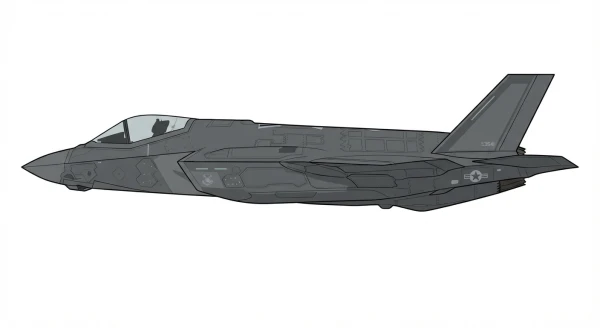
Description
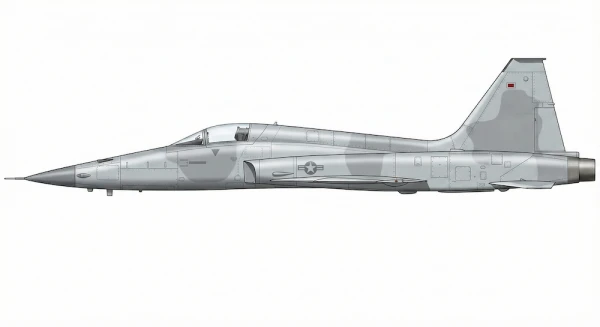
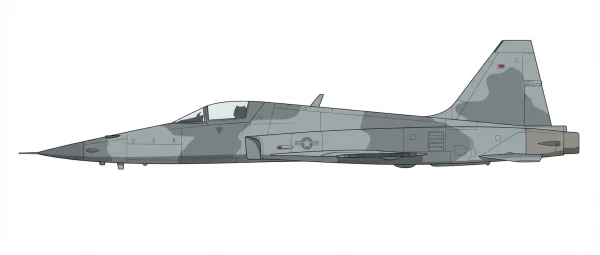
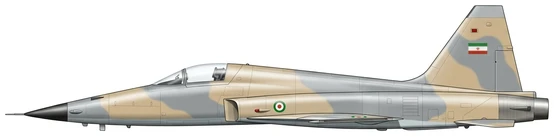
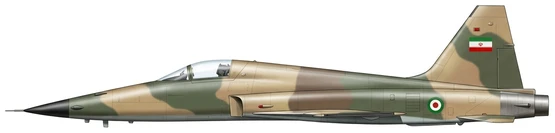
The HESA Saeqeh (Persian: صاعقه, "Thunderbolt"), also rendered Sa'eqeh, Saegheh or Saeqeh-80, is an Iranian single-seat jet fighter derived from the Northrop F-5. It was produced jointly by the Islamic Republic of Iran Air Force and the Iranian Ministry of Defence as the second generation of the HESA Azarakhsh. The aircraft is identified chiefly by its twin canted vertical stabilizers, which replace the single fin of the F-5E.
Development
The first prototype was shown flying on Iranian state television in July 2004. During an exercise beginning on 19 August 2006, the aircraft carried out what were described as mock bombing missions against virtual targets. Two prototypes, differing from the earlier example, flew past Mehrabad Airport in Tehran on 20 September 2007, and three took part in a military parade on 22 September 2007. Testing was declared successful on 20 September 2007. On 26 August 2012 deputy Defence Minister Mohammad Eslami announced that an upgraded version would enter service by the end of 2013. Production totalled five single-seat Saeqeh-1 and one two-seat Saeqeh-2 before it ended, with work shifting to the HESA Kowsar.
Design
Few specifications have been released. The airframe follows the Northrop F-5E, with two vertical stabilizers instead of one, additional wing strakes and altered intakes; the fuselage, landing gear, engines, weaponry and cockpit instruments appear identical to the F-5E, indicating the type is a conversion of existing airframes rather than a new-build fighter. Power comes from two Iranian-built General Electric J85 afterburning turbojets, reportedly incorporating Pratt & Whitney TF30 technology. In 2008 Iran stated a range of 3,000 km (1,864 mi). The aircraft carries a Phazotron-NIIR N019 radar, designated "Baaz" in Iranian service, with a stated range of 80 km, capable of tracking ten targets and engaging two simultaneously. Air Force commander Brigadier-General Ahmad Mighani described the type as current in aerodynamic balance and in its missile and radar systems, while Majid Hedayat of the Ministry of Defence Aviation Organization characterised it as a combat and logistic aircraft with high manoeuvrability and a close-target bombing role.
Operational History
The Islamic Republic of Iran Air Force is the sole operator. Iran displayed what it called the first Saeqeh squadron during air displays at the military parades opening Sacred Defence Week in September 2010. In May 2012 Defence Minister Ahmad Vahidi stated that three new-generation Saeqeh fighters had been built and delivered to the Air Force.
Variants
- Saeqeh-1: Single-seat production variant with twin vertical stabilizers; five built.
- Saeqeh-2: Two-seat version introduced in 2015 with revised weapon systems, electronics and avionics, also usable for training; one built, with 17 remaining IRIAF Northrop F-5F airframes considered suitable for conversion.
Frequently Asked Questions
What type of aircraft is the Saeqeh?
What is the range of the Saeqeh?
When did the Saeqeh first fly?
How many Saeqeh have been built?
- AUG 302026 Updated Description updated
- JUL 222026 Created Page created: Saeqeh