V-BAT
American vertical take-off and landing reconnaissance unmanned aerial vehicle, developed in the early 21st century, used for maritime and land-based intelligence, surveillance, and reconnaissance operations. Key figures: top speed 90 km/h, service ceiling 5,500 m, max takeoff weight 73 kg, unit price $1M. In service with 2 air forces as of 2026 — Netherlands (12), Greece (4).
| Length | 3.8 m (12.5 ft) |
| Wingspan | 2.9 m (9.5 ft) |
| Max. takeoff weight | 73 kg (161 lbs) |
| Powerplant | 1 × Heavy Fuel Engine |
| Maximum speed | 90 km/h (56 mph) |
| Endurance | 13 hours |
| Service ceiling | 5,500 m (18,045 ft) |
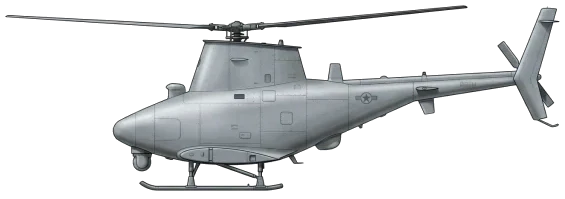
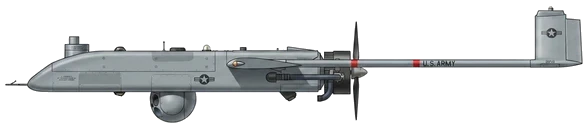
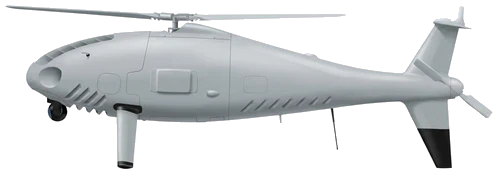
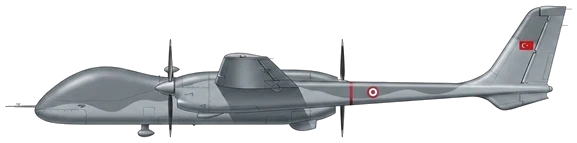
Description
The Shield AI MQ-35A V-BAT is an American Group 3 vertical take-off and landing unmanned aerial vehicle used for intelligence, surveillance, reconnaissance and targeting. Developed by Martin UAV, later acquired by Shield AI, it uses a single-engine ducted-fan tailsitter configuration that permits operation without a runway from ships and confined land sites. It is operated by military and maritime agencies in the Americas, Europe and Asia, and has been employed in the Black Sea, Caribbean and Middle East.
Development
The V-BAT originated with Martin UAV and passed to Shield AI following its acquisition of the company. In 2021 the United States Navy awarded Shield AI a contract to prototype and develop the type. In March 2023 the U.S. Army selected the V-BAT to compete in the Future Tactical Unmanned Aircraft System (FTUAS) Increment 2 programme to replace the RQ-7B Shadow, with Shield AI teaming with Northrop Grumman. The aircraft was added to the Defense Contract Management Agency's Blue UAS Cleared List. In December 2024 Shield AI and Palantir Technologies announced the deployment of Palantir's Warp Speed software for V-BAT manufacturing. In November 2024 Shield AI formed a joint venture with JSW Defense and Aerospace to produce and test the aircraft in India, with JSW investing $65 million within a year and $90 million over two years; construction of a plant at Maheshwaram near Hyderabad began in December 2025. Chengdu Aircraft Corporation displayed the Yunying-25 in February 2026, described by Janes as externally similar to the V-BAT.
Design
The V-BAT is 12.5 ft (3.8 m) long with a 9.6 ft (2.9 m) wingspan and a gross weight of 165 lb (75 kg). The ducted fan permits vertical take-off and landing in confined spaces and transition from hover to horizontal flight. Maximum speed is 56 mph (90 km/h), service ceiling 18,000 ft (5,500 m) and endurance in excess of 12 hours. Sensors comprise electro-optical and mid-wave infrared cameras. Shield AI's Hivemind autonomy software provides visual odometry navigation for GPS- and communications-denied environments; multi-vehicle coordination and swarming were announced in October 2023.
Operational History
On 21 December 2022 a V-BAT and a Skyways V2.6B made the first unmanned cargo deliveries to a U.S. Navy ship at sea, each carrying 22.5 kg over 200 nm (370 km). In July 2024 the U.S. Coast Guard awarded Shield AI a $198 million maritime UAS services contract. Ukraine's Unmanned Systems Forces have used the type under Russian electronic warfare conditions to relay targeting data for artillery. Operators include the Colombian Navy (three systems, 2024), the Hellenic Army (May 2025), Indonesian Kopassus Group 5, the Japan Maritime Self-Defense Force (first delivery December 2025) and the Royal Netherlands Navy (twelve aircraft for eight vessels). Orders exist for Argentina, Armenia, India, Poland, Romania and Taiwan. Between June and July 2026 two V-BATs flew 150 hours over 19 days from the Italian Coast Guard vessel Dattilo during a Frontex pilot project, reaching 150 km from the ship. In April 2024 a V-BAT severed three fingers of a U.S. Navy sailor assisting its landing, prompting flight restrictions and the introduction of unassisted launch and recovery. Reuters reported in June 2026 that 50 of 200 upgraded V-BATs had been destroyed in accidents.
Variants
- V-BAT: Baseline gasoline-engined configuration with 25 lb (11.3 kg) maximum payload.
- MQ-35A: U.S. military designation for the type.
- V-BAT Block 5.3: April 2025 upgrade with a 33 hp JP-5 heavy-fuel engine, larger fuel tanks, satellite communications, unassisted VTOL and 40 lb (18.1 kg) payload.
Frequently Asked Questions
What type of aircraft is the V-BAT?
What is the maximum speed of the V-BAT?
Which countries operate the V-BAT?
How much does a V-BAT cost?
What is the service ceiling of the V-BAT?
- AUG 302026 Updated Description updated
- AUG 202026 Updated Unit price filled (1.0 $M, estimate) for the UAV inventory weighting.
- JUL 12026 Created Page created: V-BAT