GlobalMilitary.net Open-source military intelligence Updated daily
Europe · Bucharest

Romania Military Forces

Romania ranks #37 of 170 militaries worldwide in 2026, with 69,300 active troops. The Romanian Army fields 3,265 ground vehicles, including 328 main battle tanks; the Air Force flies 199 aircraft, including 64 combat aircraft; the Navy operates 39 warships. Romania has no nuclear weapons.

World rank #37 ATLAS index 33.4/100
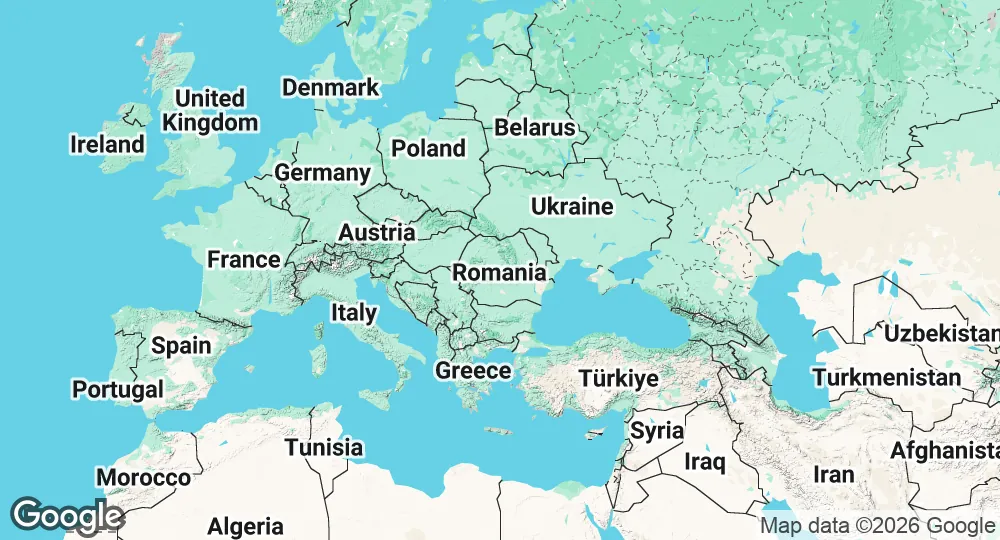
Map of Romania Flag of Romania
Active troops
69K
Reserve troops
55K
Defense budget
$8.8B2025
Share of GDP
2.3%
Population
19M2025

Armed Forces in 2026

Domain Strength Composition
Air Force 199 aircraft 64 combat 64 helicopters 10 air bases +95 on order
Romanian Naval Forces 39 warships 3 major combatants
Ground Forces 3,265 vehicles 328 main battle tanks
Personnel 69,300 active 55,000 reserve 57,000 paramilitary

ATLAS Index (Aggregate Total of Land, Air and Sea strength)

Full ranking →
Score & Pillar Breakdown World #37
33.4/ 100
Romania ranks #37 of 170 in the ATLAS Index (Aggregate Total of Land, Air and Sea strength) with a score of 33.4/100. The ATLAS Index scores Romania's overall capability on a 0–100 scale from verifiable data across six pillars: manpower, ground forces, naval power, air power, nuclear deterrent and defense budget, each conventional pillar read after the availability proxy of its branch index (budget per point of the force).
Pillar Weight Score Basis
Manpower 10% 44.7 Active, reserve & paramilitary personnel
Ground forces 20% 42.8 ARMS inventory power: armour & artillery by type and era, attack helicopters, armament
Naval power 20% 34.9 SEAS inventory power: hulls by type, size and era, air wing, sustainment, armament
Air power 25% 29.5 AIRS inventory power: aircraft by type and generation, enablers, armament
Nuclear deterrent 10% 0.0 No declared nuclear capability
Defense budget 15% 37.6 Annual spending, purchasing-power adjusted
Availability modifier ground ×1.09 · naval ×1.08 · air ×1.16 Budget per point of each force, from the branch indexes

Country File

Defense Statistics & Key Metrics
Population19M (2025)
GDP$428.7 billion (2025)
GDP per capita$22,538
Military budget$8.8B (2025)
Share of GDP2.3% (2025)
Military spending per capita$463 (2025)
Inflation rate7.19% (2025)
Military Budget History
2021 — $5.4B, 1.90% of GDP $5.4B 2021 2022 — $5.3B, 1.80% of GDP $5.3B 2022 2023 — $5.6B, 1.60% of GDP $5.6B 2023 2024 — $8.4B, 2.20% of GDP $8.4B 2024 2025 — $8.8B, 2.30% of GDP $8.8B 2025
Budget (US$) Share of GDP (0-2.5%)
Share of GDP (line): CIA World Factbook (public domain). Budget in US$ (bars): that share applied to World Bank GDP (CC BY 4.0). Estimates.
Geography
CapitalBucharest
RegionEurope
Land area231,291 km²
Coastline225 km
Land borders2,508 km
Bordering countries5
CurrencyRON
National Flag Adopted 1989
Flag of Romania
Aspect ratio2:3
ColorsRed, blue, yellow
Compare this Country
🇷🇴 Romania vs

Strategic Overview in 2026

Strategic Position

Romania’s defense posture is defined by its location on the western coast of the Black Sea and its proximity to the conflict in Ukraine. As a member of NATO and the European Union, the country serves as a primary hub for the Alliance’s Eastern Flank security architecture. Romania hosts the NATO Multinational Corps South-East (HQ MNC-SE) and the Aegis Ashore Missile Defense System at Deveselu, which is part of the European Phased Adaptive Approach (EPAA).

Primary security concerns center on Russian maritime activities in the Black Sea and the risk of spillover from the war in Ukraine. Defense doctrine focuses on integrated collective defense within the NATO framework, emphasizing the "forward presence" of allied forces. Romania maintains a strategic partnership with the United States, which includes a rotational presence of U.S. Army brigade combat teams at Mihail Kogălniceanu Air Base. Regionally, Romania coordinates defense policy through the Bucharest Nine (B9) format and maintains a trilateral security dialogue with Poland and Turkey.

Military Forces

The Romanian Armed Forces are organized into three primary branches: Land Forces, Air Force, and Naval Forces, overseen by the Ministry of National Defense and the Joint Operations Command.

Land Forces The army is organized into divisions and independent brigades, including mechanized, mountain, and paratrooper units. The primary main battle tank remains the TR-85M1, a domestic modernization of the T-55 platform, though the force is transitioning to the M1A2 SEPv3 Abrams. Infanty units operate Piranha V and Piranha IIIC armored personnel carriers, alongside MLI-84M infantry fighting vehicles. Artillery capabilities are centered on the M142 HIMARS rocket system and LAROM multiple launch rocket systems. The service recently began the acquisition of K9 Thunder self-propelled howitzers to replace towed artillery.

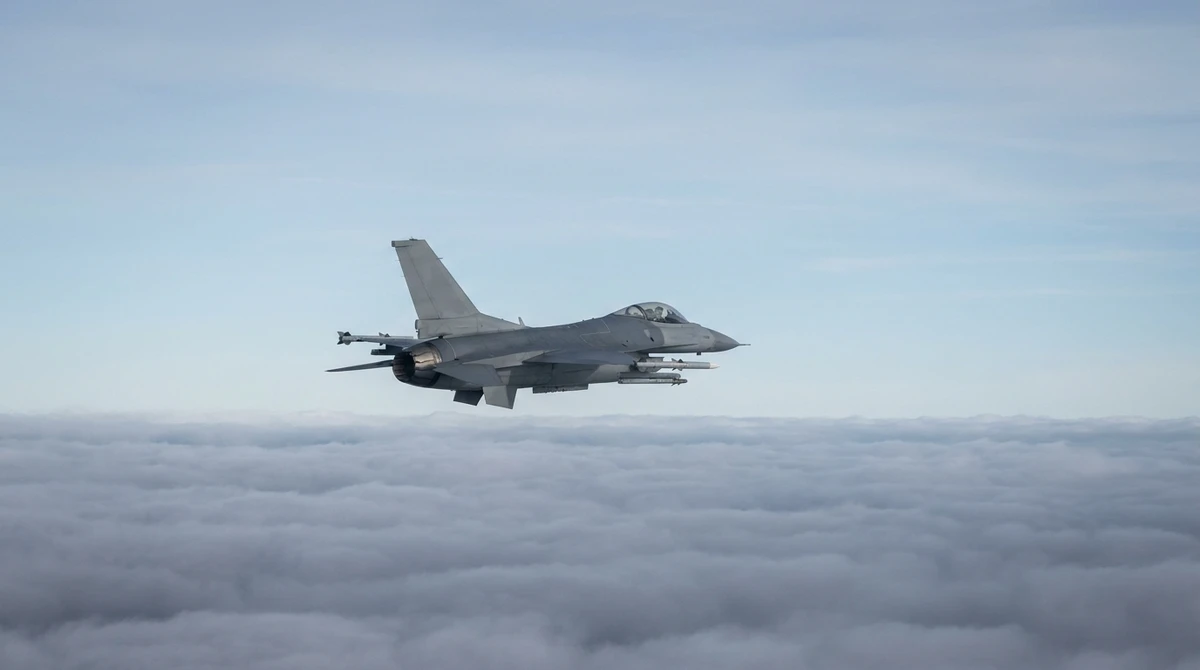
Air Force The Romanian Air Force has phased out its Soviet-era MiG-21 LanceR fleet, transitioning to the F-16 Fighting Falcon (A/B Block 15 MLU) as its primary multirole fighter. These aircraft perform air policing missions and are integrated into NATO’s Integrated Air and Missile Defense System. Air defense is provided by Patriot PAC-3+ batteries and short-range Hawk PIP IIIM systems. Transport requirements are met by C-130 Hercules and C-27J Spartan aircraft. The rotary-wing fleet consists of IAR 330 Puma helicopters, including the SOCAT variant for attack and anti-tank roles.

Naval Forces Naval operations are concentrated in the Black Sea and on the Danube River. The fleet includes Type 22 frigates (formerly British), a Mărășești-class frigate, and several corvettes. Coastal defense is being modernized with the Naval Strike Missile (NSM) system. The River Flotilla operates monitors and armored patrol boats to secure the Danube delta. Romania does not currently operate an active submarine fleet, although procurement plans for diesel-electric boats have been proposed.

Special and Specialized Forces The Special Operations Forces Command (AFSOS) manages elite units trained for unconventional warfare and counter-terrorism. Romania also maintains a dedicated Cyber Defense Command responsible for protecting military infrastructure and coordinating with NATO’s Cyber Defense Center.

Defense Industry

The domestic defense sector is dominated by the state-owned ROMARM national company, which oversees several subsidiaries producing small arms, ammunition, and armored vehicles. IAR Ghimbav provides maintenance and assembly for the helicopter fleet, while Aerostar Bacău serves as the designated maintenance center for the F-16 fleet.

Romania relies on a mix of domestic production and international co-production. A significant agreement with General Dynamics Land Systems facilitates the local assembly of Piranha V armored vehicles at the Bucharest Mechanical Plant. While Romania produces its own infantry equipment and certain classes of ammunition, it remains dependent on imports for high-technology platforms, including fighter aircraft, advanced missile systems, and heavy armor.

Strategic Trends

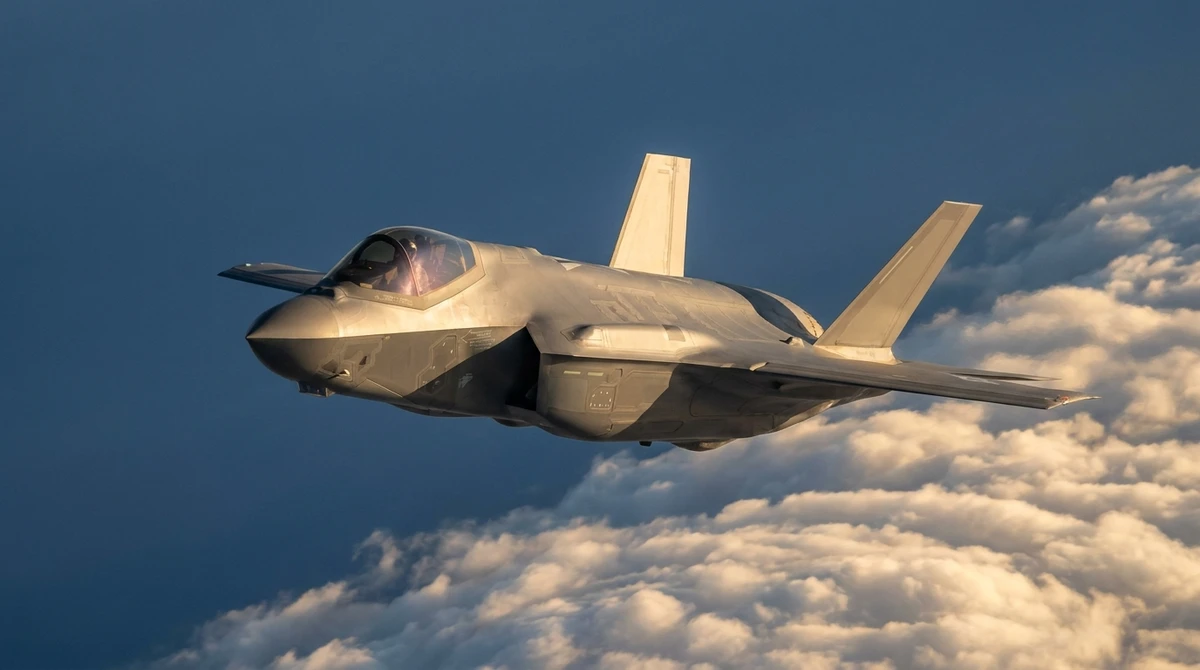
The defense budget is maintained at approximately 2.5% of GDP, reflecting a long-term commitment to modernization. Current procurement priorities focus on transitioning to fifth-generation capabilities, specifically the F-35 Lightning II, with a government-to-government agreement finalized to acquire these aircraft starting in the late 2020s.

Force structure shifts emphasize mobility and anti-access/area-denial (A2/AD) capabilities. Key programs include the acquisition of new 155mm self-propelled howitzers, tracked infantry fighting vehicles to replace the MLI-84, and new maneuverable short-range air defense (SHORAD) systems. Constraints facing the military include the need to modernize aging naval hulls and the challenge of recruiting and retaining technical personnel for high-tech systems amidst regional competition for specialized labor. Military planning is increasingly focused on the permanent stationing of NATO-led battlegroups, currently led by France, to enhance the deterrent posture against regional maritime and aerial threats.

Population, GDP, Inflation and Personnel: World Bank.
Military Expenditure: CIA World Factbook. Last updated on 25 September 2026. Suggest a change

Romanian Defense Manufacturing

Designed in Romania
Firearms 1 model
PSL Sniper rifle

In the News

All news →
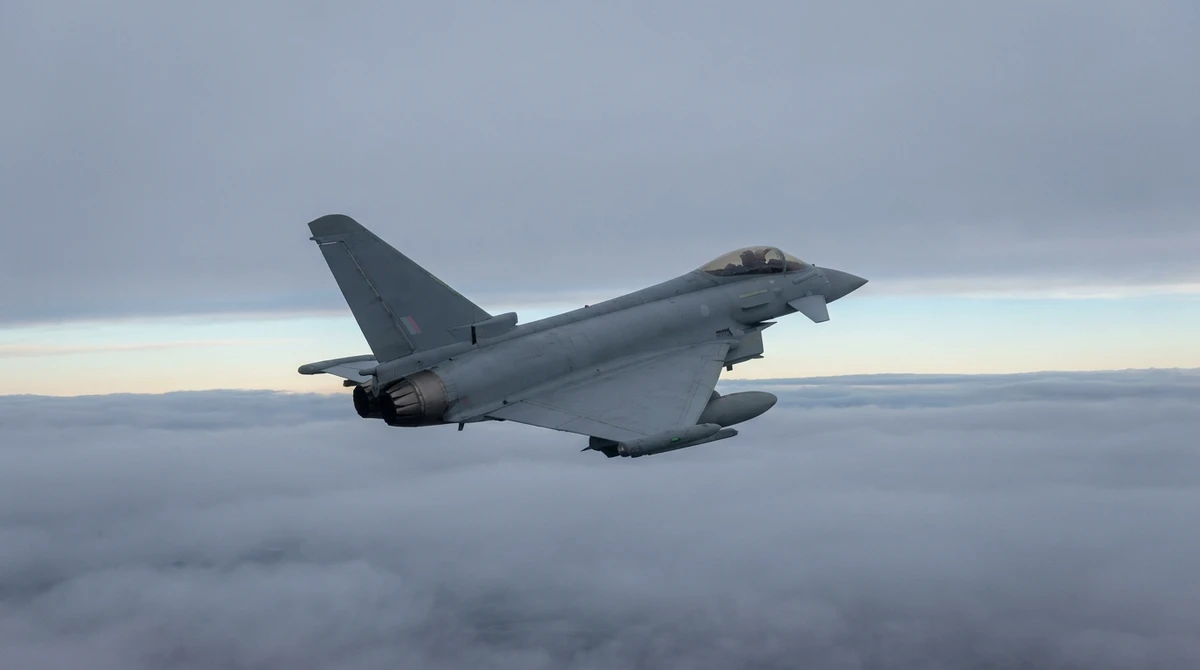
Europe Logged More Airspace Violations by Mid-August 2026 Than in All of 2025
AUG 18, 2026

Europe Logged More Airspace Violations by Mid-August 2026 Than in All of 2025

GlobalMilitary.net's incident log counts 45 established violations of European airspace between January 1 and August 16, 2026, against 31 for the whole of 2025 - and almost all of the growth sits in incidents that ended with a shootdown or an explosion on the ground.

🇧🇾 🇪🇪 🇱🇹 🇱🇻 🇲🇩 🇵🇱 🇷🇴 🇷🇺 🇺🇦
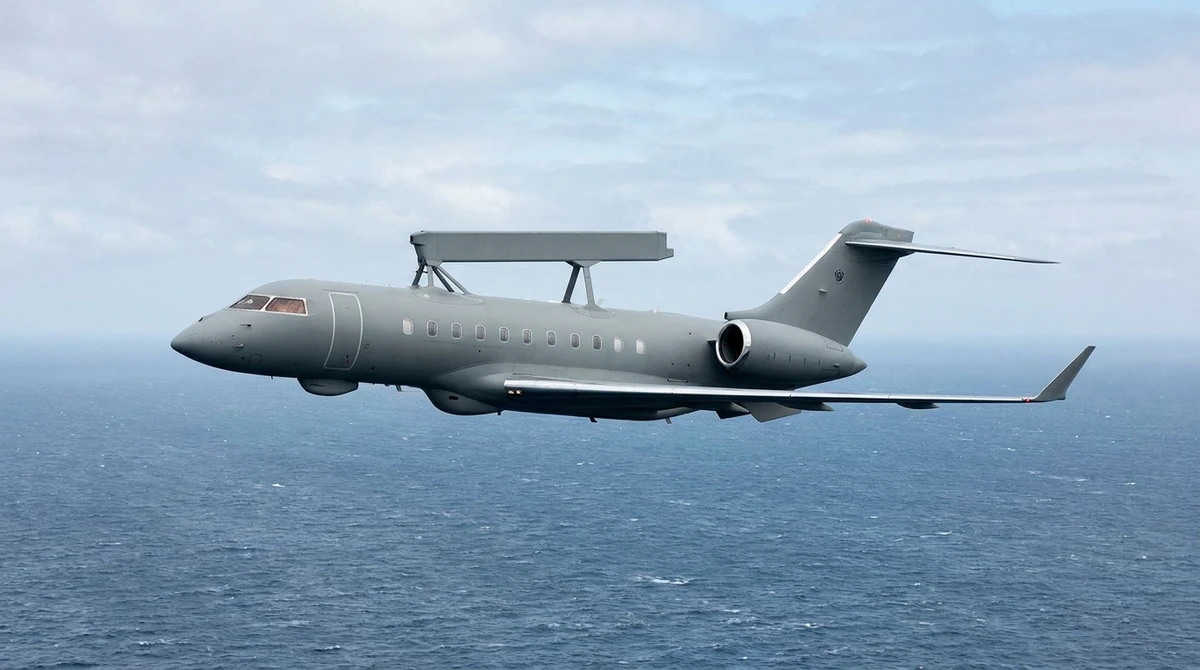
NATO Selects Saab GlobalEye to Replace Aging E-3 AWACS Fleet
JUL 10, 2026

NATO Selects Saab GlobalEye to Replace Aging E-3 AWACS Fleet

Eleven NATO allies announced on July 7, 2026, the joint procurement of up to 10 Saab GlobalEye aircraft to succeed the alliance's Boeing E-3 Sentry AWACS fleet, months after Boeing's E-7 Wedgetail was dropped as NATO's presumptive successor.

🇧🇪 🇨🇦 🇩🇪 🇩🇰 🇱🇹 🇱🇺 🇱🇻 🇳🇱 🇳🇴 🇷🇴 🇸🇪

Frequently Asked Questions

How large is Romania's military?
Romania has 69,300 active military personnel with an additional 55,000 in reserve. This includes army, navy, and air force service members.
What is Romania's defense budget?
Romania's annual defense budget is approximately $8.8 billion. This covers personnel costs, equipment procurement, operations, and maintenance of military forces.
How does Romania rank militarily in the world?
Romania ranks #37 globally on the ATLAS Index with a score of 33.4 out of 100. This composite index measures military capability across manpower, ground forces, naval power, air power, nuclear deterrent, and defense budget, adjusted for equipment quality and readiness.
Does Romania have nuclear weapons?
No, Romania does not possess nuclear weapons and is a non-nuclear weapon state.
How many aircraft does Romania's air force have?
Romania operates 199 military aircraft including 64 combat aircraft. The fleet includes fighters, transport planes, helicopters, and training aircraft.
How large is Romania's navy?
Romania's navy operates 70 vessels. The fleet includes surface combatants, support ships, and coastal patrol craft.
How many tanks does Romania have?
Romania operates approximately 328 main battle tanks. This figure includes both active inventory and reserve stocks available for mobilization.
What percentage of GDP does Romania spend on defense?
Romania spends approximately 2.3% of its GDP on defense. This meets the NATO target of 2% of GDP.
What is Romania's military personnel per capita?
Romania has approximately 3.6 active military personnel per 1,000 citizens. This ratio reflects the country's military manpower relative to its population of 19,020,271.
Does Romania have paramilitary forces?
Yes, Romania maintains 57,000 paramilitary personnel. These forces typically include gendarmerie, border guards, coast guard, and internal security troops that supplement regular military capabilities.
Latest Data Updates
  1. SEP 252026 Updated Population, GDP and inflation added for 2025; GDP series revised
  2. AUG 42026 Updated Global Military Index updated in a site-wide editorial pass
  3. AUG 32026 Updated Global Military Index updated
  4. JUL 162026 Updated Global Military Index updated in a site-wide editorial pass
  5. JUN 162026 Updated Yearly statistics, military spending and Global Military Index updated
  6. MAR 162026 Updated Reserve personnel updated
  7. JAN 232026 Updated Rank insignia updated (11 entries)