Grob G-115
German training aircraft, extensively utilized for United Kingdom's Royal Air Force Cadets and military aviation worldwide since the 1980s. Key figures: top speed 270 km/h, range 1,150 km, service ceiling 3,048 m, max takeoff weight 990 kg, built 204. In service with 5 air forces as of 2026 — United Kingdom (91), Egypt (74), Finland (28) and 2 others.
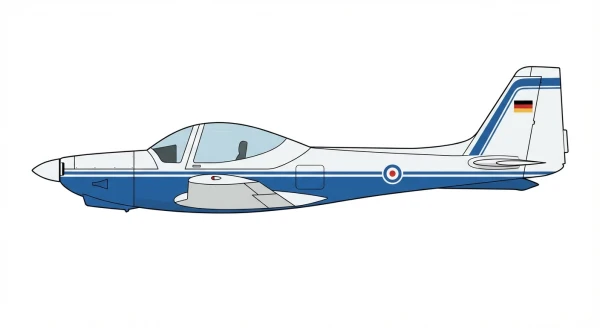

| Length | 7.5 m (24.7 ft) |
| Wingspan | 10 m (32.8 ft) |
| Height | 2.4 m (7.9 ft) |
| Wing area | 12.2 m² (131.3 sqft) |
| Empty weight | 690 kg (1,521 lbs) |
| Max. takeoff weight | 990 kg (2,183 lbs) |
| Powerplant | 1 × pistons engine Lycoming AEIO-360-B1F 134 kW each |
| Maximum speed | 270 km/h (168 mph) |
| Operational range | 1,150 km (715 mi) |
| Service ceiling | 3,048 m (10,000 ft) |
| Climb rate | 5.3 m/s (17.4 ft/s) |
-
 United Kingdom
91
United Kingdom
91
-
 Egypt
74
Egypt
74
-
 Finland
28
Finland
28
-
 United Arab Emirates
12
United Arab Emirates
12
-
 Bangladesh
3
Bangladesh
3
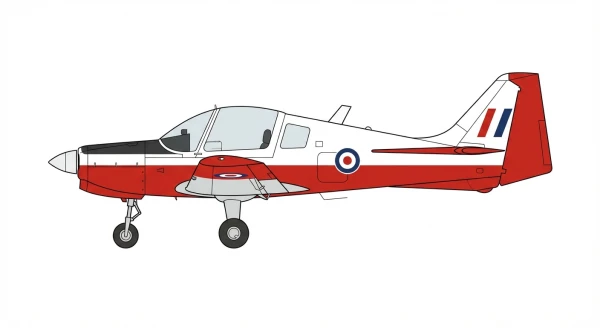
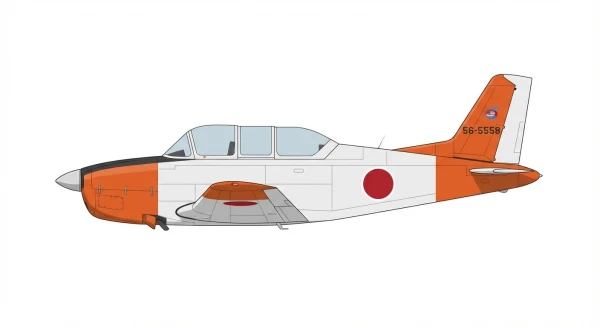
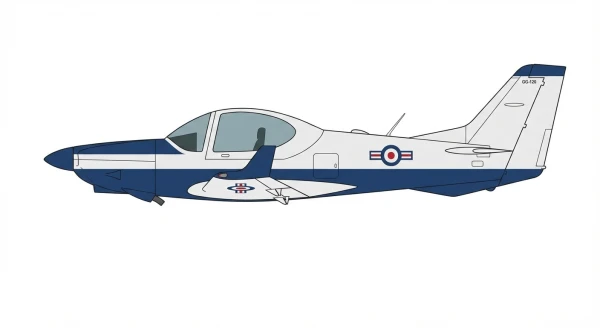
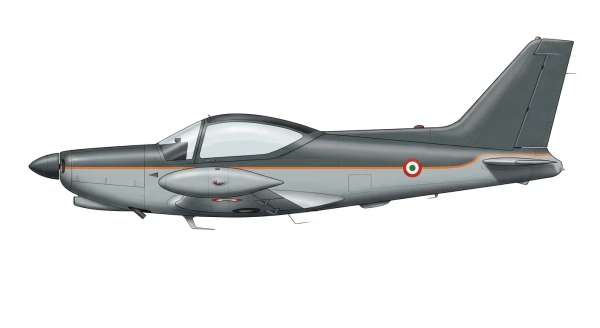
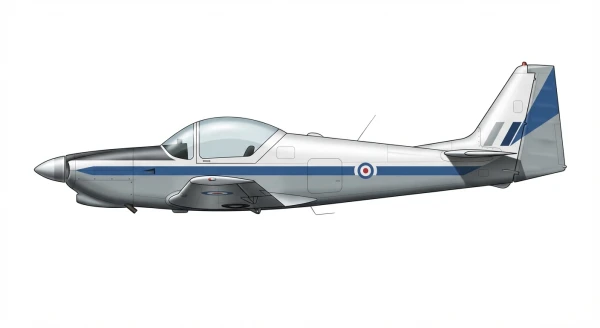
Description
The Grob G 115 is a two-seat fixed-wing light aircraft built in Germany by Grob Aircraft (Grob Aerospace before January 2009) and used primarily for basic and elementary flight training. Military operators include the Royal Air Force, Royal Navy, Finnish Air Force, Egyptian Air Force and several other air arms. In British service the G 115E is designated Tutor T1 and has equipped University Air Squadrons and Air Experience Flights since the retirement of the Scottish Aviation Bulldog T1 around the turn of the century.
Development
The initial G 115 and G 115A models had an upright fin and rudder and were sold mainly to civilian flying clubs in Germany, the United Kingdom and other countries. For the UK requirement to replace the Bulldog T1 in the UAS and AEF roles, the Ministry of Defence adopted a contractor-owned arrangement in which the aircraft are owned and maintained by Babcock International under a Private Finance Initiative, carry British civil registrations and wear an overall white scheme with blue flashes and UK military roundels. The type was re-certified in 2013 with a new MT Propeller following cracking found in the roots of the earlier design, and the inverted oil system was redesigned to improve lubrication during aerobatics. From 2009 some Tutor units received Enhanced Avionics (EA) aircraft with a Garmin GNS 430W GPS, digital HSI and digital engine instruments, differing from standard Tutors only in the cockpit fit and an additional VHF aerial.
Design
The airframe is of carbon composite construction, with the main fuselage and each wing spar built as a single piece. The wings are tapered with square tips; the empennage comprises a large fin and rudder with a mid-set oblong tailplane. The undercarriage is a fixed sprung-steel tricycle unit with spatted wheels. The G 115E is powered by a 130 kW (180 hp) Lycoming AEIO-360-B1F/B four-cylinder air-cooled horizontally opposed piston engine driving a three-bladed constant-speed propeller of 1.83 m diameter. Maximum speed is 250 km/h, service ceiling 6,095 m and range 1,150 km; g limits are +6.0/−3.0, permitting basic aerobatics. The side-by-side seats are fixed, with pilot position adjusted by cushions and a rudder bar adjuster.
Operational History
The RAF operates 89 aircraft with No. 3 and No. 6 Flying Training Schools, No. 16 and No. 115 Squadrons, sixteen University Air Squadrons and thirteen Air Experience Flights. Elementary Flying Training at RAF Cranwell and RAF Barkston Heath, run by 3 FTS with 703 Naval Air Squadron, 674 Squadron AAC and 57(R) Squadron, passed to the Grob G120TP Prefect in 2018. The Royal Navy operates five Tutor T1s with 727 Naval Air Squadron at RNAS Yeovilton for flying grading. Export operators include the Egyptian Air Force (74), the Finnish Air Force (28, bought from UK stocks), the United Arab Emirates Air Force (12), Bangladesh (3) and Kenya (3). Two mid-air collisions in 2009, one between two Tutors near RAF St Athan and one with a glider in June, killed six people.
Variants
- G 115 / G 115A: Initial production models with an upright fin and rudder, sold mainly to civilian flying clubs.
- G 115D2 (Heron): Variant first purchased by the Royal Navy; only six are recorded as surviving.
- G 115E (Tutor T1): Three-blade variable-pitch propeller version used by the RAF, Royal Navy and Finnish Air Force.
- G 115E EA: Enhanced Avionics Tutor with Garmin GNS 430W GPS, digital HSI and digital engine instruments.
Frequently Asked Questions
What type of aircraft is the Grob G-115?
What is the maximum speed of the Grob G-115?
What is the range of the Grob G-115?
When did the Grob G-115 first fly?
How many Grob G-115 have been built?
Which countries operate the Grob G-115?
What is the service ceiling of the Grob G-115?
- AUG 302026 Updated Description updated
- JUL 272026 Updated Name updated
- APR 72026 Updated Sources and cross-references refreshed
- FEB 72026 Updated Top speed added
- JAN 122026 Updated Range updated in a site-wide editorial pass