SIAI-Marchetti SF-260
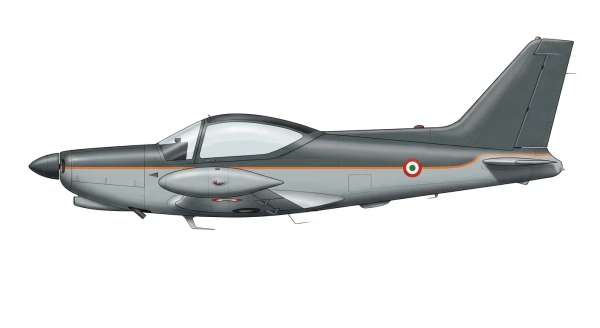
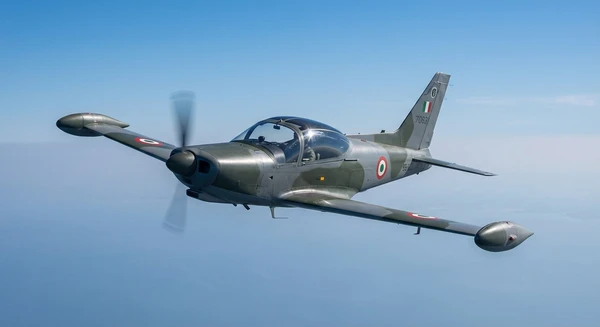
Italian light military trainer, globally utilized since the 1960s, renowned for its aerobatic capabilities and air force service. Key figures: top speed 333 km/h, range 1,650 km, service ceiling 4,500 m, max takeoff weight 1,300 kg, unit price $1.33M, built 900. In service with 13 air forces as of 2026 — Turkey (34), Italy (29), Belgium (19) and 10 others.
| Length | 7.1 m (23.3 ft) |
| Wingspan | 8.4 m (27.4 ft) |
| Height | 2.4 m (7.9 ft) |
| Wing area | 10.1 m² (108.7 sqft) |
| Empty weight | 770 kg (1,698 lbs) |
| Max. takeoff weight | 1,300 kg (2,866 lbs) |
| Powerplant | 1 × pistons engine Lycoming O-540-E4A5 194 kW each |
| Maximum speed | 333 km/h (207 mph) |
| Operational range | 1,650 km (1,025 mi) |
| Service ceiling | 4,500 m (14,764 ft) |
| Climb rate | 6.3 m/s (20.7 ft/s) |
-
 Turkey
34
Turkey
34
-
 Italy
29
Italy
29
-
 Belgium
19
Belgium
19
-
 Philippines
19
Philippines
19
-
 Tunisia
17
Tunisia
17
-
 Zimbabwe
15
Zimbabwe
15
-
 Venezuela
11
Venezuela
11
-
 Zambia
11
Zambia
11
-
 Libya
10
Libya
10
-
 Uruguay
6
Uruguay
6
-
 Ethiopia
4
Ethiopia
4
-
 Mali
1
Mali
1
-
 Mauritania
1
Mauritania
1
- Cluster SAMP BL-9
Recent Events — SIAI-Marchetti SF-260
8 events →

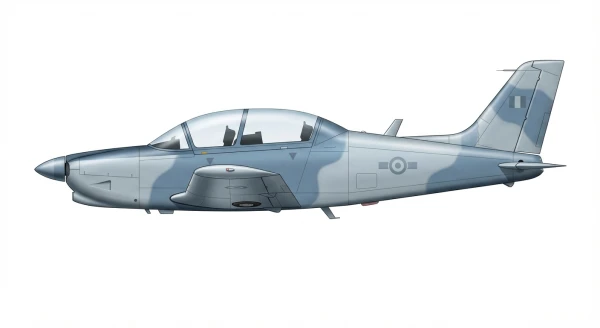
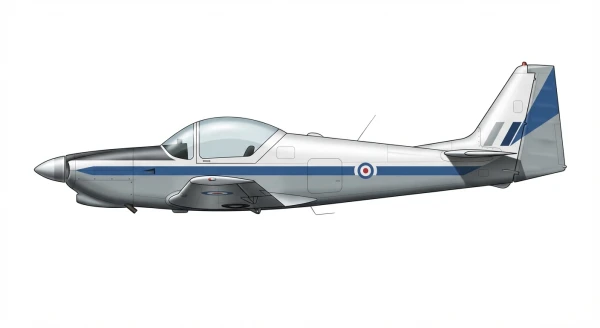
Description
The SIAI-Marchetti SF.260 (now Leonardo SF-260) is an Italian light aircraft designed for military pilot training, aerobatics, and light close air support. Originally designed by Stelio Frati and flown as the Aviamilano F.250 prototype on 15 July 1964, production rights were acquired by SIAI-Marchetti shortly thereafter. Entering service in the late 1960s, the type was widely adopted by military air forces as a trainer and light attack platform due to its combat-like handling and flight characteristics.
Development
Designed as an all-metal aircraft, the SF.260 evolved from Frati's earlier Caproni Trento F-5 and Falco F8L designs. SIAI-Marchetti purchased the manufacturing rights from Aviamilano following the maiden flight, later transferring production to Aermacchi in 1997. Structural improvements led to the military-standard SF.260C in the late 1970s, followed by the turboprop-powered SF.260TP in 1980. The fuel-injected SF.260E and normally aspirated SF.260F were introduced in the 1990s, with licensed assembly also taking place in Turkey and the Philippines. A total of 976 aircraft were produced across all variants through 2017.
Design
The SF.260 is a low-wing cantilever monoplane constructed with a flush-riveted metal airframe and retractable tricycle undercarriage. Initial production models are powered by a 260 hp Lycoming O-540 piston engine, while later models use an Allison Model 250 turboprop flat-rated at 350 shp. The cockpit accommodates up to three occupants under a glazed canopy, with military training typically conducted from the right-hand seat. Wingtip fuel tanks feature aerodynamic vanes to maintain airflow over the ailerons during stalls, though performing aerobatic maneuvers requires the tip tanks to be empty, limiting endurance to approximately 1.5 hours.
Armament
Armed military variants, such as the SF.260W Warrior, feature underwing hardpoints for attaching combat stores and equipment. In light attack roles, the aircraft can carry machine gun pods, unguided rockets, and bombs across two or four hardpoints.
Operational History
The SF.260 has served with more than 20 military air arms worldwide. Libya was the largest customer, purchasing 240 SF.260WLs that saw extensive ground-attack usage during the Chadian-Libyan conflict between 1978 and 1987, where several were captured or destroyed by Chadian forces. Burkina Faso deployed Warriors during the 1986 Agacher Strip War against Mali, while Rhodesia used the type for light attack and convoy escort duties during the late 1970s. Additional air forces using the SF.260 in active operations or training include the Philippines, Sri Lanka, Turkey, Belgium, and Italy.
Variants
-
SF.260M: Militarised trainer variant featuring a strengthened airframe and modified aerodynamics, first flown in 1970.
-
SF.260W Warrior: Armed light combat variant based on the SF.260M, fitted with two or four underwing hardpoints.
-
SF.260C: Upgraded military variant introduced in 1977 with a strengthened wing, re-profiled aerofoil, and elongated rudder.
-
SF.260TP: Turboprop variant powered by an Allison Model 250 engine, first flown in 1980.
-
SF.260EA: Screening and primary trainer variant developed for the Italian Air Force, with 30 units delivered in 2005.
Frequently Asked Questions
What type of aircraft is the SIAI-Marchetti SF-260?
What is the maximum speed of the SIAI-Marchetti SF-260?
What is the range of the SIAI-Marchetti SF-260?
When did the SIAI-Marchetti SF-260 first fly?
How many SIAI-Marchetti SF-260 have been built?
Which countries operate the SIAI-Marchetti SF-260?
How much does a SIAI-Marchetti SF-260 cost?
What is the service ceiling of the SIAI-Marchetti SF-260?
- AUG 62026 Updated Description updated
- JUL 272026 Updated Name updated
- APR 72026 Updated Sources and cross-references refreshed
- FEB 72026 Updated Top speed added
- JAN 122026 Updated Range added; price added