AH-2 Rooivalk vs AH-64 Apache
AH-2 Rooivalk vs AH-64 Apache at a glance — top speed 309 vs 293 km/h, range 740 vs 480 km, max takeoff weight 8,750 vs 10,107 kg, built 12 vs 2,400 units.
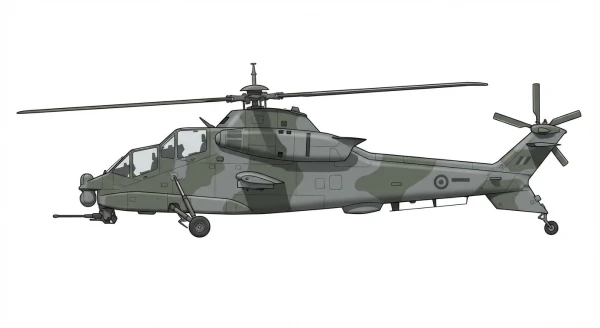
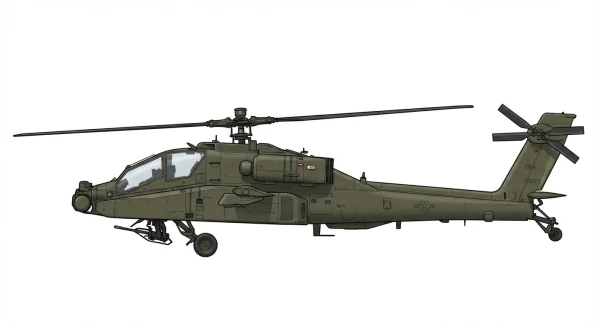
| AH-2 Rooivalk | AH-64 Apache | |
|---|---|---|
| Origin country | 🇿🇦 South Africa | 🇺🇸 United States |
| Category | Military Helicopters | Military Helicopters |
| Manufacturer | Denel | Boeing |
| First flight | 15 January 1990 | 30 September 1975 |
| Year introduced | 2011 | 1984 |
| Number produced | 12 units | 2400 units |
| Average unit price | $40 million | $33 million |
| Wingspan | 15.6 m | 14.6 m |
| Height | 5.2 m | 5.0 m |
| Length | 18.7 m | 17.7 m |
| Maximum speed | 309 km/h | 293 km/h |
| Operational range | 740 km | 480 km |
| Service ceiling | 6,096 m | 5,670 m |
| Max. takeoff weight | 8,750 kg | 10,107 kg |
| Empty weight | 5,730 kg | 5,352 kg |
| Total thrust | 2 x 1,420 kW | 2 x 1,208 kW |
Detailed Comparison
South Africa’s Denel AH-2 Rooivalk and the Boeing AH-64 Apache emerged from Cold War-era requirements to destroy armor, but their developmental trajectories yield vastly different industrial realities. While the Apache became the default attack helicopter for the US and its allies with over 2,400 units produced, the Rooivalk remains capped at 12 airframes due to post-apartheid budget constraints and Denel's institutional atrophy.
Development and Design
Boeing designed the AH-64 around a network-centric architecture, culminating in variants equipped with the AN/APG-78 Longbow fire-control radar. This mast-mounted system tracks 128 targets and engages 16 simultaneously from defilade. Conversely, Denel developed the Rooivalk under an apartheid-era arms embargo. Lacking access to clean-sheet dynamic components, engineers grafted an attack fuselage onto the Aérospatiale SA 330 Puma/Oryx drivetrain. This prioritized self-sufficiency; a Rooivalk requires only four ground crew and a single medium transport helicopter for field sustainment, contrasting directly with the Apache's heavy logistical footprint.
Specifications and Performances
The Rooivalk's Puma heritage results in a heavier empty weight (5,730 kg versus the Apache's 5,352 kg) but a lower maximum takeoff weight (8,750 kg compared to 10,107 kg). This limits the South African platform's payload fraction. The Apache leverages twin General Electric T700-GE-701C engines to maximize weapons carriage, firing up to 16 Hellfire missiles. However, the Rooivalk extracts a speed advantage (309 km/h against 293 km/h) and a longer unrefueled range (740 km vs 480 km), reflecting SAAF requirements for long-range patrols across the Angolan and Namibian borders.
Deployment and usage
The Apache dictates Western attack helicopter doctrine. Since destroying Iraqi radar sites in 1991, it has executed anti-armor and close air support missions across Iraq, Afghanistan, and the Levant. Vulnerabilities to small-arms fire in urban environments, specifically during the 2003 Karbala attack, forced tactical shifts from hovering to running-fire engagements. The Rooivalk’s combat record is relegated to a single theater. In 2013, three SAAF Rooivalks supported the UN Force Intervention Brigade in the DRC, neutralizing M23 rebel artillery using unguided 70mm rockets. However, funding shortfalls and incomplete weapon integration—specifically the failure to field the Mokopa ATGM in operational volume—killed the platform's export viability.
Conclusion
The AH-64 Apache commands high-intensity, multi-domain environments. Its millimeter-wave radar, drone teaming capabilities, and precision munition capacity make it the standard for networked warfare. The Rooivalk holds a narrow edge strictly in austere, low-infrastructure theaters where unrefueled range and minimal ground support dictate mission parameters. Assessing their utility yields clear dividing lines:
- The Apache wins in peer-conflict scenarios requiring deep integration with ground forces, anti-armor saturation, and active missile defense.
- The Rooivalk is preferable only in localized, asymmetric conflicts across vast geographic expanses where supply lines are virtually non-existent.
Ultimately, an attack helicopter cannot survive on unrefueled range alone. The lack of a modern fire-control radar, stagnant software development, and non-existent economies of scale render the Rooivalk structurally uncompetitive, leaving the Apache as the definitive choice for mechanized warfare.