AH-64 Apache vs A129 Mangusta
Overview
The AH-64 Apache and the A129 Mangusta are both Military Helicopters, manufactured by Boeing and Agusta respectively.
Top speed is 293 km/h for the AH-64 Apache vs 278 km/h for the A129 Mangusta. The AH-64 Apache has an operational range of 480 km vs 510 km for the A129 Mangusta. The AH-64 Apache operates at altitudes up to 5,670 m compared to 4,724 m for the A129 Mangusta. At 10,107 kg MTOW, the AH-64 Apache is 2.2x the A129 Mangusta's 4,600 kg.
The AH-64 Apache has been produced in 2,400 units vs 60 for the A129 Mangusta. Unit cost is $33M for the AH-64 Apache vs $22M for the A129 Mangusta. The AH-64 Apache first flew 8 years before the A129 Mangusta (1975 vs 1983).
| American attack helicopter, developed during the Cold War, most famous for significant deployments in Gulf War and Afghanistan conflict. | |
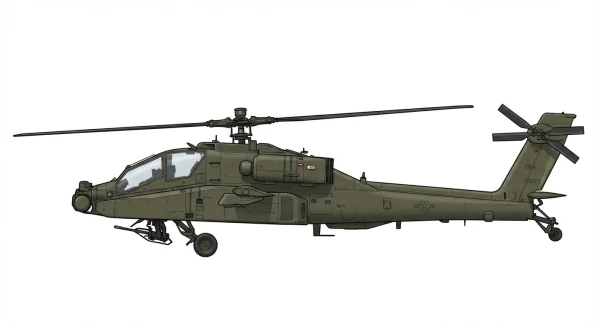
|
|
| Origin country | 🇺🇸 United States |
| Category | Military Helicopters |
| Manufacturer | Boeing |
| First flight | 30 September 1975 |
| Year introduced | 1984 |
| Number produced | 2400 units |
| Average unit price | $33 million |
| Italian attack helicopter, designed in the 1980s, extensively deployed for reconnaissance, fire support, and anti-armour operations. | |
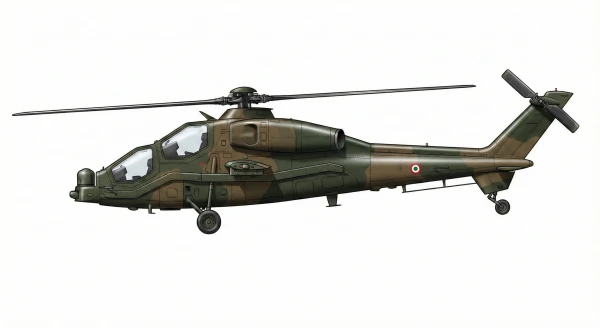
|
|
| Origin country | 🇮🇹 Italy |
| Category | Military Helicopters |
| Manufacturer | Agusta |
| First flight | 15 September 1983 |
| Year introduced | 1990 |
| Number produced | 60 units |
| Average unit price | $22 million |
| Wingspan | 14.6 m ◉ |
| Height | 5.0 m ◉ |
| Length | 17.7 m ◉ |
| Maximum speed | 293 km/h ◉ |
| Operational range | 480 km ◉ |
| Service ceiling | 5,670 m ◉ |
| Max. takeoff weight | 10,107 kg ◉ |
| Empty weight | 5,352 kg ◉ |
| Total thrust | 2 x 604 kW ◉ |
| Wingspan | 11.9 m ◉ |
| Height | 3.4 m ◉ |
| Length | 12.3 m ◉ |
| Maximum speed | 278 km/h ◉ |
| Operational range | 510 km ◉ |
| Service ceiling | 4,724 m ◉ |
| Max. takeoff weight | 4,600 kg ◉ |
| Empty weight | 2,530 kg ◉ |
| Total thrust | 2 x 332 kW ◉ |
Performance Radar Chart
Detailed Comparison
Generating comparison analysis...
Unable to generate comparison at this time.