C-17 Globemaster III vs C-390 Millennium
C-17 Globemaster III vs C-390 Millennium at a glance — top speed 930 vs 980 km/h, range 4,480 vs 6,240 km, max takeoff weight 259,460 vs 72,000 kg, built 279 vs 15 units.
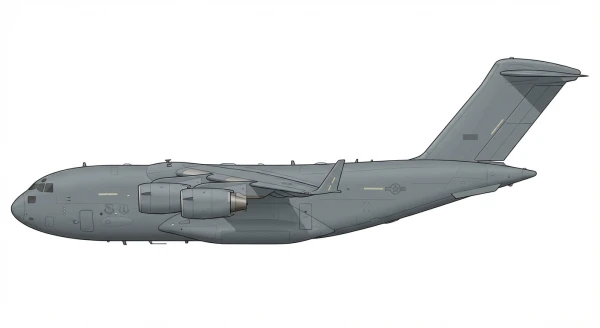
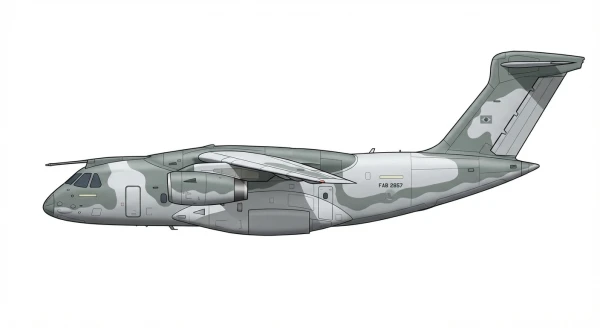
| C-17 Globemaster III | C-390 Millennium | |
|---|---|---|
| Origin country | 🇺🇸 United States | 🇧🇷 Brazil |
| Category | Military Transport Aircraft | Military Transport Aircraft |
| Manufacturer | McDonnell Douglas | Embraer |
| First flight | 15 September 1991 | 30 August 2025 |
| Year introduced | 1993 | 2019 |
| Number produced | 279 units | 15 units |
| Average unit price | $340 million | $140 million |
| Wing area | 353.0 m² | -- m² |
| Wingspan | 51.8 m | 35.1 m |
| Height | 16.8 m | 10.3 m |
| Length | 53.0 m | 33.9 m |
| Maximum speed | 930 km/h | 980 km/h |
| Operational range | 4,480 km | 6,240 km |
| Service ceiling | 13,715 m | 11,000 m |
| Max. takeoff weight | 259,460 kg | 72,000 kg |
| Empty weight | 122,000 kg | 35,000 kg |
| Total thrust | 4 x 18,909 kgf | 2 x 13,154 kgf |
Detailed Comparison
The Embraer C-390 Millennium and the McDonnell Douglas/Boeing C-17 Globemaster III are military transports from different classes, addressing distinct airlift requirements. The C-390 is a modern, twin-engine medium tactical transport designed to offer jet-powered performance and efficiency in the category historically dominated by turboprops like the C-130 Hercules. In contrast, the C-17 is a much larger, four-engine strategic airlifter, designed to transport outsized cargo over intercontinental distances and operate from forward, austere airfields.
Development and Design
The C-17 originated from a 1980s U.S. Air Force requirement for a transport to bridge the gap between tactical and strategic airlift, combining the payload capacity of the C-5 Galaxy with the short-field performance of the C-130. Its design incorporates a high-lift wing system and powerful thrust reversers, enabling it to operate from runways as short as 2,500 meters despite its size. The C-390's development in the 2000s leveraged modern technologies from the outset. It uses two efficient, widely-used IAE V2500 commercial turbofans, a full fly-by-wire flight control system with active sidesticks, and modern Rockwell Collins Pro Line Fusion avionics. This design philosophy emphasizes lower operating costs, higher reliability (demonstrated by an early 99.5% mission completion rate), and reduced crew workload compared to older platforms.
Specifications and Performances
The performance differences are dictated by scale and role. The C-17's Max Takeoff Weight of 259,460 kg is more than three times the C-390's 72,000 kg, and its cargo hold is designed for main battle tanks and other heavy equipment. The C-390's 26-tonne payload capacity is tailored for pallets, light armored vehicles, and troops. A key differentiator is speed; the C-390 has a higher maximum speed (980 km/h vs. 930 km/h), allowing for faster tactical deployment within a theater of operations. The C-17, with its four engines and higher service ceiling (13,715 m vs. 11,000 m), possesses greater range and operational redundancy for long-haul strategic missions. The C-390 is engineered to operate from unprepared runways, a critical tactical capability it shares with the C-17.
Deployment and Usage
With 279 units built, the C-17 has a long and proven operational history, forming the backbone of strategic airlift for the U.S. and key allies. It has been extensively used in combat operations in Iraq and Afghanistan and in major humanitarian relief efforts worldwide. The C-390 is a newer entrant, with a small number of aircraft delivered to Brazil and Portugal. It has quickly established its utility in missions ranging from COVID-19 medical airlifts and Antarctic support to participating in joint exercises with USAF C-17s. Its role is primarily theater-level transport and multi-mission support, including aerial refueling (KC-390 variant) and prospective maritime patrol.
Conclusion
These two aircraft are not direct competitors but serve complementary roles. The C-17 Globemaster III remains an unmatched strategic airlift asset, defined by its massive payload and intercontinental range. Production has ceased, making the existing fleet a finite global resource. The Embraer C-390 Millennium represents the new generation of tactical airlifters, offering jet speed, modern systems, and lower lifecycle costs. It provides a compelling option for air forces seeking to modernize their C-130-class fleets with a versatile, efficient, and technologically advanced platform, without the strategic scale or expense of the C-17.